
/tcs/uploads/categories/20260106-09-59-00_2452a0ee-5d2f-4f0a-ad18-1d653e48926a.jpg)
/tcs/uploads/categories/20260106-09-24-54_fa149ae6-6b92-41a2-8c58-6872c3f98f46.jpg)
/tcs/uploads/categories/20260420-14-42-55_6x4-pent-2.jpeg)
/tcs/uploads/categories/cycle-storage-cycle-lockers.jpeg)
/tcs/uploads/categories/20260420-14-39-09_parkis-5.jpg)
/tcs/uploads/categories/20260106-09-51-52_img-1458.jpg)
/tcs/uploads/categories/cycle-storage-bike-pump-repair-stands.jpeg)
/tcs/uploads/categories/20260420-14-44-33_whatsapp-image-2026-02-24-at-131821-4.jpeg)
RESIDENTIAL SECTOR
Bike Storage, Solutions For Residential & Housing Developments
Bike Storage, Solutions For Residential & Housing Developments
Get In Touch With Our Team For Assistance
Why Residential Bike Storage Is Now Non-Negotiable
Cycle parking is no longer an optional extra in UK residential developments. Local planning authorities increasingly require secure, accessible bike storage as a condition of planning consent, driven by national policy, sustainability targets, and growing resident demand.
New build housing developments must demonstrate adequate cycle parking provision from the outset. For apartment blocks and flats, this means communal storage that serves all residents. For houses, convenient garden or garage storage is expected. Social housing providers must balance durability with accessibility across diverse resident groups.
Beyond compliance, well-designed bike storage adds measurable property value. Research by property agents shows that secure cycle parking is a top five amenity for urban renters and buyers Active Travel England Guidance. For build to rent schemes and student accommodation, it can tip the balance between shortlisted developments.ns.
OUR STANDOUT HEALTHCARE CASE STUDIES
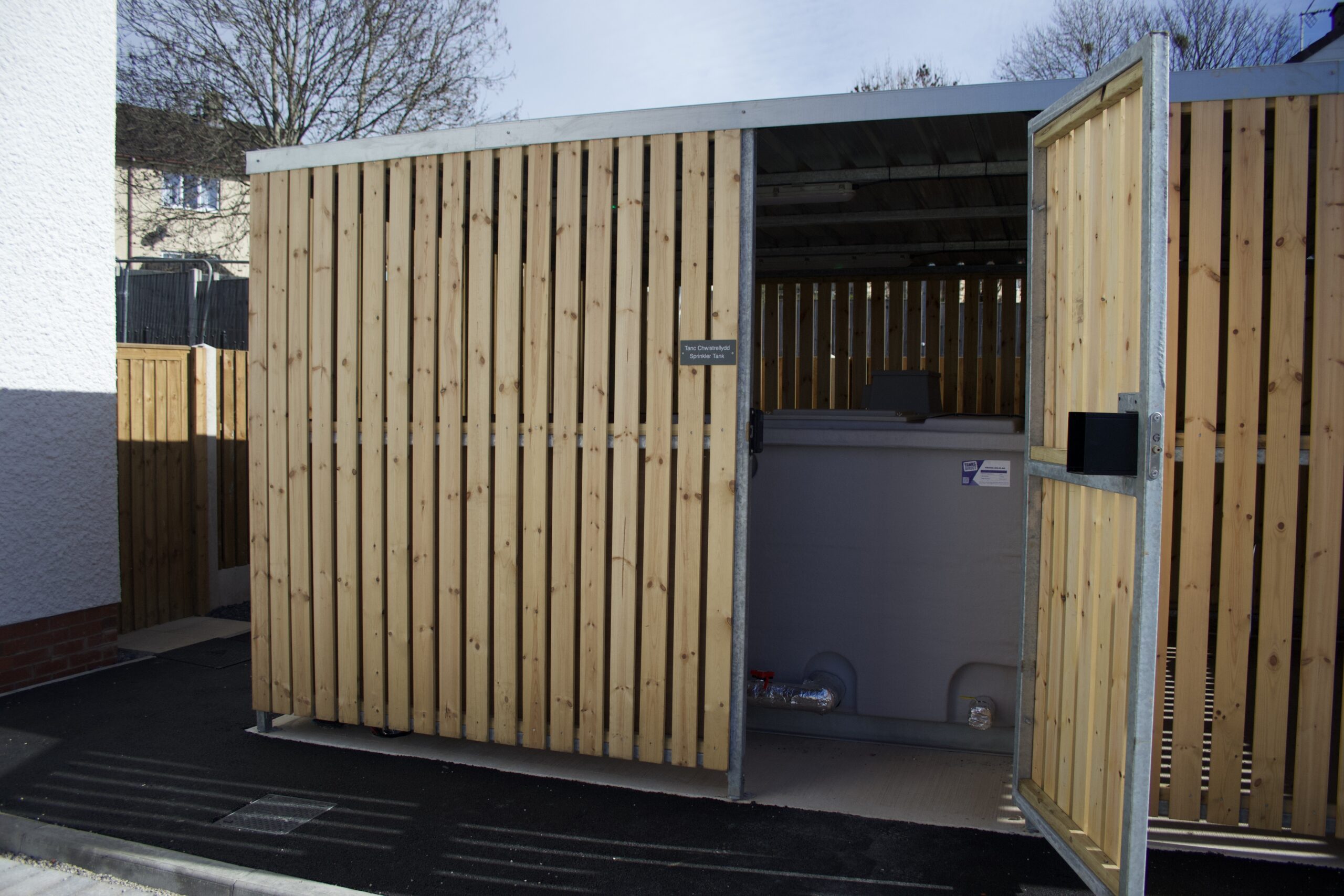
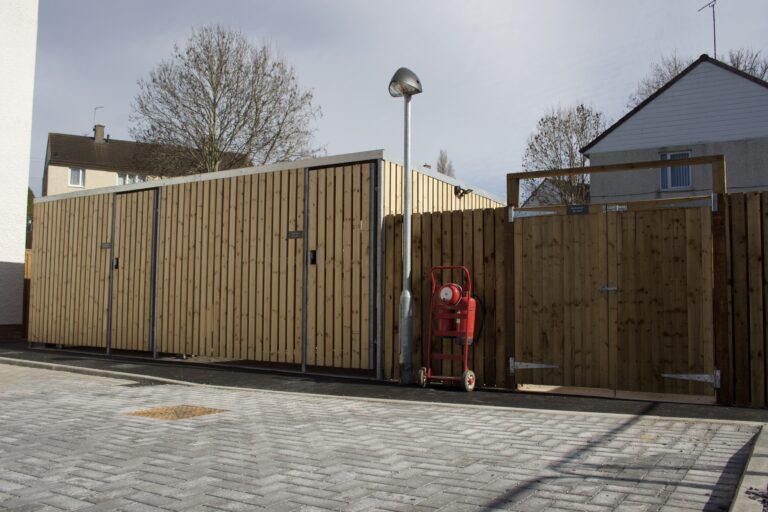
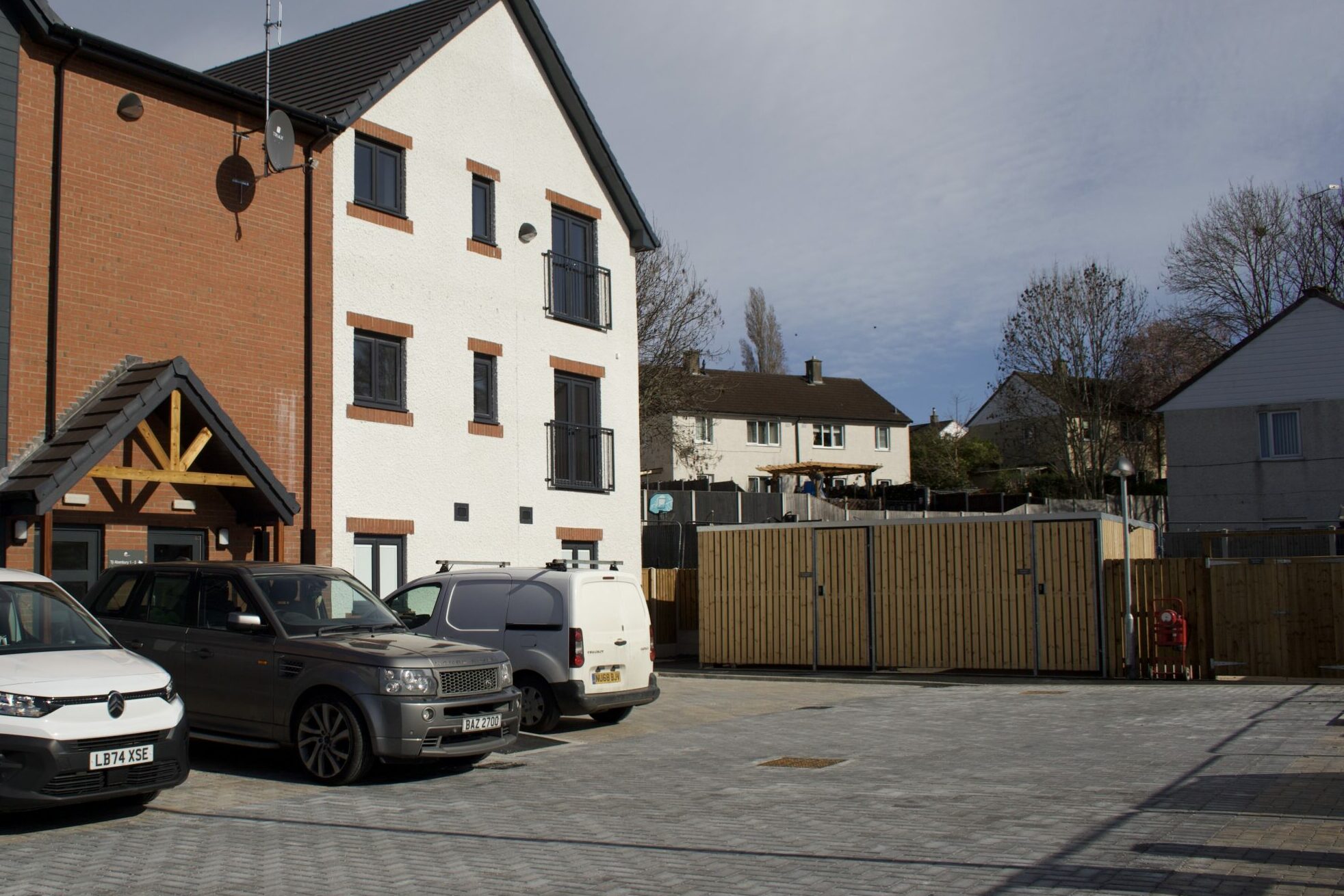
Ty Abenbury, Eaton Drive Wrexham
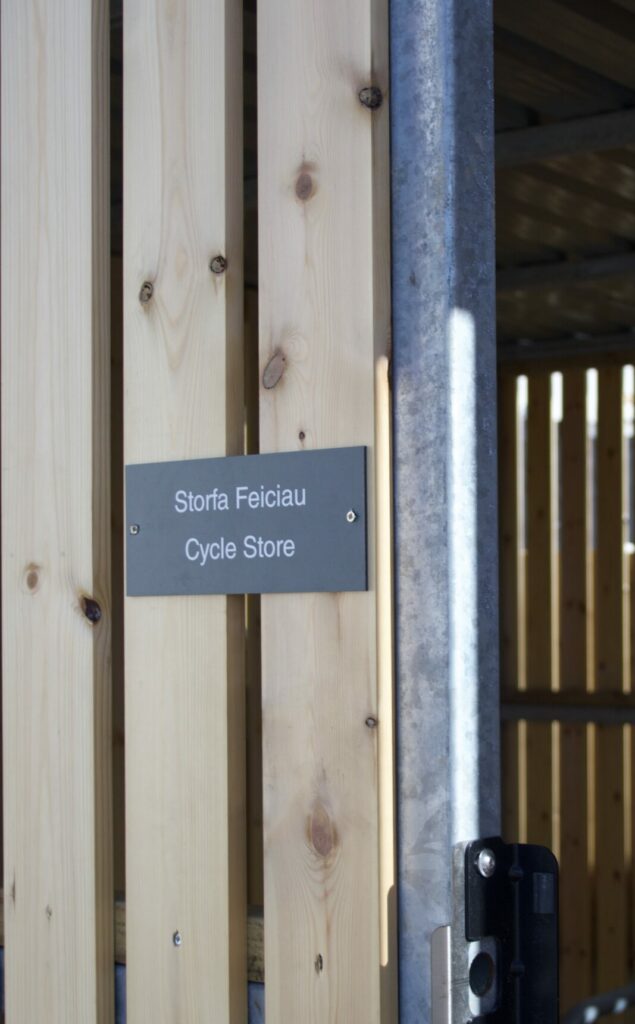
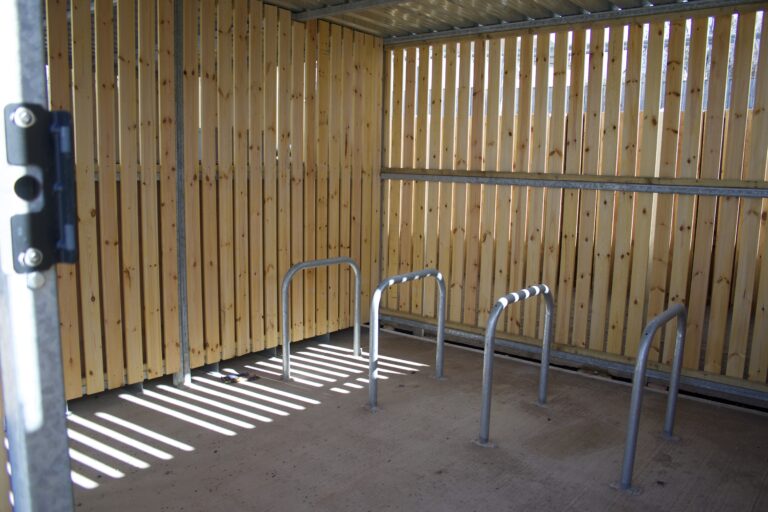
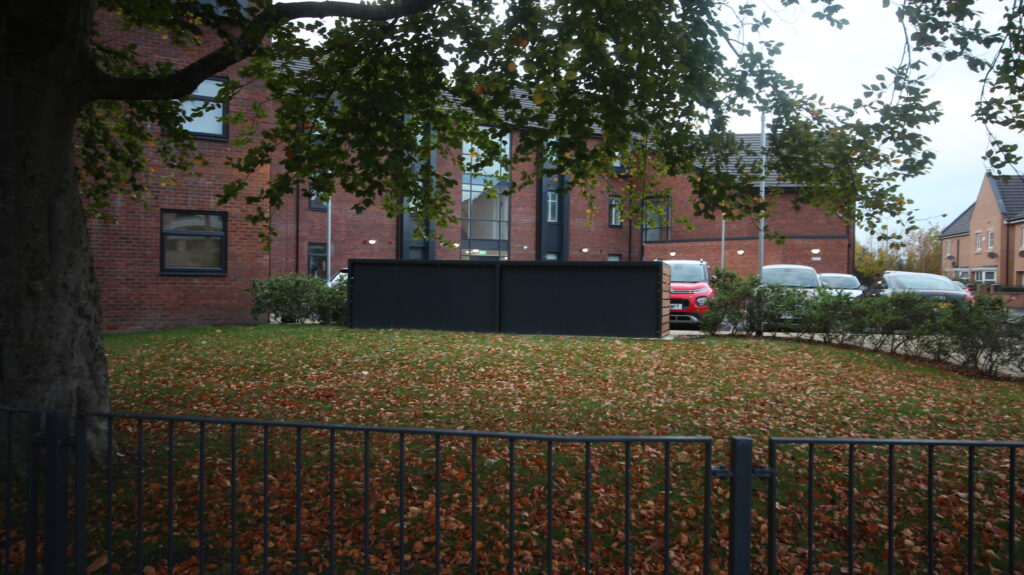
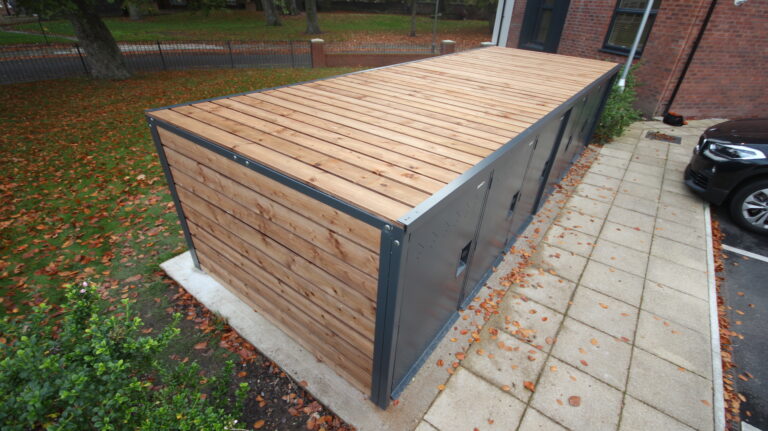
As part of the external works, we were appointed to design, supply and install a Bespoke Combined Trinity Timber Cycle Shelter and Water Tank Store, tailored precisely to the client’s drawings and spatial requirements. The structure measures 7007mm wide by 3828mm deep and 2500mm high, providing a practical and visually cohesive solution that integrates seamlessly with the wider development.

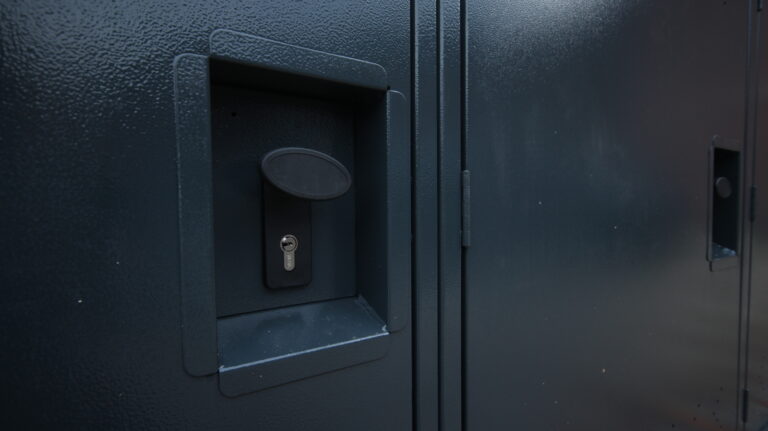
Pavilion Point
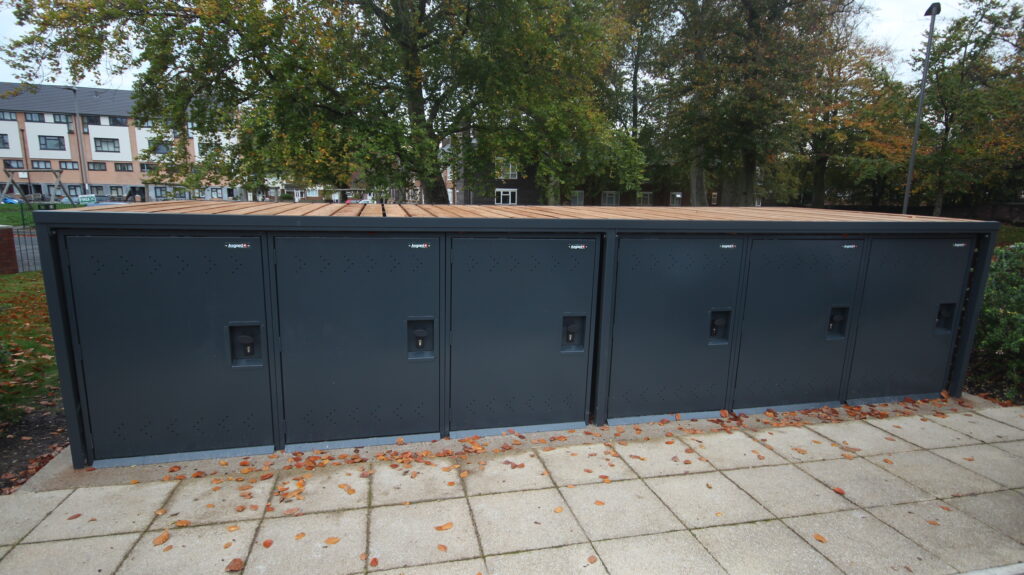
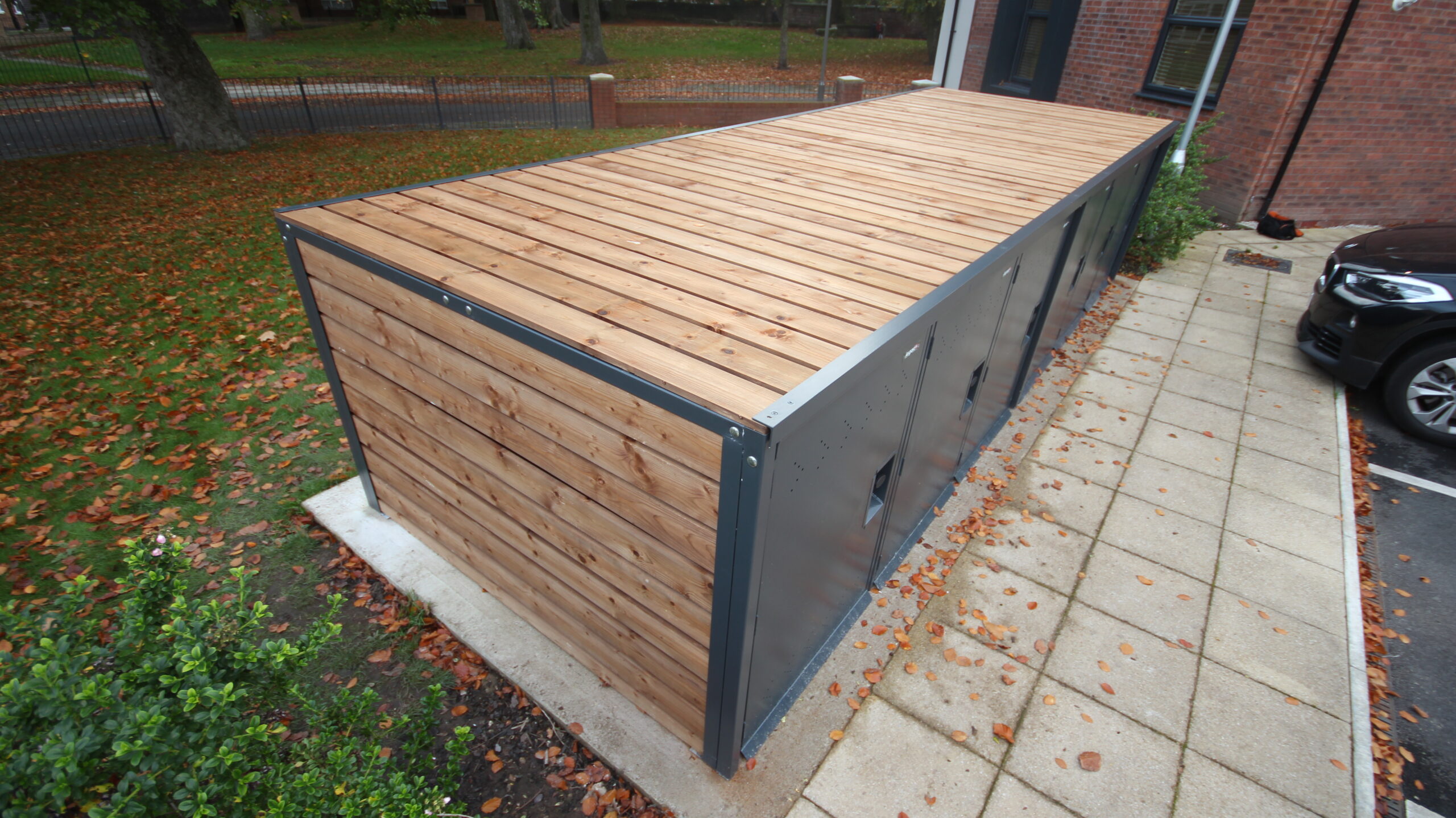
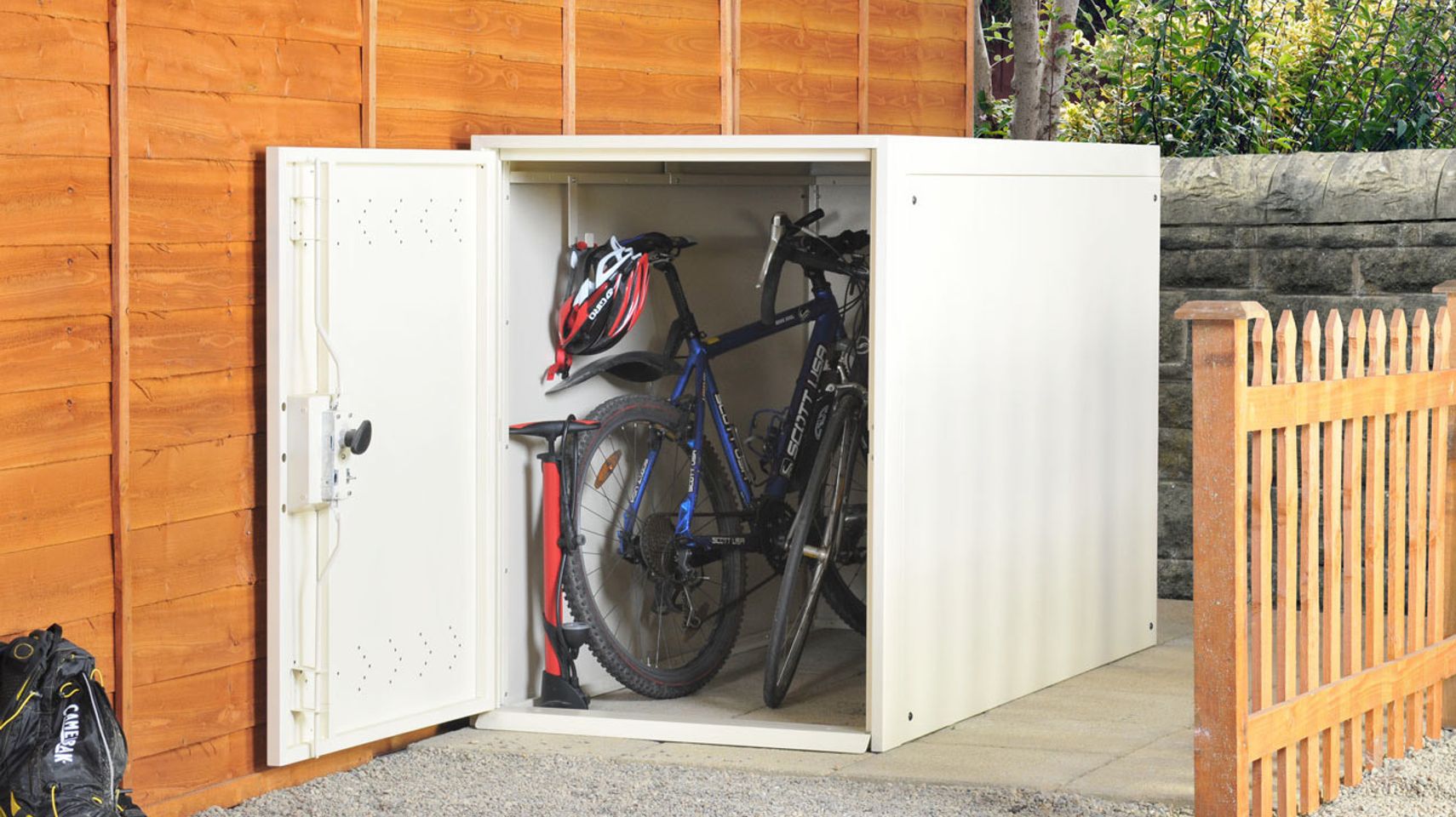
After careful consideration and analysis, we determined that the most suitable solution was to concrete a landscaped area adjacent to the car park. This approach not only maximises the available space at Pavilion Point, but also adds an aesthetic value to the area. The facade houses Six Two-Bike Lockers In Anthracite Grey, providing ample storage space for residents to store their bikes, equipment, and accessories. This solution not only promotes cycling as a form of transportation at Pavilion Point but also keeps the area organised and clutter-free.

Pall Mall Press Liverpool
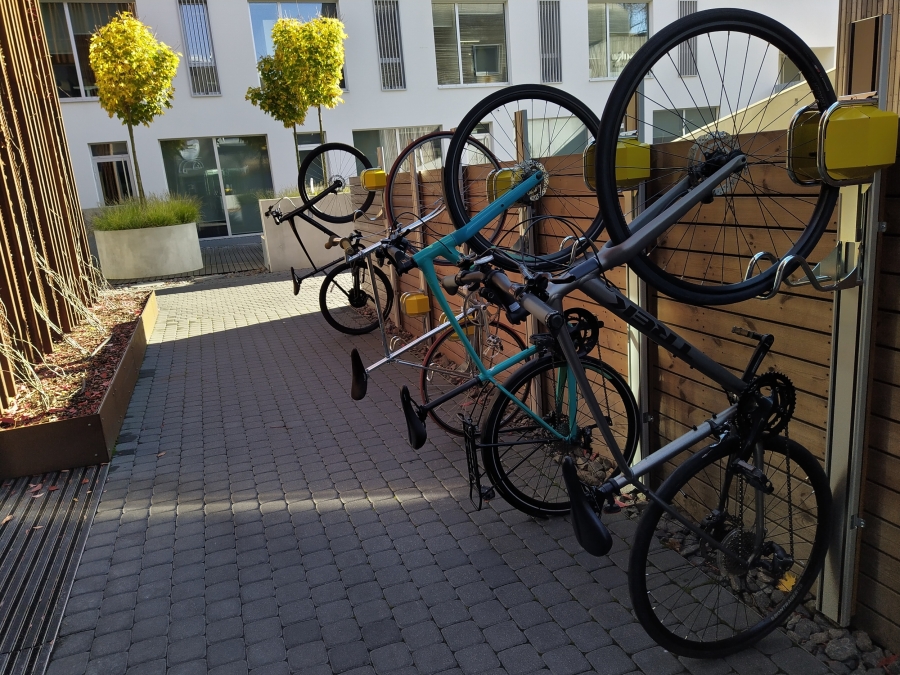
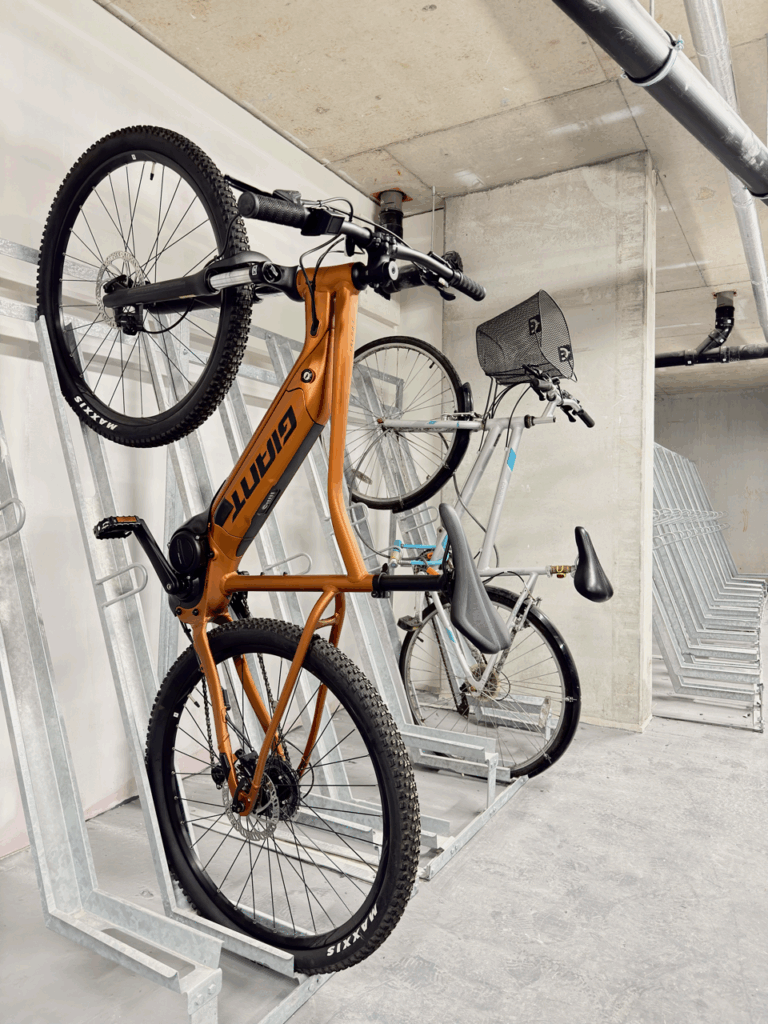
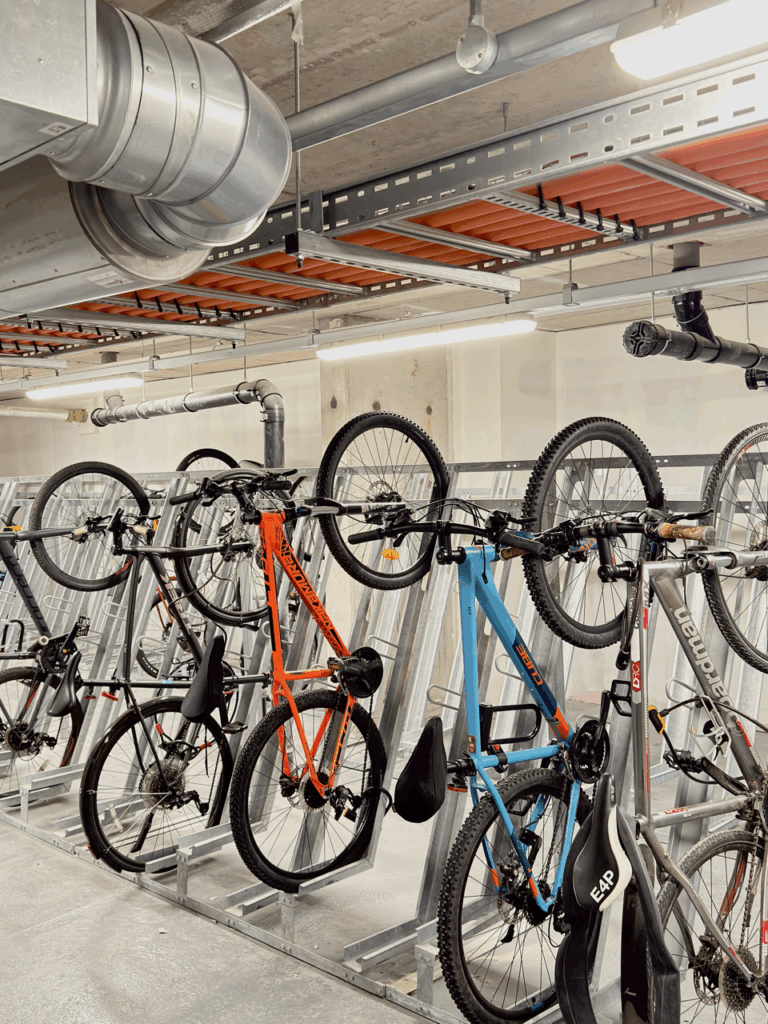
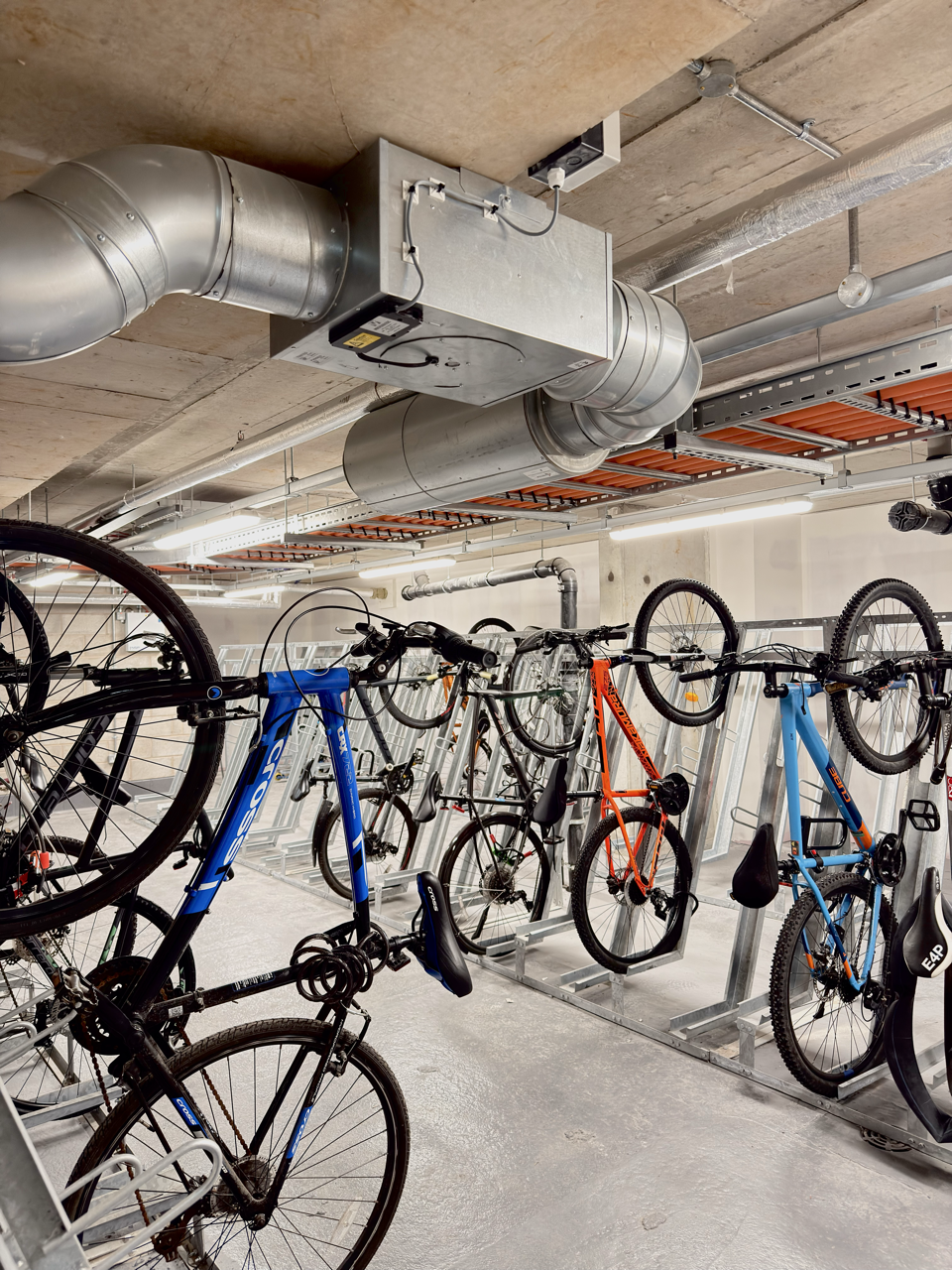
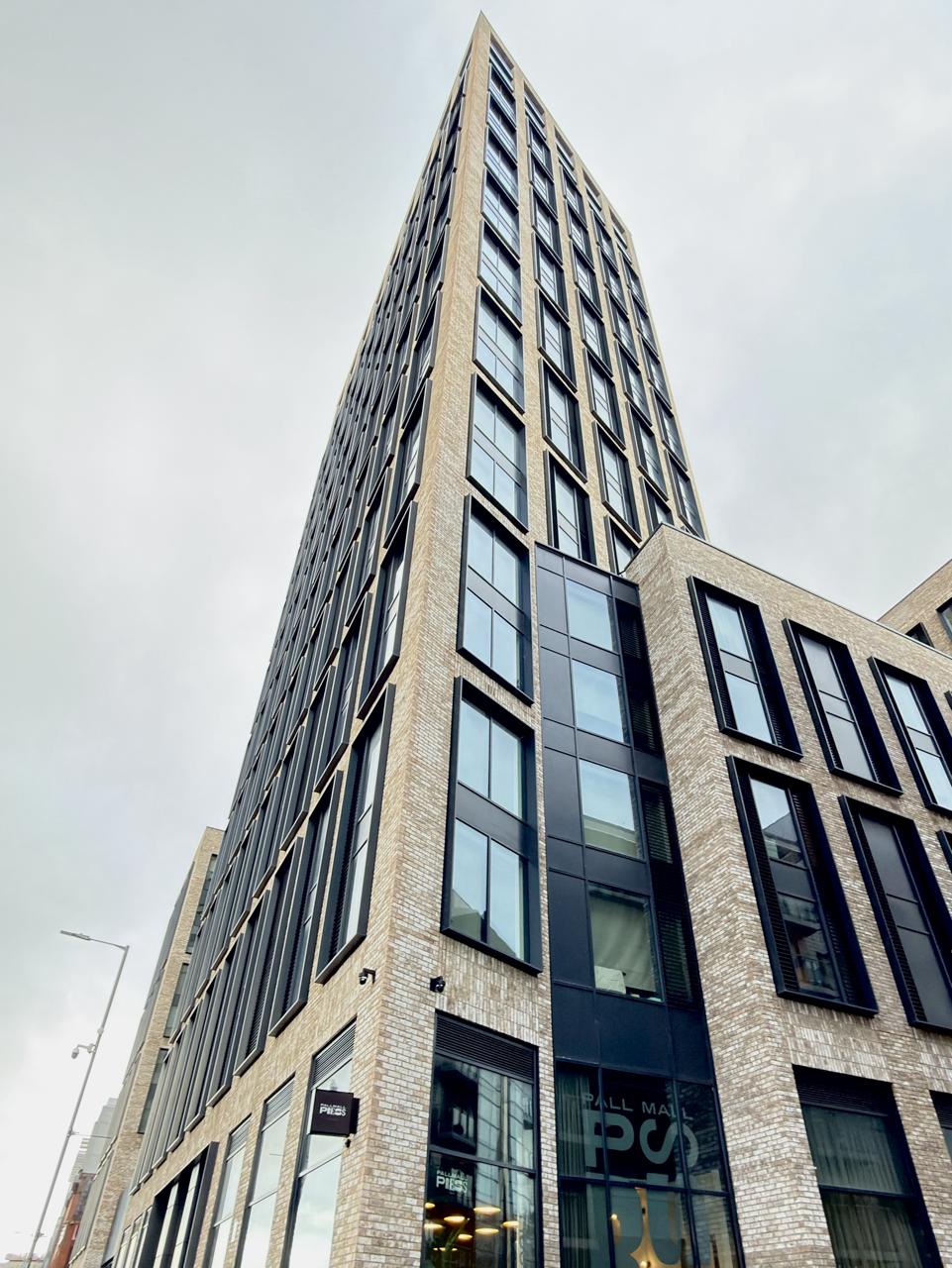
Discover our secure cycle storage installation at Pall Mall Press in Liverpool. Featuring our durable Semi-Vertical Bike Racks designed with a 3 point-locking system for enhanced bicycle security. The system, holding 244 bicycles, was expertly fitted on the building’s ground floor, with all units customised to integrate seamlessly within the allocated space. Pall Mall Press is a newly completed residential development that combines contemporary design with strong sustainability credentials.

Whitley Court Gateshead
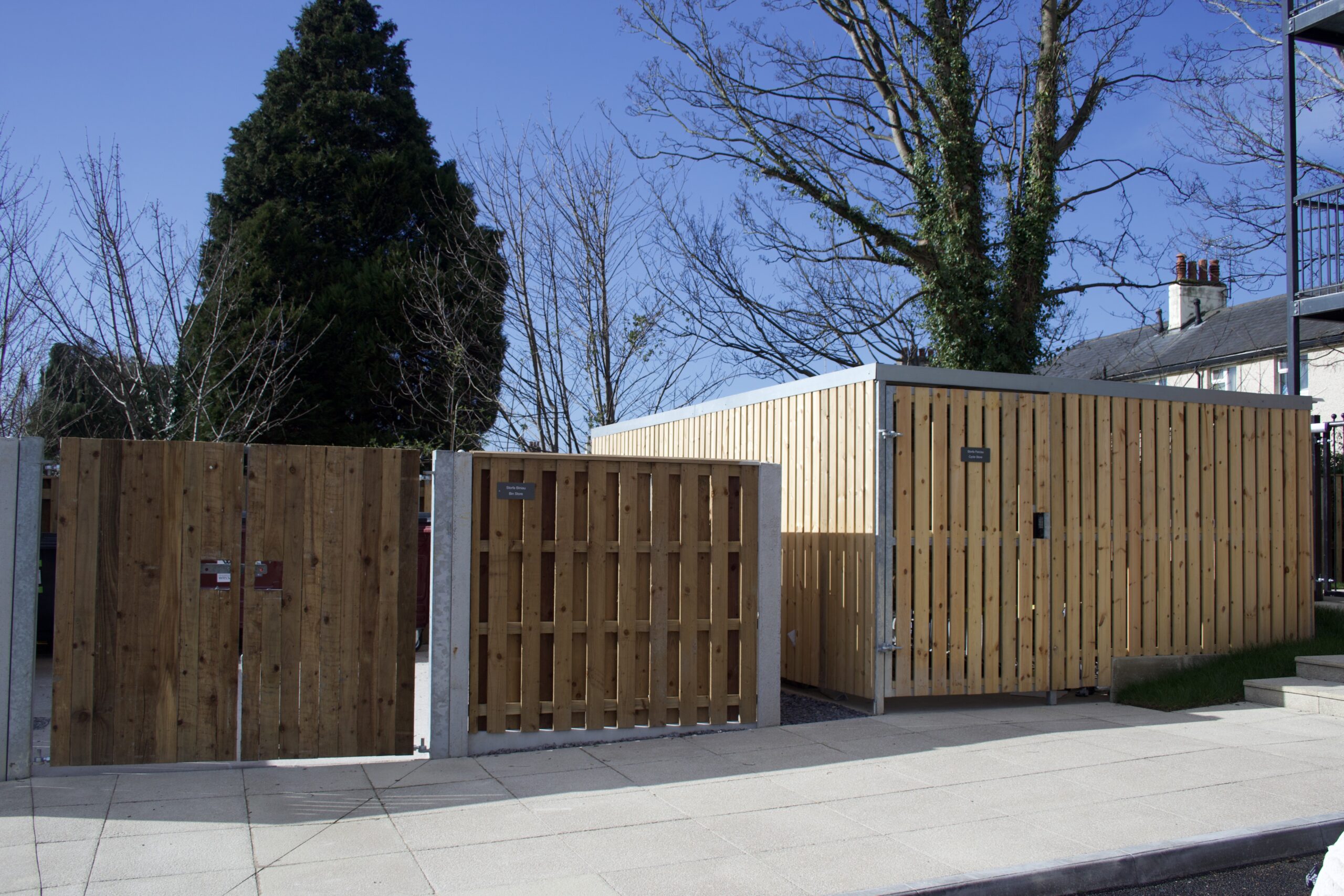
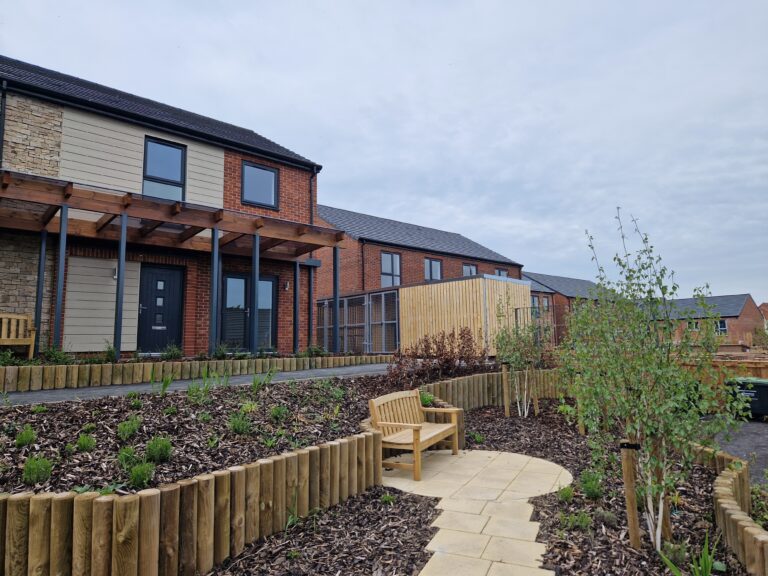
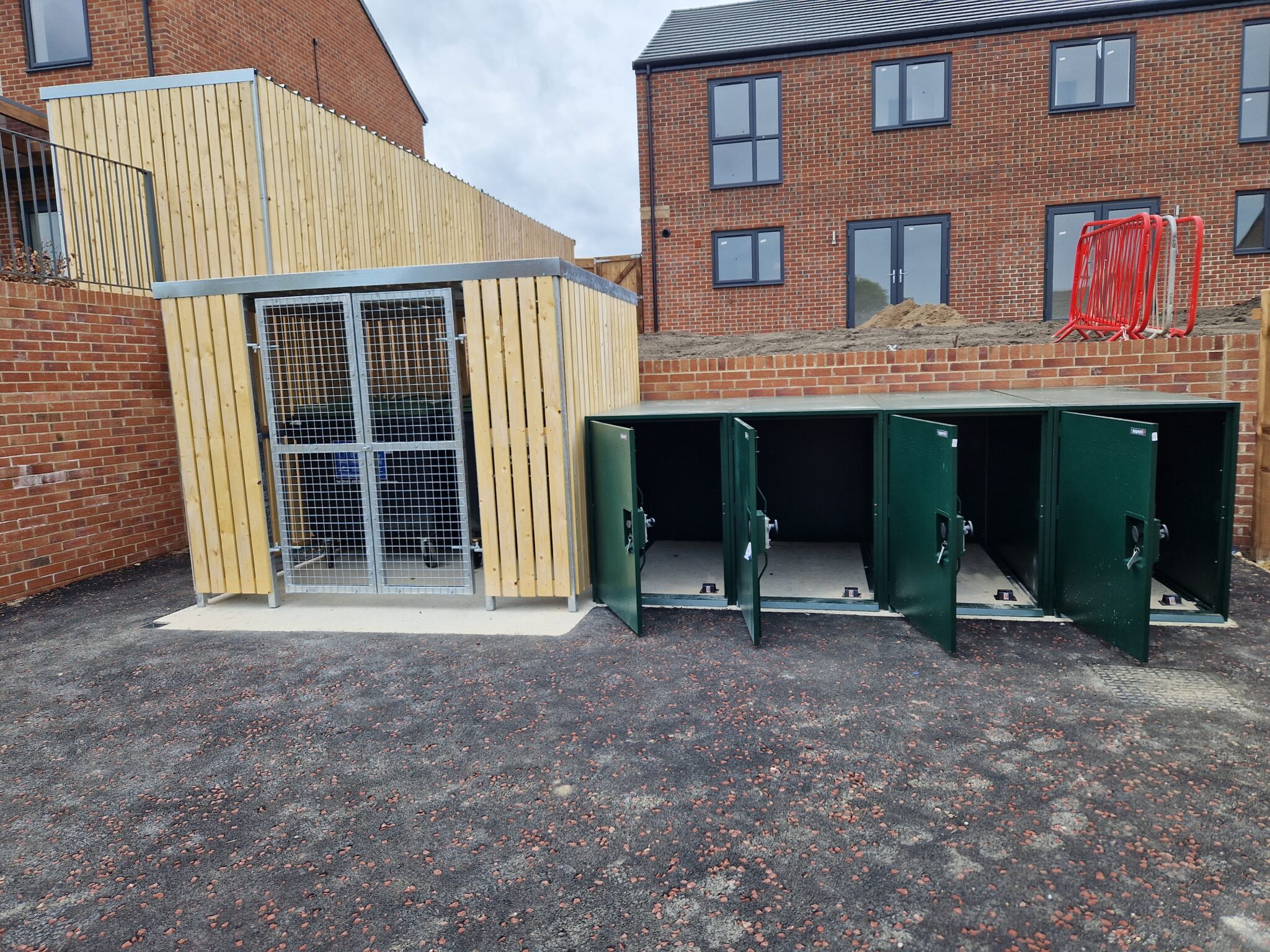
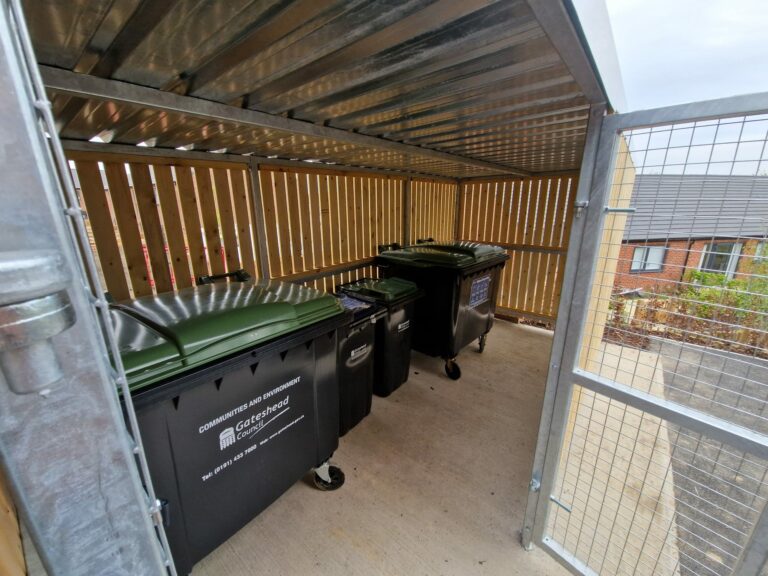
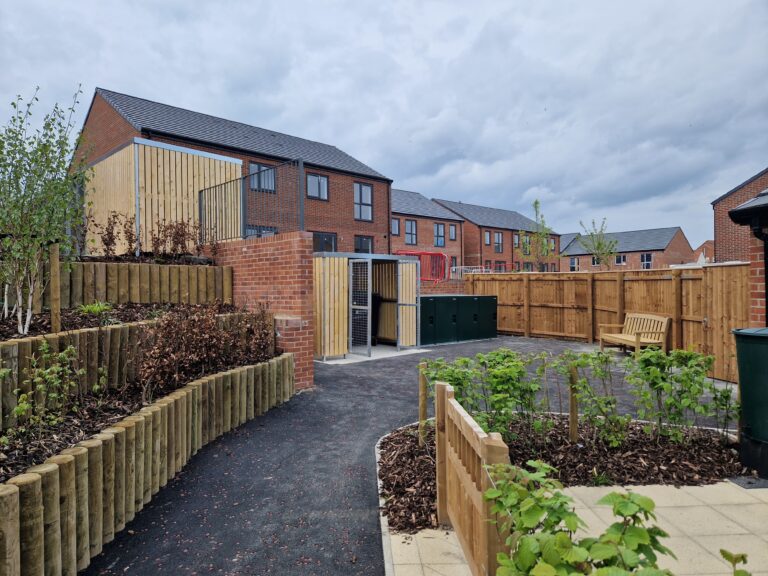
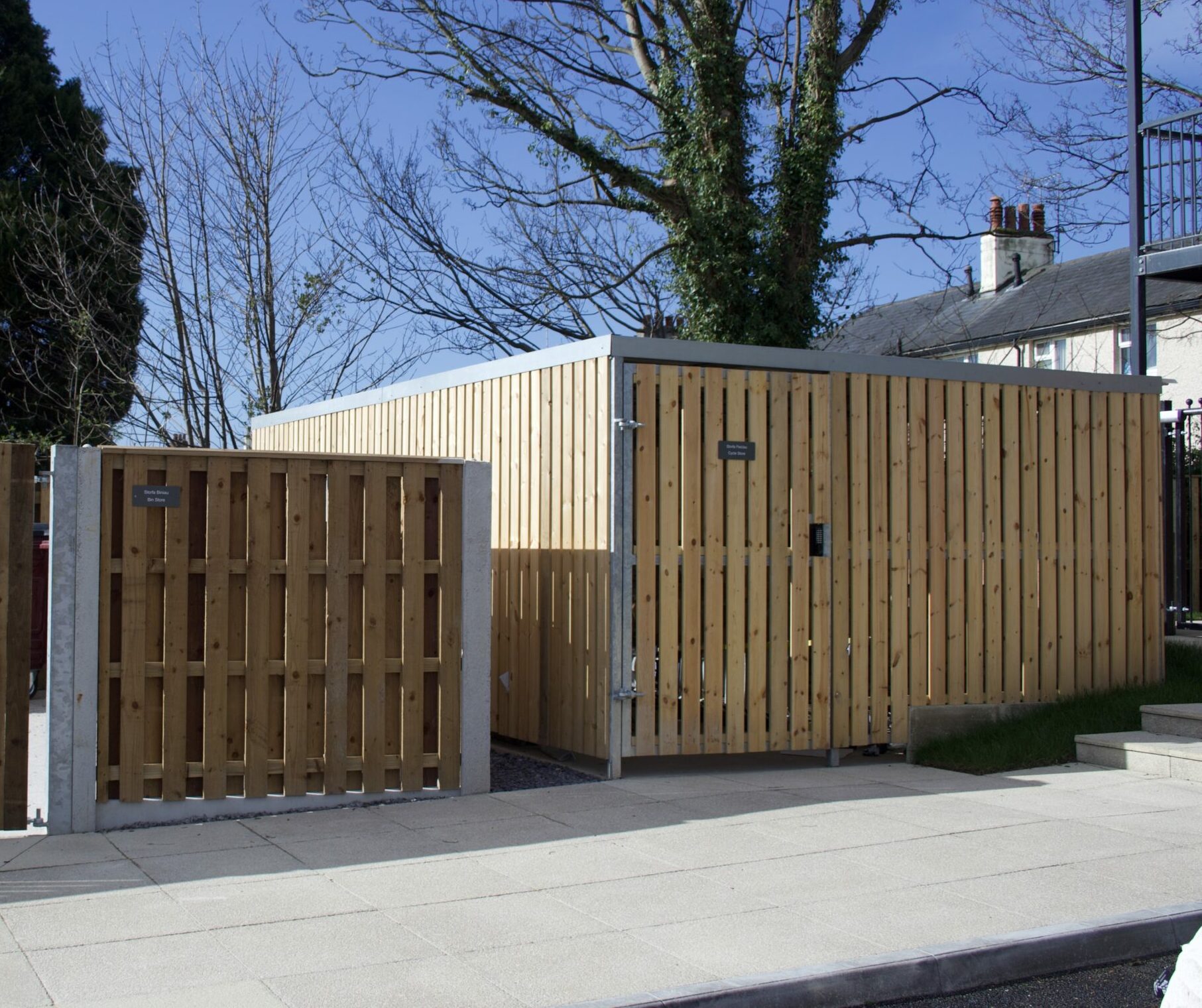
The installation started with a Combined Communal Bin and Bike Store, designed to seamlessly integrate cycle storage with communal bin housing in a single, space-efficient shelter. This robust structure offers a practical solution for residential and commercial developments where both secure cycle parking and tidy waste management are priorities. For this project, the developers chose to finish this unit with a selection of Sheffield Cycle Stands offering efficient storage and accessibility for users.
Planning & Regulatory Context
Residential developments face a growing web of cycle parking standards. Understanding which apply to your project is essential.
LTN 1/20 — the National Standard
The Department for Transport’s Local Transport Note 1/20 sets the UK benchmark for cycle infrastructure design UK Government LTN 1/20. Key requirements for residential settings include:
– Cycle parking must be secure, covered, and conveniently located relative to dwelling entrances
– A minimum of 5% of total spaces must accommodate non-standard cycles (cargo bikes, adapted cycles, trikes)
– Accessible design: spacing, manoeuvring room, and step-free routes
– Lighting and natural surveillance to deter theft
The London Plan — Residential Cycle Parking Standards
The London Plan sets the most detailed residential cycle parking ratios in the UK London Plan:
– 1-bedroom dwellings: 1 to 1.5 spaces per unit
– 2-bedroom dwellings: 1.5 to 2 spaces per unit
– 3+ bedroom dwellings: 2 spaces per unit
– Student accommodation: 1 space per 2 bedrooms, plus 0.1 visitor spaces per unit
– Residential visitor parking: 1 space per 40 units for up to 40 units, then 1 per 100 thereafter
These ratios are increasingly adopted by councils outside London as best practice.
Secured by Design
Secured by Design accreditation is increasingly specified for residential developments, particularly social and affordable housing Secured by Design. For cycle parking, this means:
– Covered, lockable enclosures — open racks in an unsecure area do not qualify
– Certified hardware — stands, locks, and gates must meet SBD standards
– Natural surveillance — storage areas visible from dwellings
– Perimeter security — enclosed compounds with controlled access
BREEAM Communities & New Construction
BREEAM credits for cycle parking apply under Tra 03 (Cyclist Facilities) BREEAM Tra 03 Technical Manual:
– 1 credit: Covered, secure, conveniently located cycle storage for all residential units
– 1 additional credit: Showers and changing facilities for residential sites with communal amenities
– Exemplary credit: Provision beyond minimum standards, including cargo bike spaces and e-bike charging
British Standard
There is currently no British Standard (BS) that covers cycle parking due to the nature and variety of products and solutions provided.

E-Bike, Cargo Bike & Fire Safety in Residential Settings
E-bike adoption is accelerating, creating specific storage and charging challenges for residential developments. Lithium battery fires are a growing concern for building owners and insurers London Fire Brigade E-Bike Guidance.
Key considerations:
– Outdoor fire-safe lockers are recommended for e-bike charging in communal areas rather than charging inside dwelling corridors or escapes
– Cargo bikes need wider spaces (typically 800mm to 1,000mm per bike) and ground-level access
– Non-standard cycle provision: LTN 1/20 requires 5% of spaces for cargo, adapted, or non-standard cycles
– Fire separating structures between cycle storage and building fabric for ground floor installations
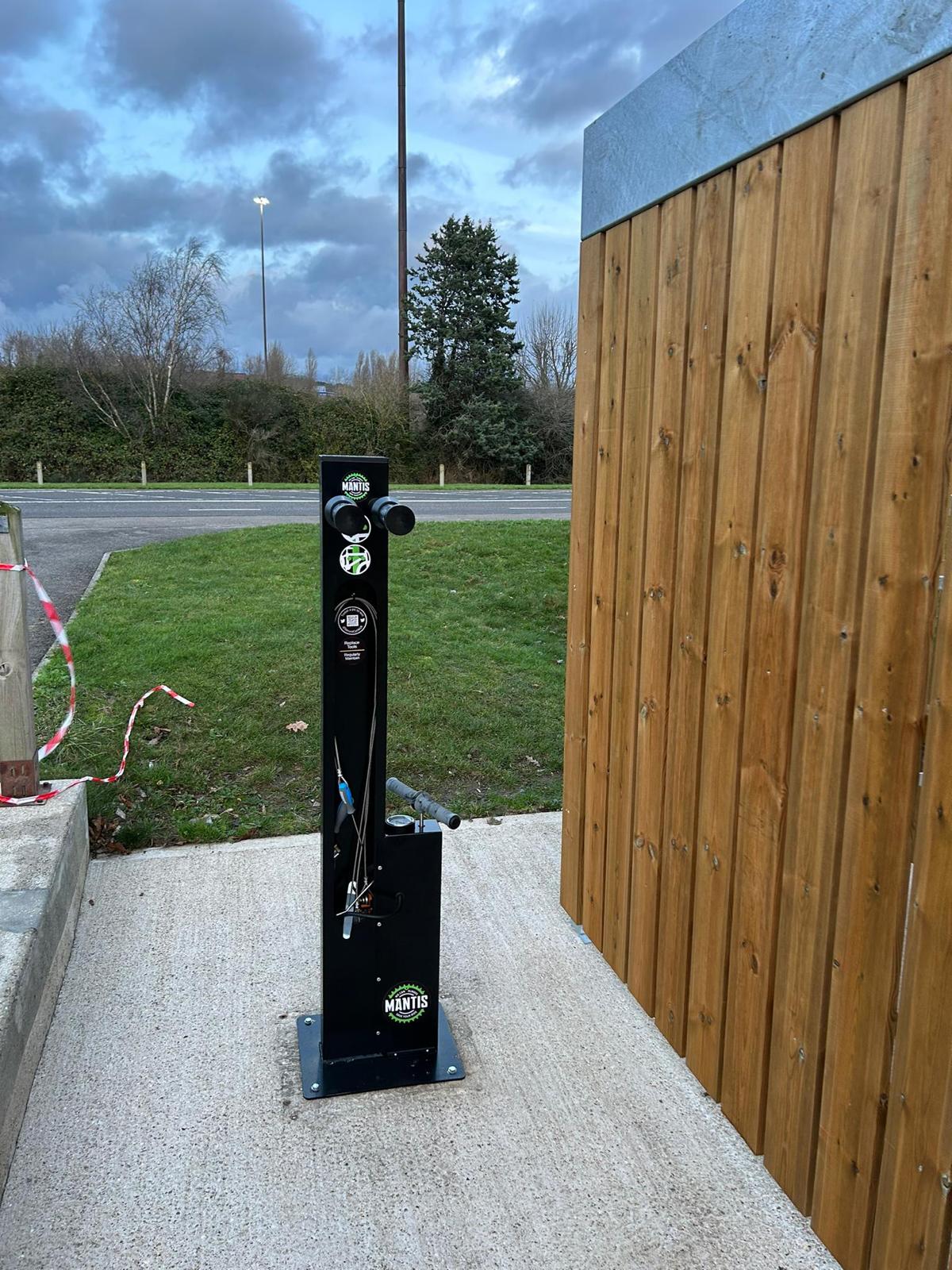
Our E-Bike Solutions range includes fire-resistant Titan, Fighter, and Commander Pro lockers designed for residential installations.
Housing Types & Needs
Every residential development type has distinct cycle storage requirements. Here is how they differ.
Flats, Apartments & Build to Rent
High-density living presents the greatest challenge: limited ground floor space, multiple residents, and a mix of bike types.
Recommended solutions:
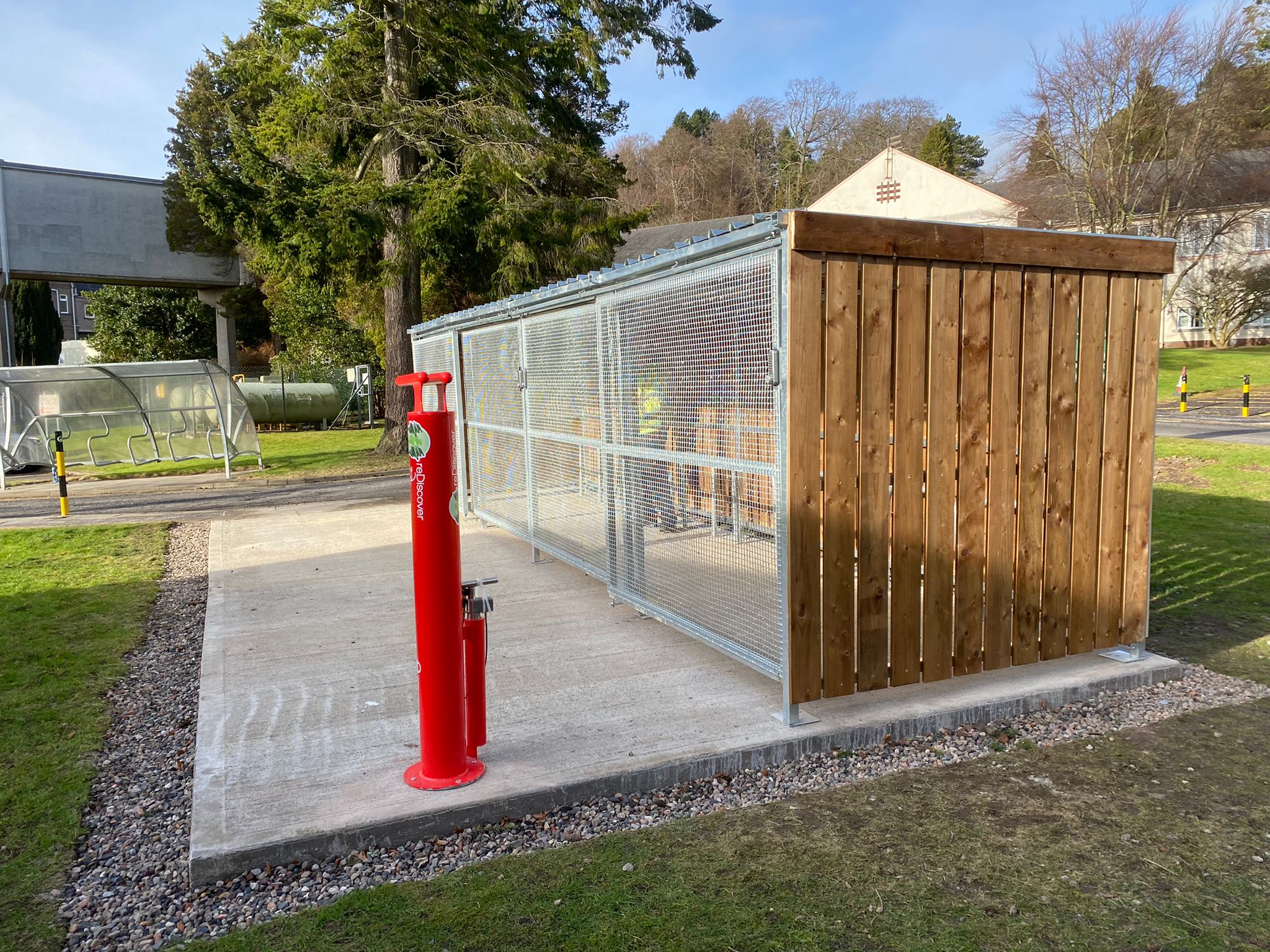
– Communal Bike Shelters with controlled access for multi-unit buildings
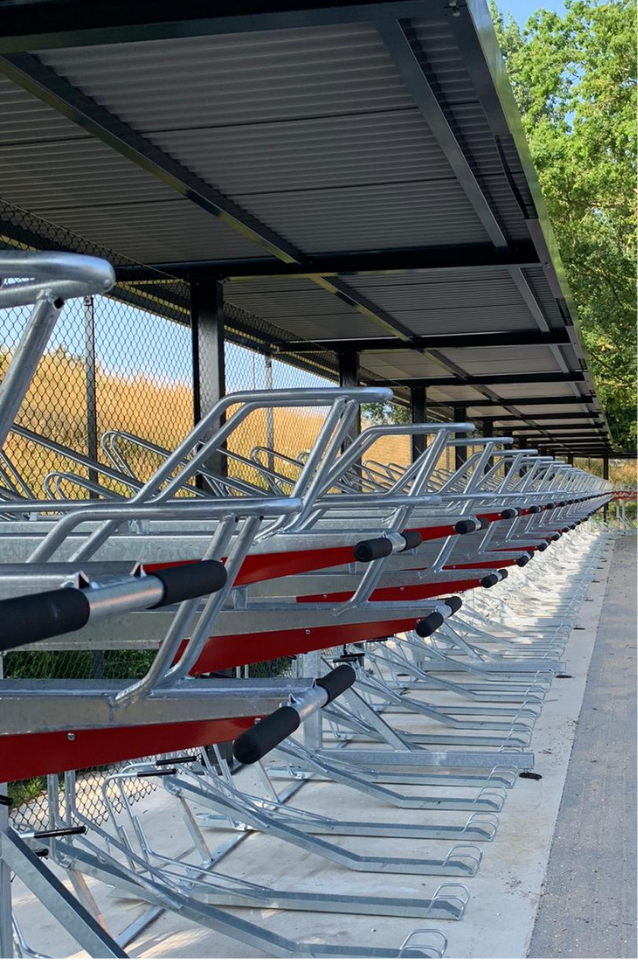
– Two-Tier Bike Racks to double capacity within the same footprint
– E-Bike Lockers for lithium battery charging, fire safety, and secure overnight storage
– Combined Communal Bin and Bike Stores for space-constrained sites that need both waste and cycle provision
Typical space allocation: approximately 1.2m by 2.0m per bike for single-tier storage, or 0.6m by 2.0m for two-tier (Secure Cycle Store space planning data).
Houses & Garden Storage
For individual dwellings with private gardens or driveways, the requirements are simpler but still require thought.
Recommended solutions:
– Bike Sheds for rear gardens — weatherproof, lockable, and available in timber or metal
– Wall-mounted cycle racks for garage fitting
– Metal 4 Bike Store — compact all-in-one solution for up to 4 bikes
Garden storage should be accessible via a minimum 900mm wide gate or path. LTN 1/20 recommends avoiding cycle storage through the main dwelling where possible (Secure Cycle Store site guidance).
Social & Affordable Housing
Social housing providers face additional requirements: vandal resistance, low maintenance, accessibility for all ages, and compliance with Homes England and Secured by Design standards.
Recommended solutions:
– Heavy-duty Bike Shelters with powder-coated galvanised steel frames and lockable gates
– Two-Tier Bike Racks with gas-assist mechanisms for reduced lifting effort
– Combined Communal Bin and Bike Stores — unique in the market, combining waste management with cycle storage in a single footprint
– Sheffield stands for the lower tier to accommodate users who cannot lift bikes
Our experience across multiple social housing projects shows that enclosed, covered storage with simple locking mechanisms has the highest resident satisfaction and lowest vandalism rates (Secure Cycle Store feedback database 2024–2026).
Residential & Housing Specific Bike Storage Solutions
Product Solutions Overview
| Requirement | Product Solution | Best For |
|---|---|---|
| Covered communal parking | Bike Shelters | Flats, apartment blocks, social housing |
| Private garden storage | Bike Sheds | Houses, terraced properties |
| Maximising limited space | Two-Tier Bike Racks | Apartment buildings, basement stores |
| Combined waste + cycles | Communal Bin Stores | Residential developments, HMOs |
| E-bike storage + charging | E-Bike Lockers | Build to rent, student accommodation |
| High-security individual storage | Bike Lockers | Stations, town centre residential |
Frequently Asked Questions
How many bike spaces per flat are required under the London Plan? The London Plan requires 1 to 2 cycle spaces per dwelling depending on bedroom count, with 1 space per 40 units for visitors London Plan.
Does bike storage add property value? Yes. Secure cycle parking is now considered a top five amenity for urban renters and buyers, and can be a deciding factor when shortlisting developments.
What is the minimum space needed for a bike store? Each bike in a single-tier arrangement needs approximately 1.2m by 2.0m including access space. Two-tier racks halve the floor area per bike at approximately 375mm width per bike (Secure Cycle Store product specification). NOTE: that actual spacing is product specific.
Do I need planning permission for bike storage? Most new residential developments include cycle storage as a condition of planning consent. Retrofit installations typically require permitted development check with your local authority, especially in conservation areas.
Can e-bikes be stored in communal bike stores? Yes, but fire safety guidance recommends dedicated fire-resistant lockers for battery charging rather than charging inside dwelling corridors or escape routes London Fire Guidance GN103.
Choosing the Right Solution
Are you building flats/apartments or houses?
Flats / Apartments
– Is space at a premium? → Two-Tier Bike Racks in a Bike Shelter
– Do you need bin storage too? → Combined Bin and Bike Store
– Are e-bikes expected? → Add E-Bike Lockers
Houses
– Private garden? → Bike Shed or Metal 4 Bike Store
– Garage? → Wall racks or freestanding stands
Social / Affordable Housing
– Enclosed, vandal-resistant required → Heavy-duty Bike Shelter with controlled access
– Bin service included → Combined Bin and Bike Store
– Secured by Design accreditation needed → Confirm SBD-certified components
Get a Quote
Every residential development is different. Our team can advise on planning compliance, space planning, and product selection for your project.
Call us on +44 (0)151 933 8895 or complete our contact form for a free consultation and quote.
Get a Quote


