
/tcs/uploads/categories/20260106-09-59-00_2452a0ee-5d2f-4f0a-ad18-1d653e48926a.jpg)
/tcs/uploads/categories/20260106-09-24-54_fa149ae6-6b92-41a2-8c58-6872c3f98f46.jpg)
/tcs/uploads/categories/20260420-14-42-55_6x4-pent-2.jpeg)
/tcs/uploads/categories/cycle-storage-cycle-lockers.jpeg)
/tcs/uploads/categories/20260420-14-39-09_parkis-5.jpg)
/tcs/uploads/categories/20260106-09-51-52_img-1458.jpg)
/tcs/uploads/categories/cycle-storage-bike-pump-repair-stands.jpeg)
/tcs/uploads/categories/20260420-14-44-33_whatsapp-image-2026-02-24-at-131821-4.jpeg)
From Spark to Shutdown, What Shop Fires Are Teaching Us About Modern Fire Risks
What Shop Fires Are Teaching Us About Modern Fire Risks
In retail, fire risk rarely announces itself. It does not arrive with sirens or warning signs, it begins quietly. A charger left plugged in, a device placed on a counter, a battery reaching the end of its life cycle. On the surface, nothing out of the ordinary. Yet recent events, including widely shared footage from a Glasgow city centre fire, have highlighted just how quickly a seemingly minor incident can escalate into something far more serious.
At the centre of that incident was a factor now common across high streets everywhere, lithium batteries. Over the past decade, lithium batteries have become embedded in the day to day operations of retail environments. From vape products and cordless tools to e-bikes, scooters and mobility aids, they’re now part of infrastructure and services many shops rely on.
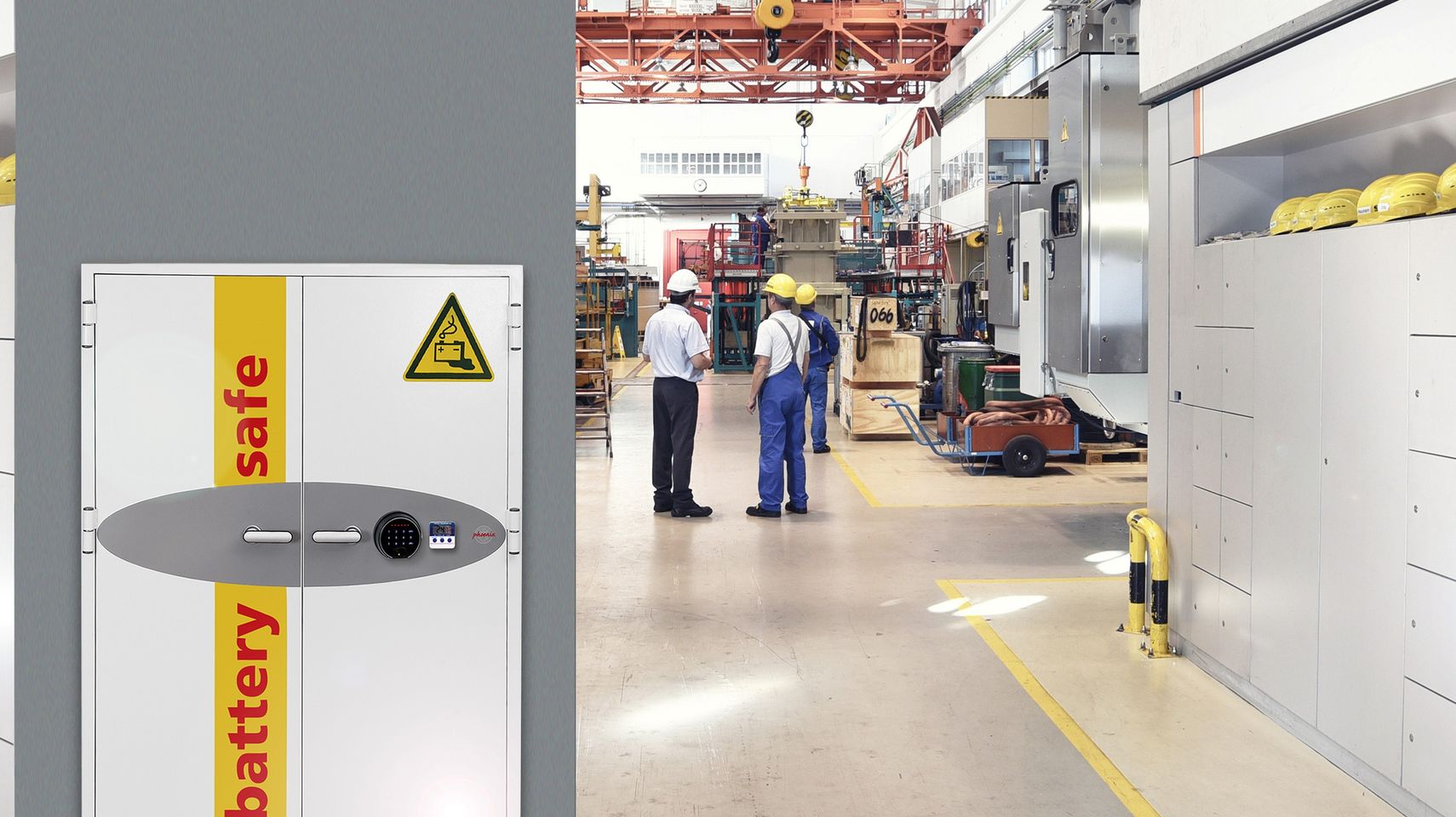
For fire prevention, it is essential to store lithium products in dedicated fire safe units due to the unique way these batteries fail. When a lithium battery enters thermal runaway, it can generate intense heat, flames and gases independently, allowing a fire to escalate rapidly and unpredictably, early footage of the Glasgow fire incident shows exactly this. Even when a fire appears to have been suppressed, it can reignite unexpectedly, sometimes minutes or even hours later. For firefighters, this presents a complex challenge.
Storing lithium powered items within a fire rated unit introduces a critical layer of control. The purpose is not only to protect contents from external fire, but to contain an internal failure at source. By isolating lithium batteries within a fire resistant enclosure, the impact of a single battery failure can be confined, preventing escalation into a wider incident.
Fire safety rated lockers are designed for initial fire prevention. Acting as a fire containment unit, these safes can withstand and contain fire for up to 90 minutes, preventing heat and flames from affecting the surrounding environment during that period. This containment window is a key advantage, providing sufficient time for emergency services to be alerted and attend the scene before the fire can spread beyond the unit. As a result, what could develop into a significant shop fire can instead be managed as a controlled incident, reducing damage, protecting property and significantly improving overall safety outcomes.
A professionally conducted fire risk assessment should now go beyond identifying ignition sources. It should consider how modern risks, including lithium batteries, interact with the physical layout of the premises, how they are managed operationally and how assets are protected in a worst case scenario.
The reality is that shop fires are no longer defined solely by traditional hazards. As technology evolves, so should the approach to safety. The Glasgow incident is not an isolated incident, it is part of a broader pattern across the retail sector.


