
/tcs/uploads/categories/20260106-09-59-00_2452a0ee-5d2f-4f0a-ad18-1d653e48926a.jpg)
/tcs/uploads/categories/20260106-09-24-54_fa149ae6-6b92-41a2-8c58-6872c3f98f46.jpg)
/tcs/uploads/categories/20260420-14-42-55_6x4-pent-2.jpeg)
/tcs/uploads/categories/cycle-storage-cycle-lockers.jpeg)
/tcs/uploads/categories/20260420-14-39-09_parkis-5.jpg)
/tcs/uploads/categories/20260106-09-51-52_img-1458.jpg)
/tcs/uploads/categories/cycle-storage-bike-pump-repair-stands.jpeg)
/tcs/uploads/categories/20260420-14-44-33_whatsapp-image-2026-02-24-at-131821-4.jpeg)
We Don’t Make Children Wear Hi-Vis to Walk to the Shops
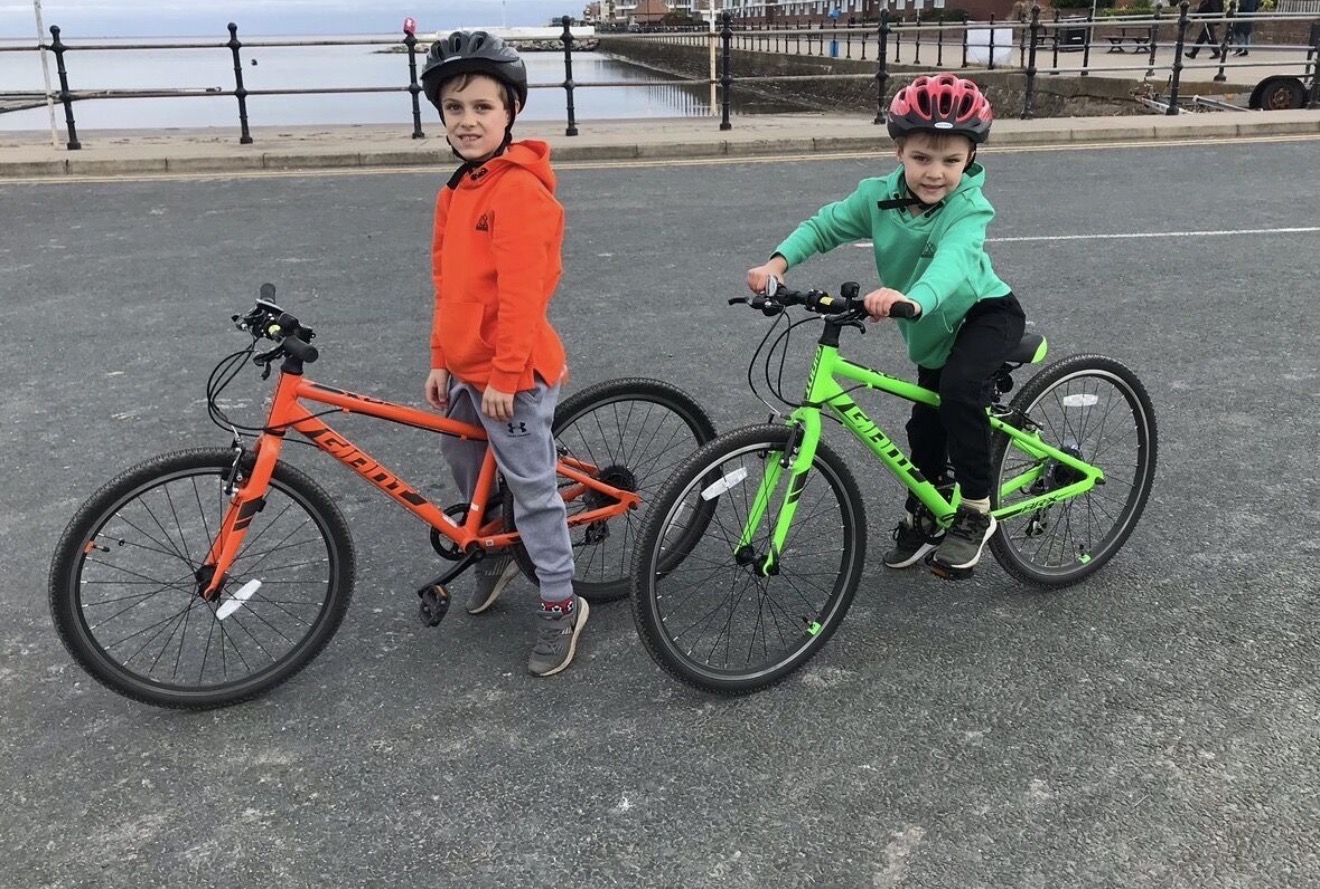
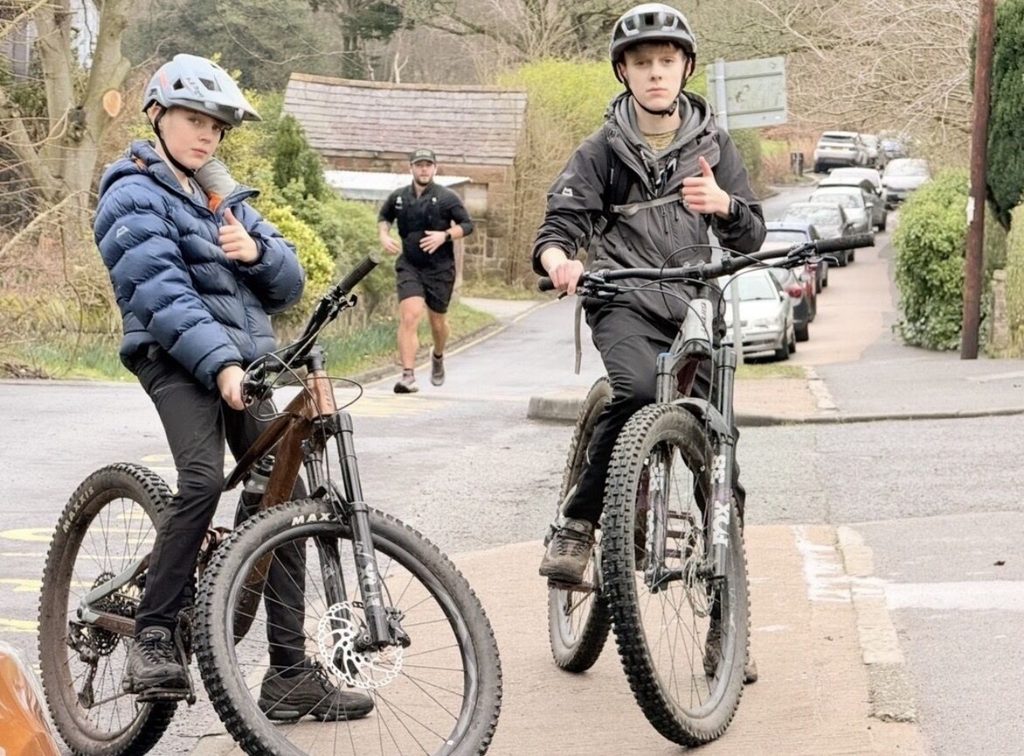
Why the safety gear we strap onto cyclists is a symptom of bad design, not good sense.
Picture a ten-year-old heading to the corner shop on foot. Nobody hands her a helmet. Nobody zips her into a fluorescent tabard or clips a flashing light to her coat. She just goes.
Now picture the same ten-year-old making the same trip on a bike. Suddenly it’s a kit list. Helmet. Hi-vis. Front light, rear light, maybe a camera. A conversation about road positioning. A parent who lies awake until she’s back.
Same child. Same street. Same distance. What changed?
Nothing about the bicycle. What changed is that we’ve built a country where riding one means negotiating with lorries.
The Dutch weren’t born on bicycles
The most useful thing to know about the Netherlands is that it was heading exactly where we did.
Post-war, Dutch cities were being rebuilt around the car just like ours. The result was carnage. In 1971, Dutch road deaths reached a record 3,300 for the year, more than 400 of them children.
What happened next wasn’t a cultural quirk. It was a fight. On 14 October 1971, a six-year-old girl, Simone Langenhoff, was killed by a speeding driver while cycling to school. Her father, the journalist Vic Langenhoff, turned his grief into a campaign, writing the newspaper article that gave the movement its name: “Stop de Kindermoord” stop the child murder. Parents occupied accident blackspots. They closed streets so children could play in them. They lay down in the road outside the Rijksmuseum with their bikes beside them.
It worked, and it kept working for decades. According to the Dutch road safety research institute SWOV, around 120 children a year were killed on Dutch roads in the mid-1980s. Today it’s roughly 35 — a fall of more than 70%, and for children in the five-to-nine bracket specifically, the death rate per head has dropped over 80% since the late 1980s. The country now has more than 35,000 km of dedicated cycle paths, and cycling accounts for 27% of all trips.
And here’s the part that matters most for this argument: that safety record was achieved with children cycling en masse, and without relying on bicycle helmets. The improvement came from the infrastructure people were using, not from the equipment they were wearing.
They didn’t make cycling survivable. They made it ordinary.
We inherited a design decision, not a law of nature
Britain took a different road, and it wasn’t inevitable. It was a choice made about sixty years ago by people who were genuinely trying to help.
In 1963, the government published Colin Buchanan’s Traffic in Towns. It was a serious, thoughtful piece of work. It looked at the explosion of car ownership in America and predicted the same was coming here. Buchanan was commissioned at a time when there were around 10 million vehicles on Britain’s roads, and he projected that the number would roughly quadruple to 40 million. As of the end of 2025, there were 42.3 million licensed vehicles in the UK. He didn’t just call it, he undershot it.
He also warned that our older, tighter towns couldn’t physically absorb that much traffic without losing something essential. His proposal was to funnel through-traffic onto a primary road network, and to protect the rest of the town as “environmental areas” where quality of living came first.
That second half got quietly dropped. Most planners skipped the warnings and read the report as a handbook for the motor age instead. So we got the ring roads, the underpasses, the pedestrian subways that smell of damp, the dual carriageway slicing a town in half. We got estates with no through-route for a bike but four lanes for a car. We got junctions engineered for vehicle throughput, with a painted strip at the edge as an afterthought.
None of that is permanent. It’s just concrete. And concrete can be poured again.
Britain’s problem isn’t reluctance. It’s fear.
There’s a comfortable myth that the British just don’t want to cycle. The data says otherwise.
Cycling still makes up under 2% of trips in England, and that figure has barely moved in two decades. Ask people why, and the answer is remarkably consistent: in the government’s own National Travel Attitudes Study, 51% of women and 45% of men say they’re concerned about their safety while cycling, the single biggest brake on getting more people onto bikes.
Look at the school run and it gets starker. Among primary school children, around 41% are driven and just 2% cycle, according to the National Travel Survey. The average primary school journey is roughly 1.5 miles. That is a fifteen-minute pedal for a child, and we’re putting almost none of them on a bike, because we don’t trust the road outside the school gate. Rightly.
We’ve responded to a design failure by issuing personal protective equipment. We’ve turned a child’s journey into a risk assessment.
What we’d actually be buying
Get the infrastructure right and cycling stops being a hobby with a safety briefing. It becomes what it is in Utrecht or Copenhagen: an extension of walking. A way to get to school, to the shops, to your nan’s.
For our children, that means a generation that can move around their own town independently, not just exercise, but confidence, navigation, friendship, the small daily freedom of going somewhere without being driven there. And it isn’t only about children. Physical inactivity is associated with one in six deaths in the UK and is estimated to cost around £7.4 billion a year, including roughly £0.9 billion to the NHS alone. The population is about 20% less active than it was in the 1960s, and on current trends will be 35% less active by 2030. You cannot gym-membership your way out of that, the only intervention that reaches everyone is built into the journeys people already make, which is exactly why it also matters for older people, who find cycling gentler on the joints than running and stay mobile and connected for years longer on safe, level, separated routes.
There’s a knock-on effect for the town itself, too. Streets where children ride and neighbours pass at eye level are simply better places to be: quieter, cleaner, more sociable, with local shops doing better when people arrive slowly instead of speeding past.
The honest counter-argument
This isn’t free, and it isn’t painless. Good cycle infrastructure means reallocating road space, and that means parking bays, traffic lanes and consultation meetings that get heated. Plenty of schemes have failed because they were half-built, a painted lane that vanishes at the junction is worse than nothing, because it delivers the inconvenience without the safety.
The lesson from the Netherlands is that tokenism doesn’t work. If separated provision isn’t good enough for a confident adult to use, it isn’t good enough for children to ride to school on either.
So the ask isn’t “more cycle lanes.” It’s coherent networks, built to a proper standard, that go where people actually need to go.
The test
Here’s the measure of success, and it has nothing to do with lycra.
Would you let your eleven-year-old ride to school on their own?
Until the answer is a relaxed yes, we haven’t built it properly. And the day the answer is yes, the hi-vis can go in the bin, not because we stopped caring about safety, but because we finally designed for it.
The Dutch didn’t get there by being a different kind of people. They got there by being a different kind of angry.
What would it take to make your street a yes? We’d like to hear from you.
Looking to improve secure cycle parking on your site?
Enquire now to get started with your Secure Cycle Store project:
Tel: 0151 933 8895 Email: [email protected]


