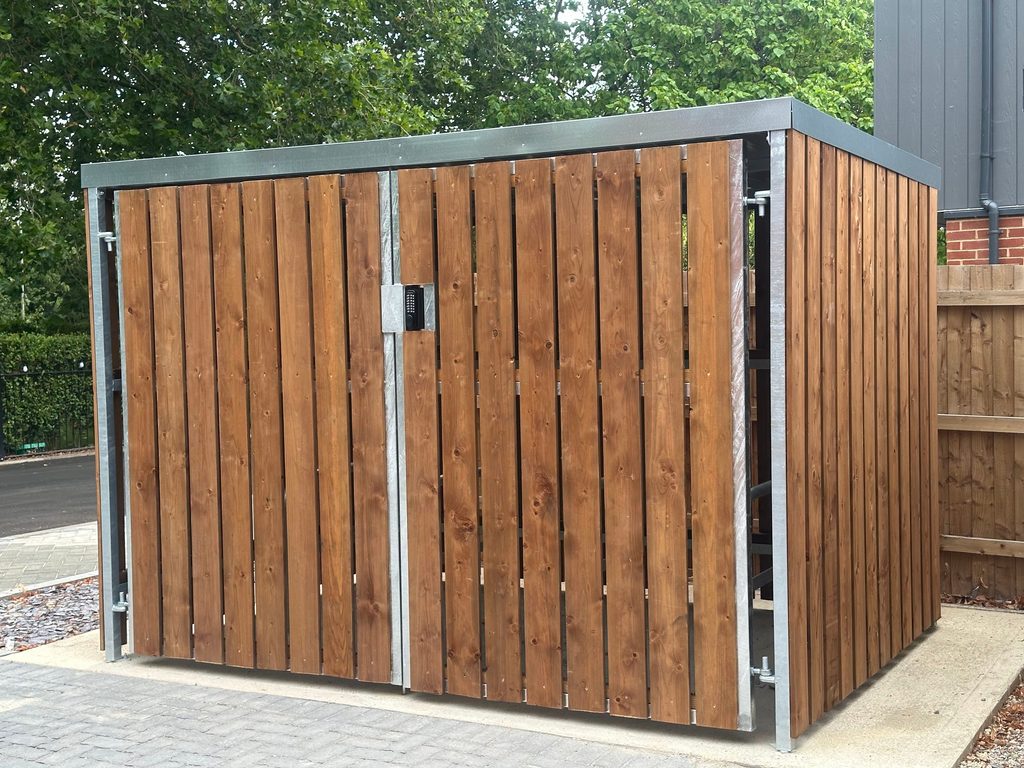
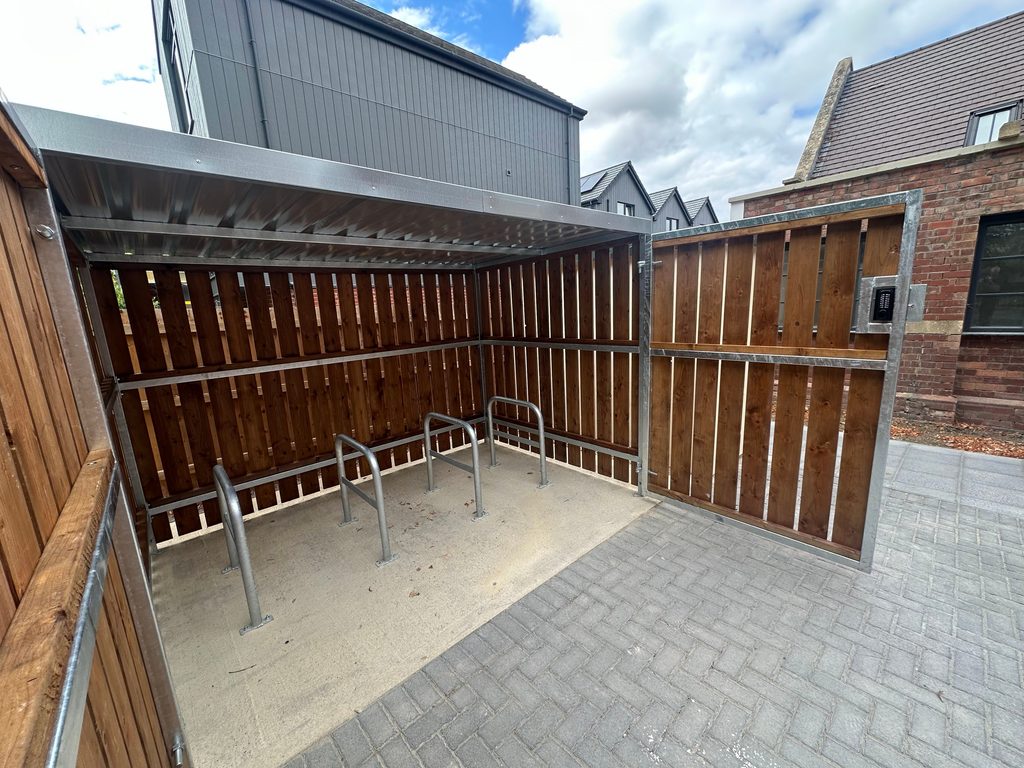
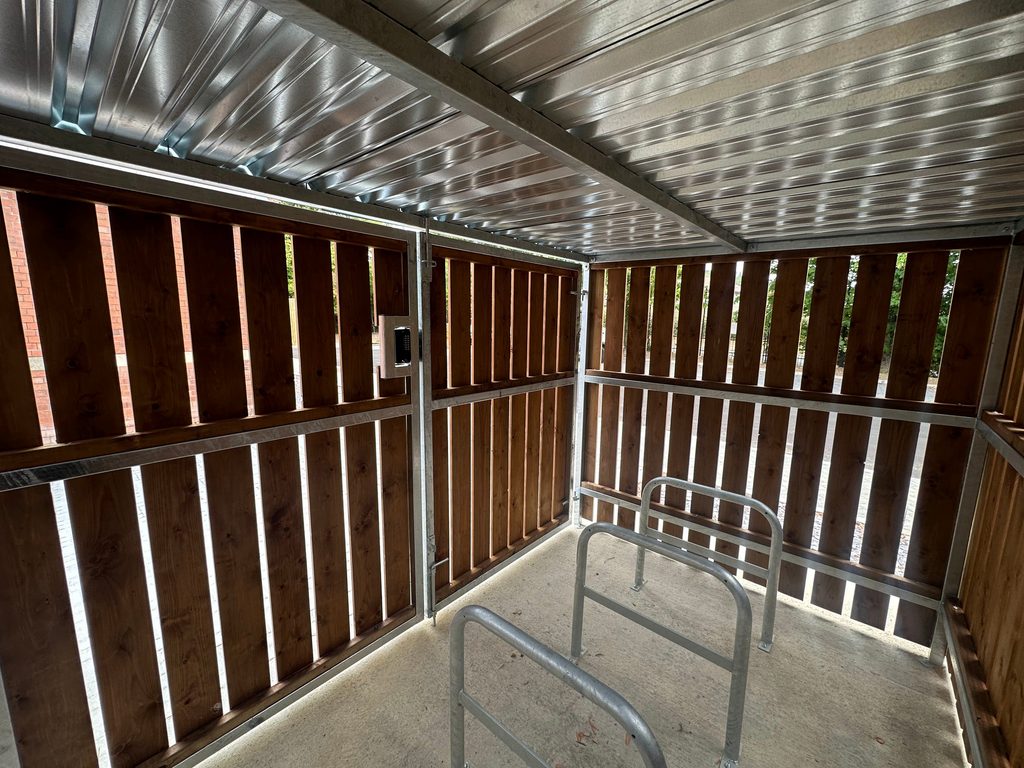
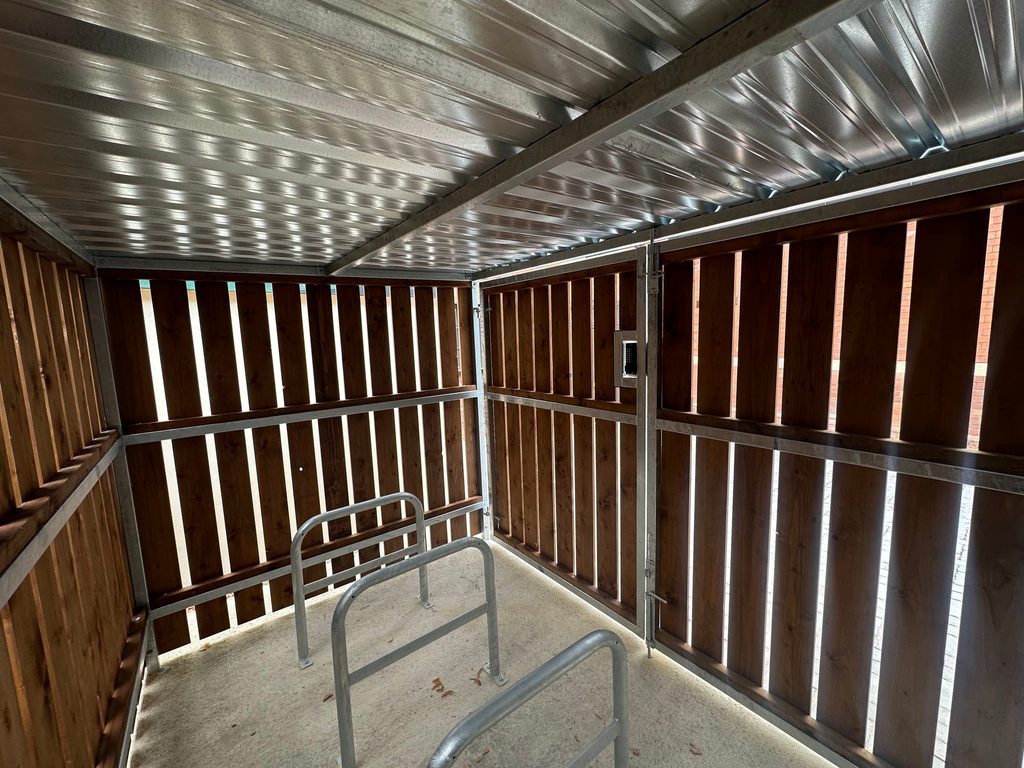
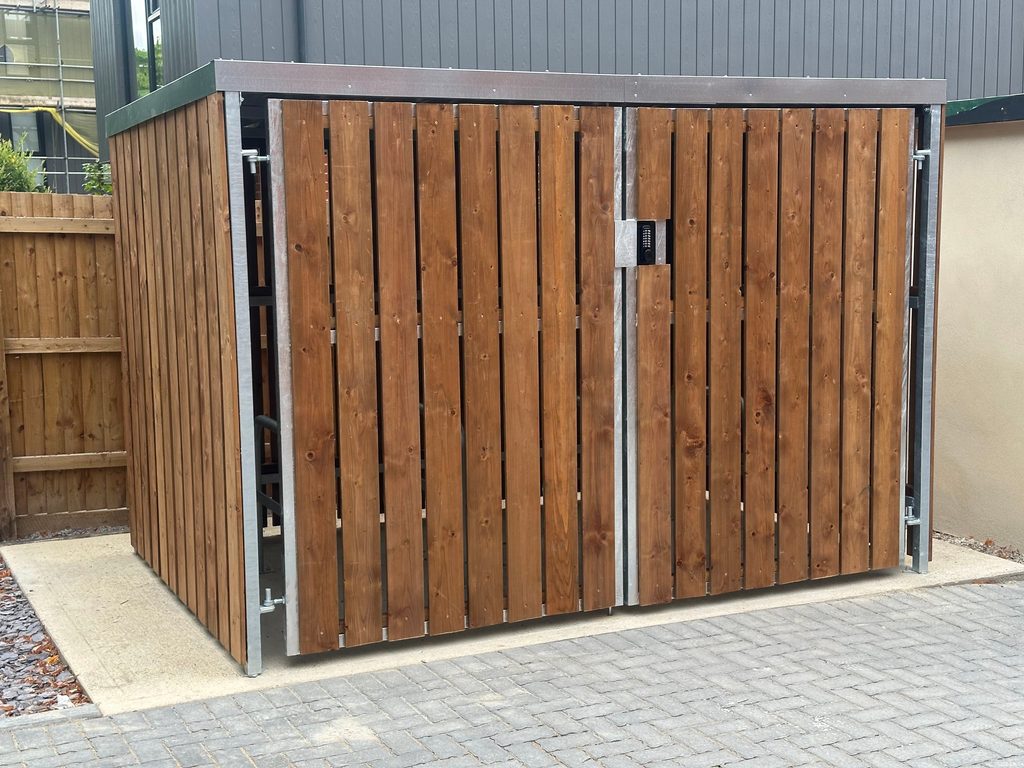
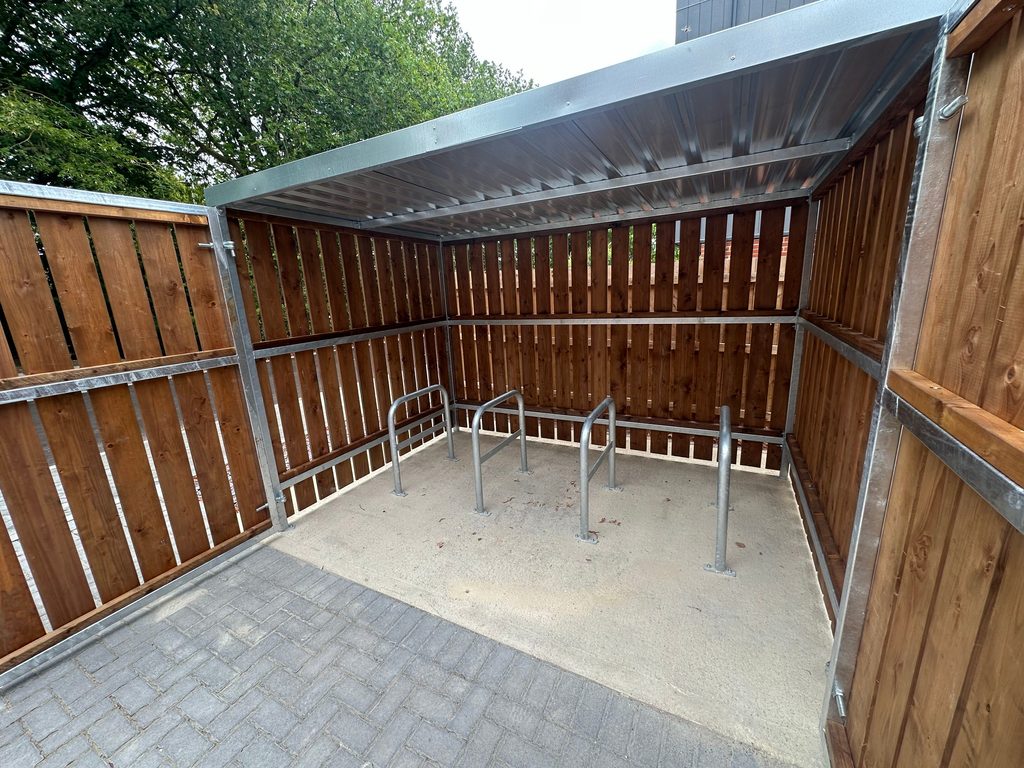
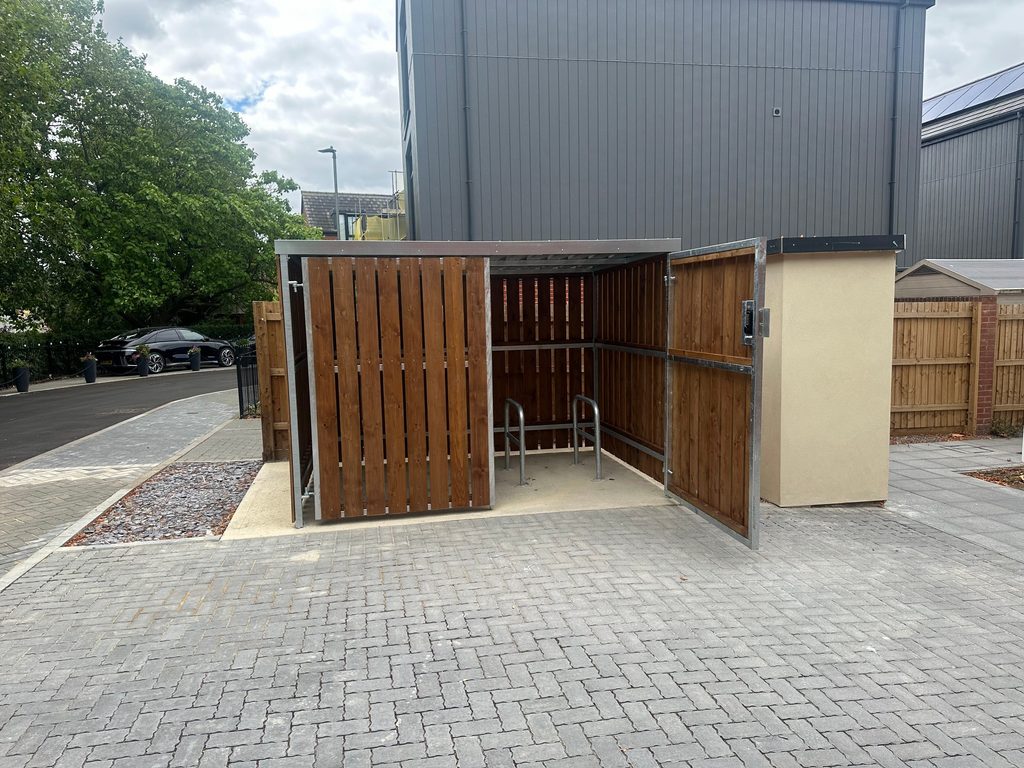
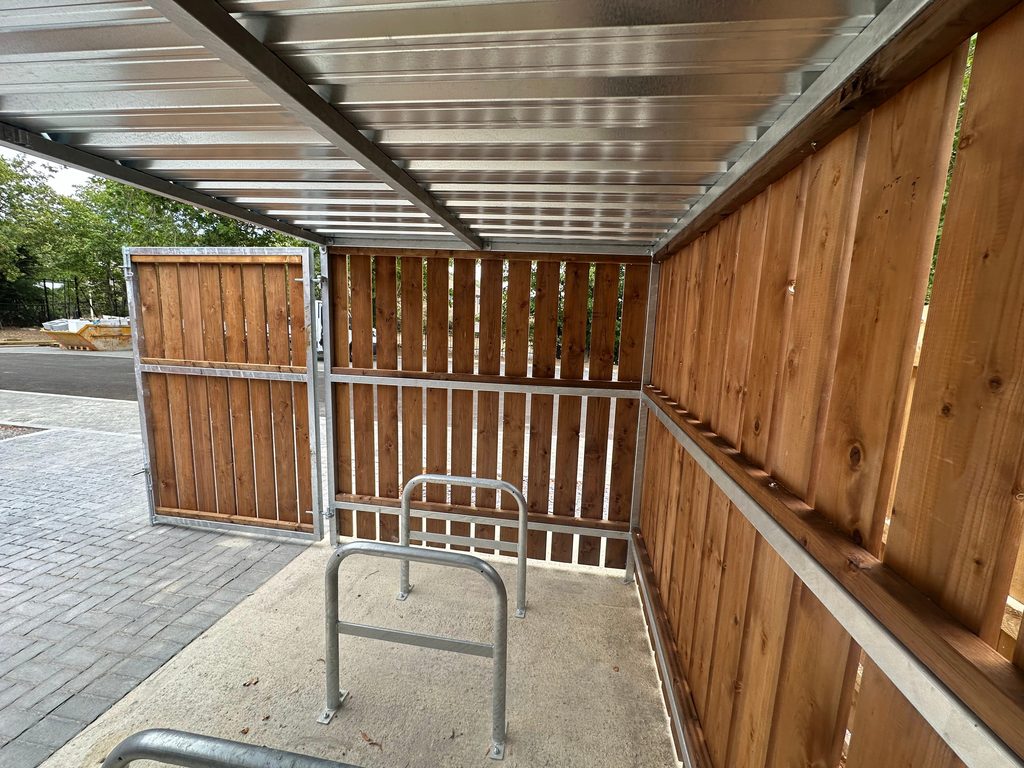
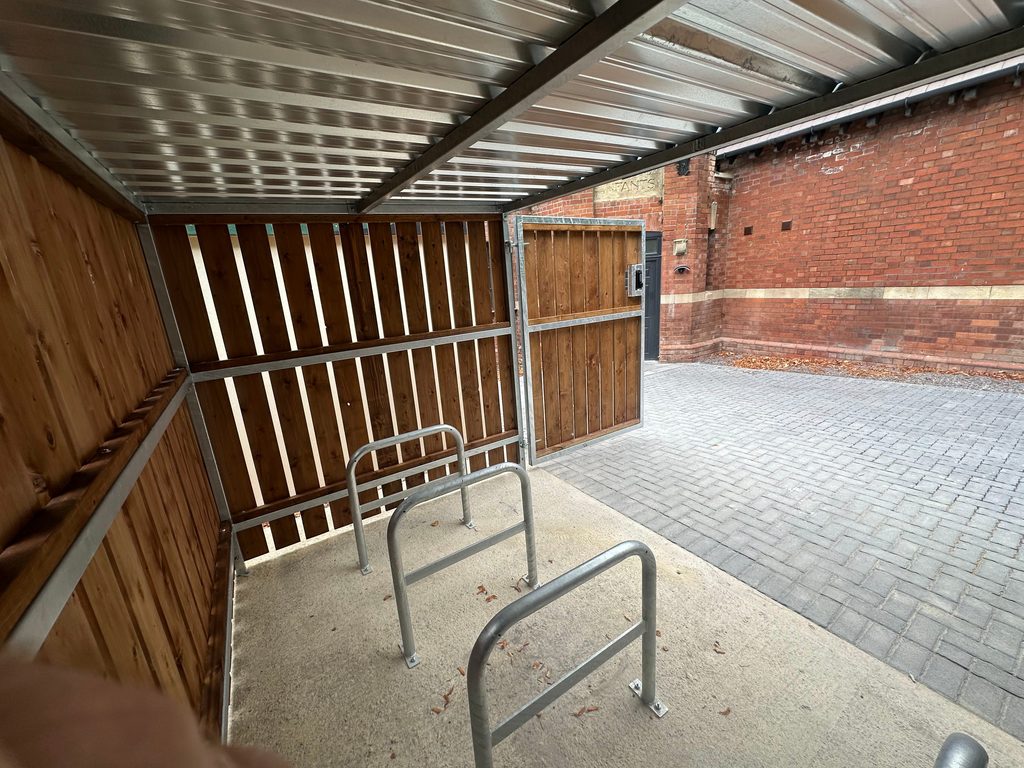
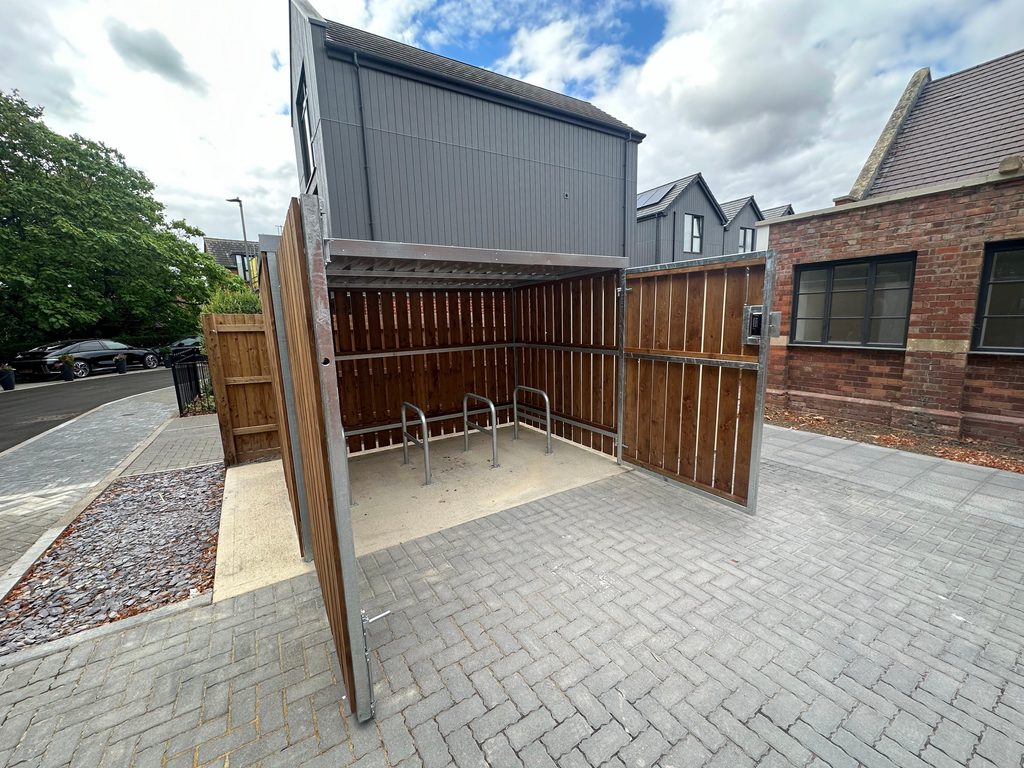
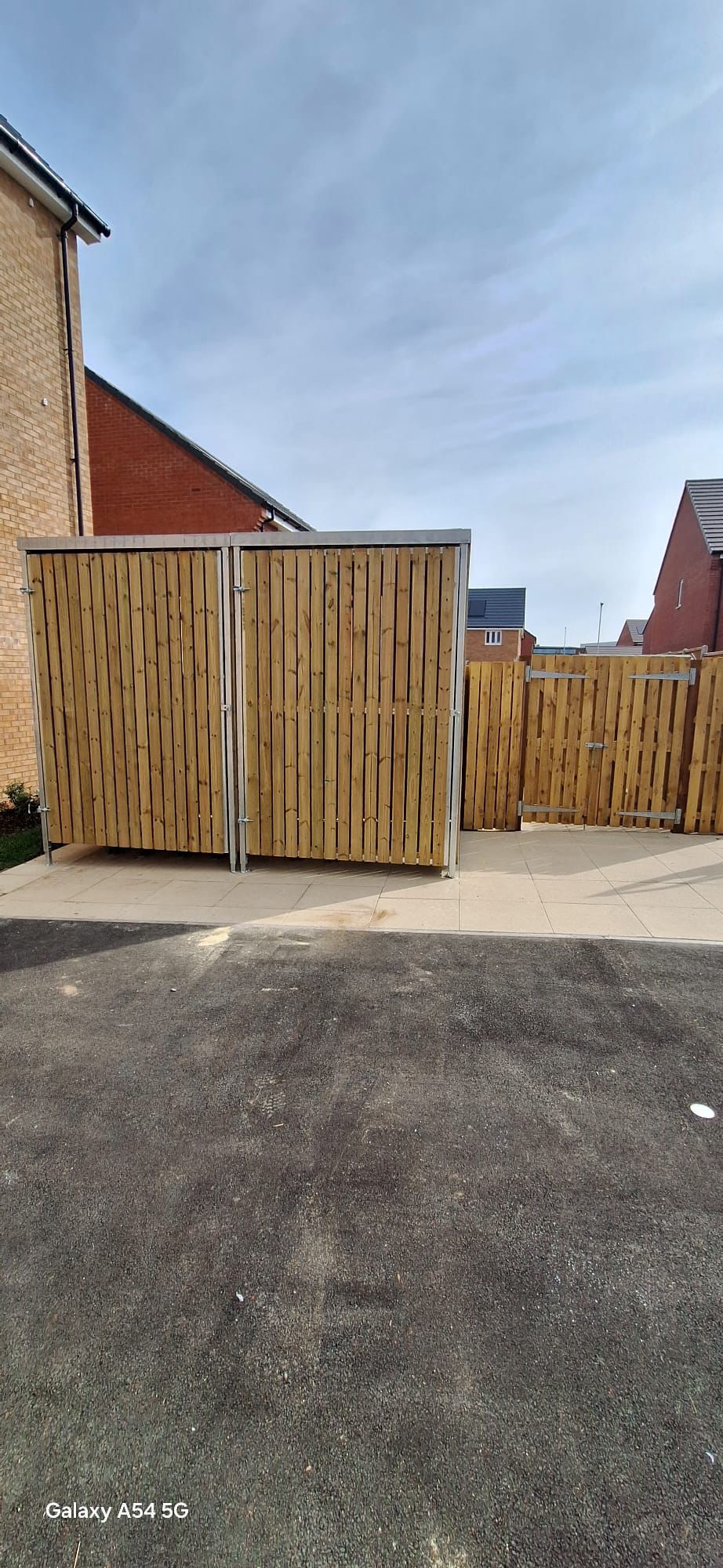
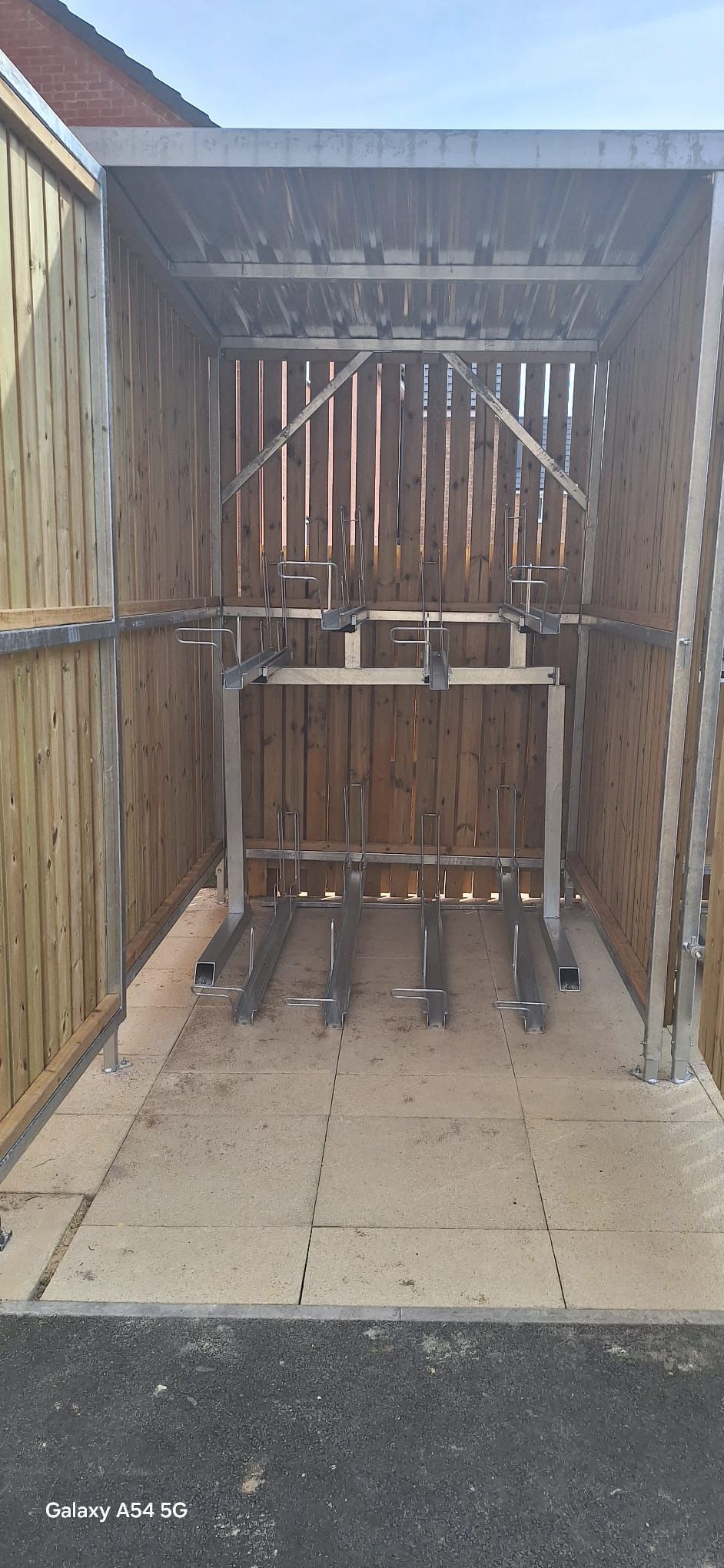
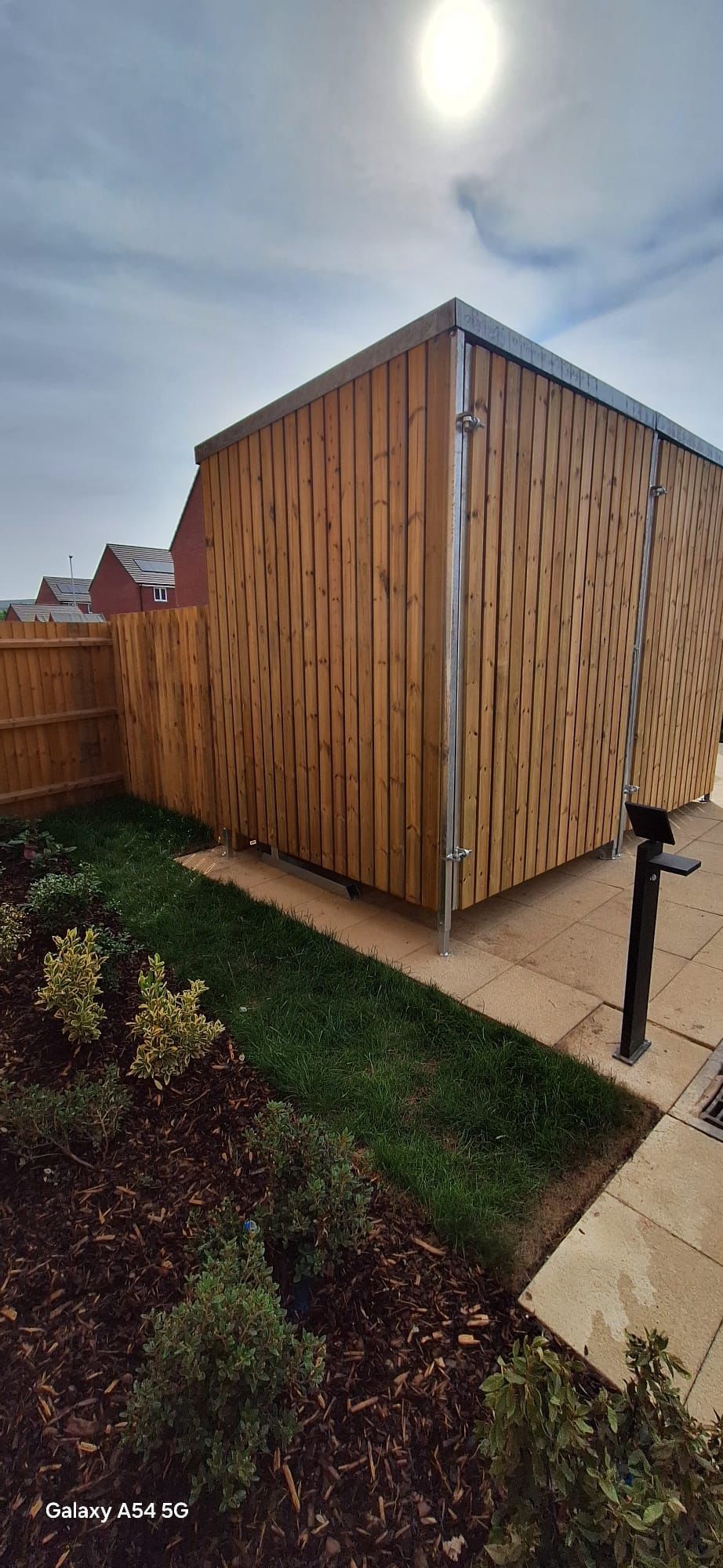
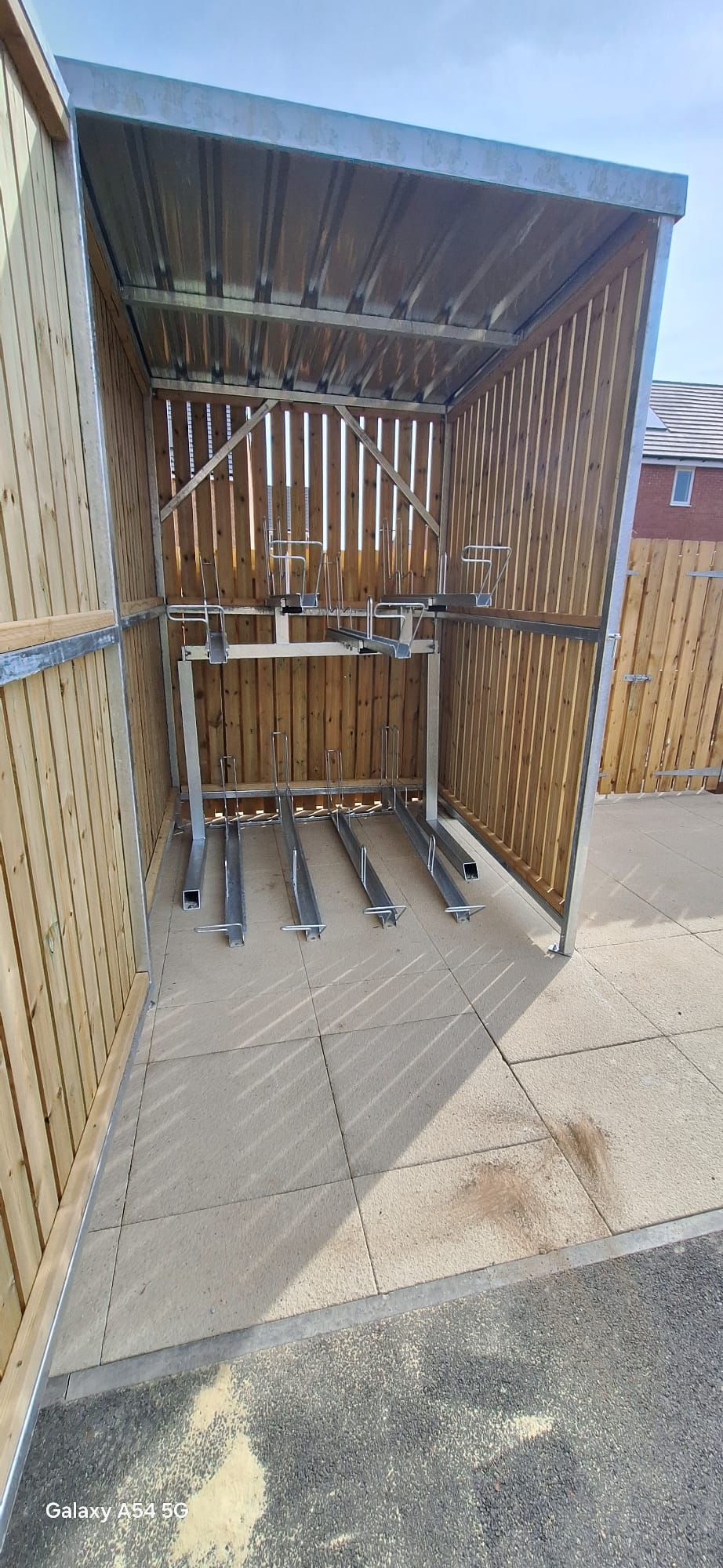
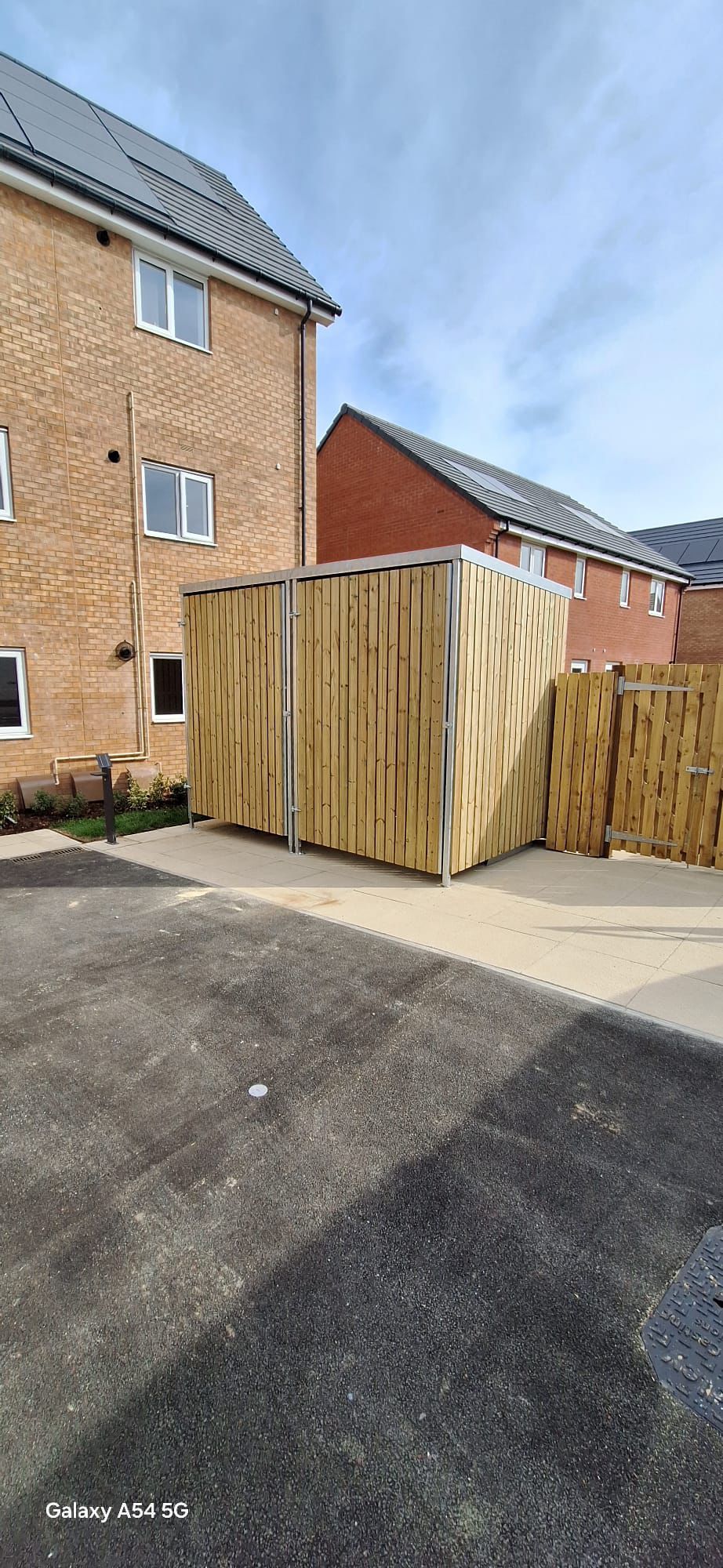
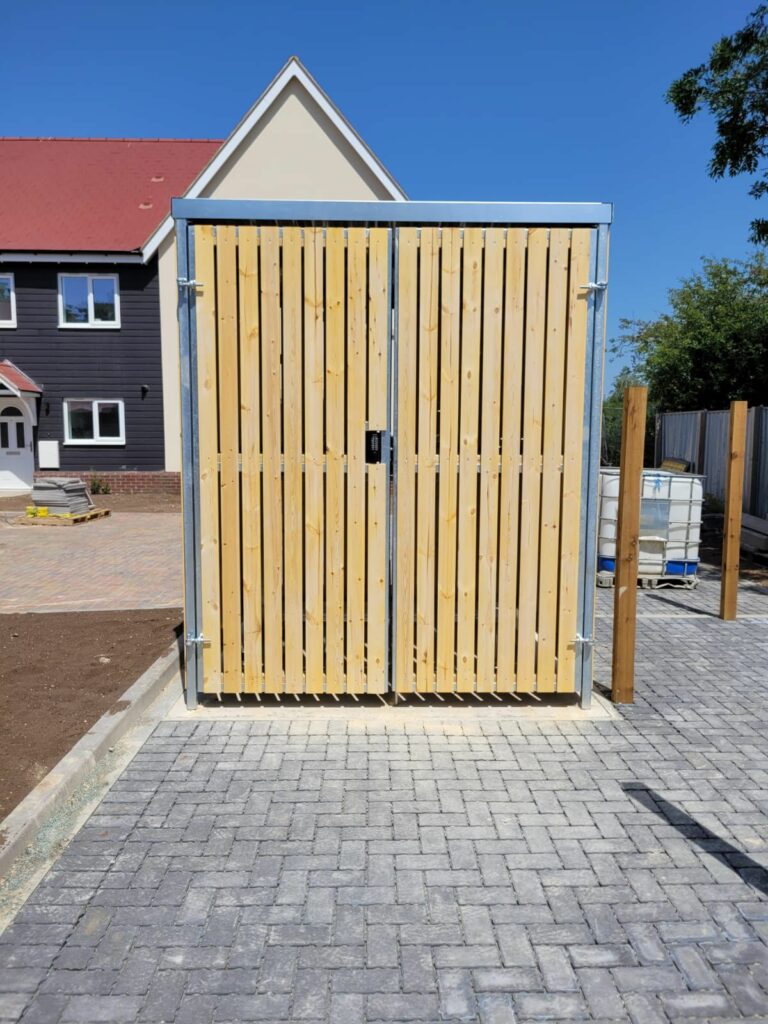
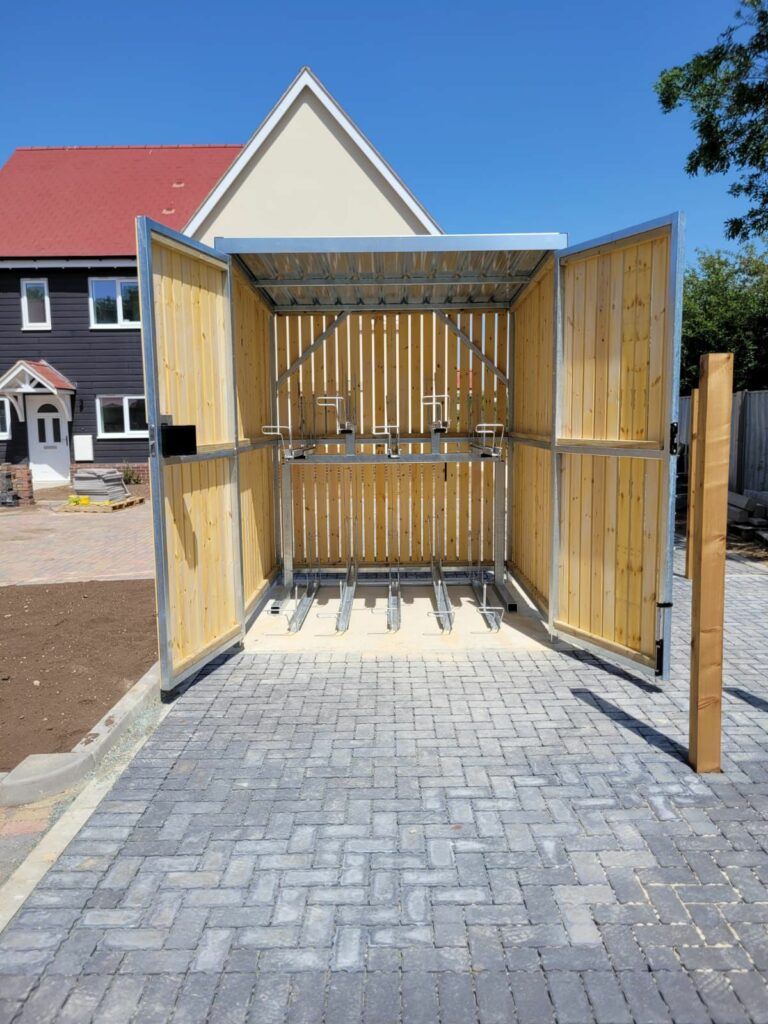
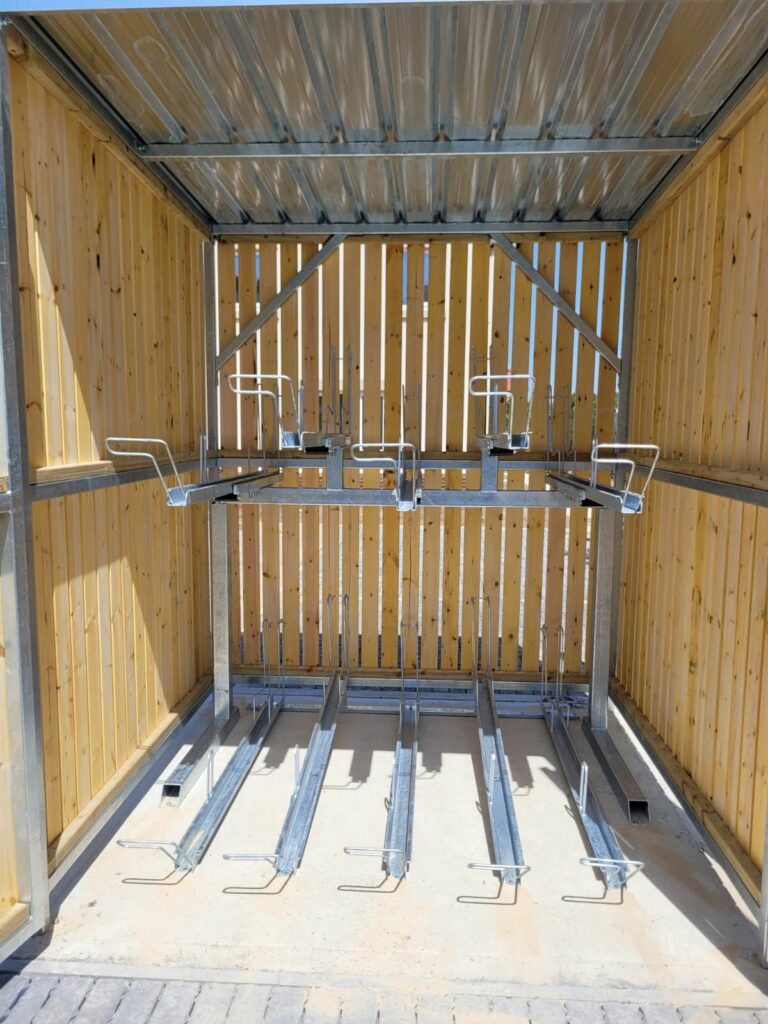
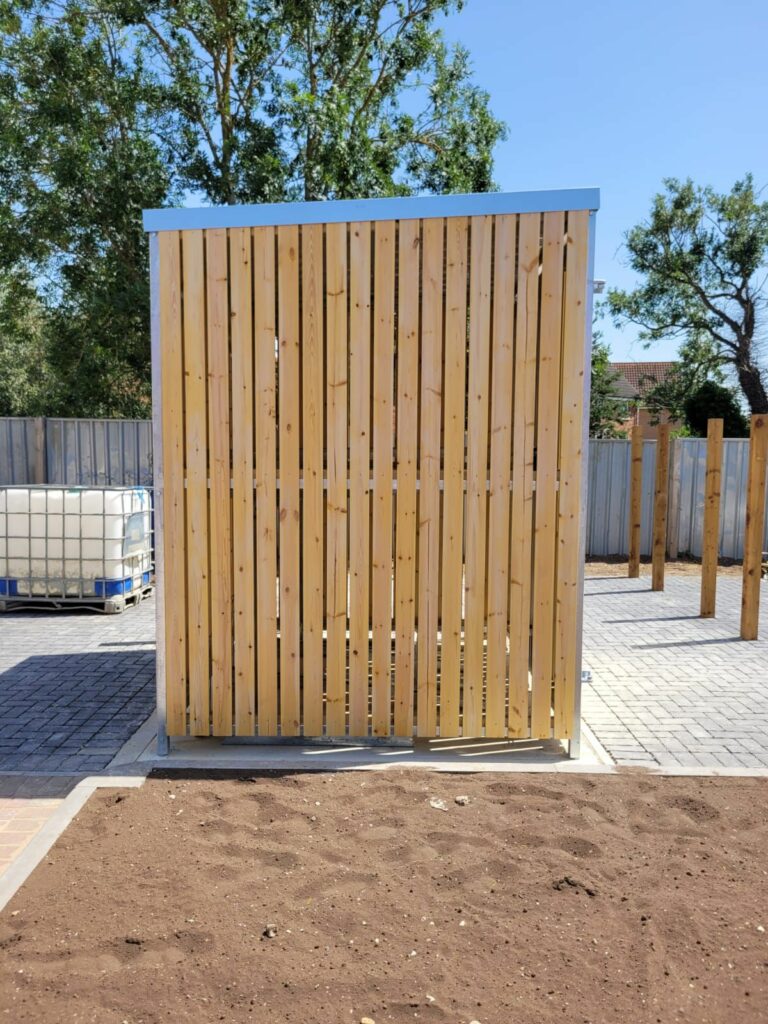
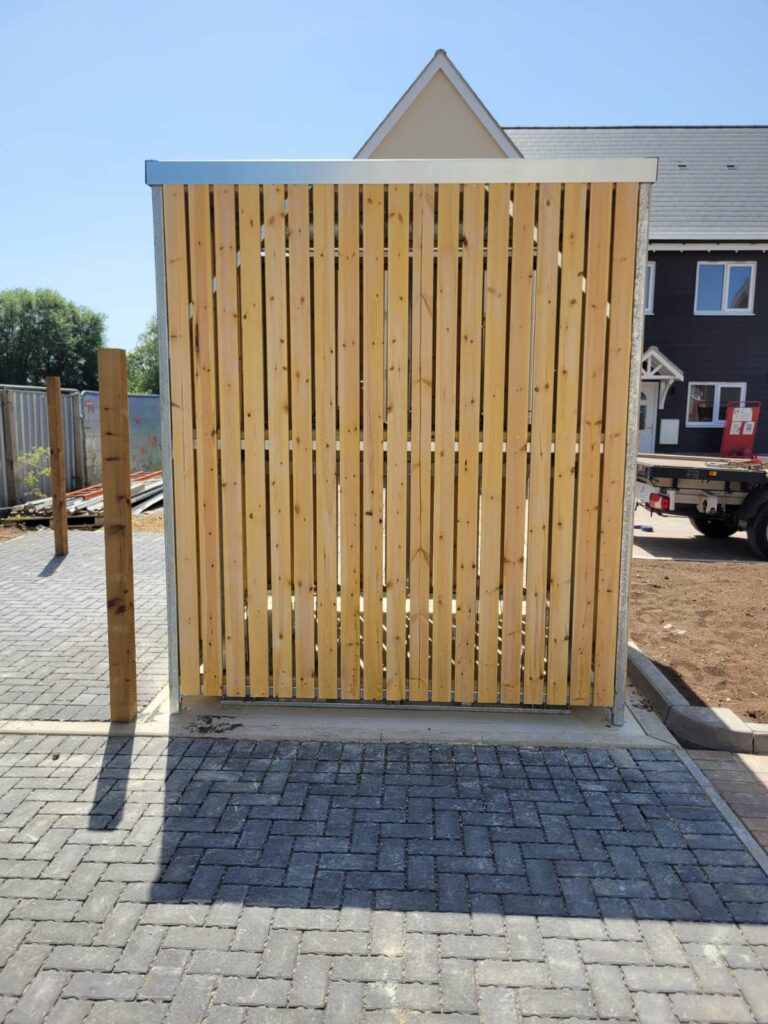
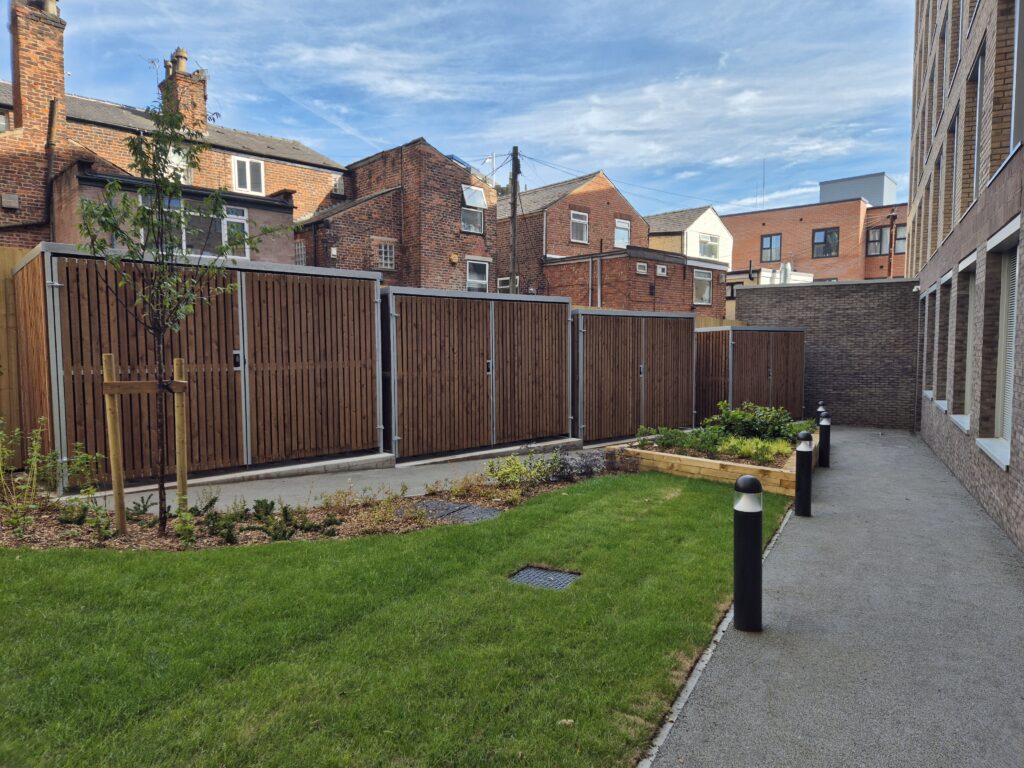
This project involved the supply of an 8 Space Trinity Timber Cycle Shelter, providing a secure, weather-protected and practical cycle storage solution. Measuring 3100mm wide x 2100mm deep x 2100mm high, the shelter combines a robust galvanised steel frame with PAR treated timber hit and miss cladding to all sides, creating a durable structure with a natural appearance suited to a range of commercial, residential and public-sector environments.
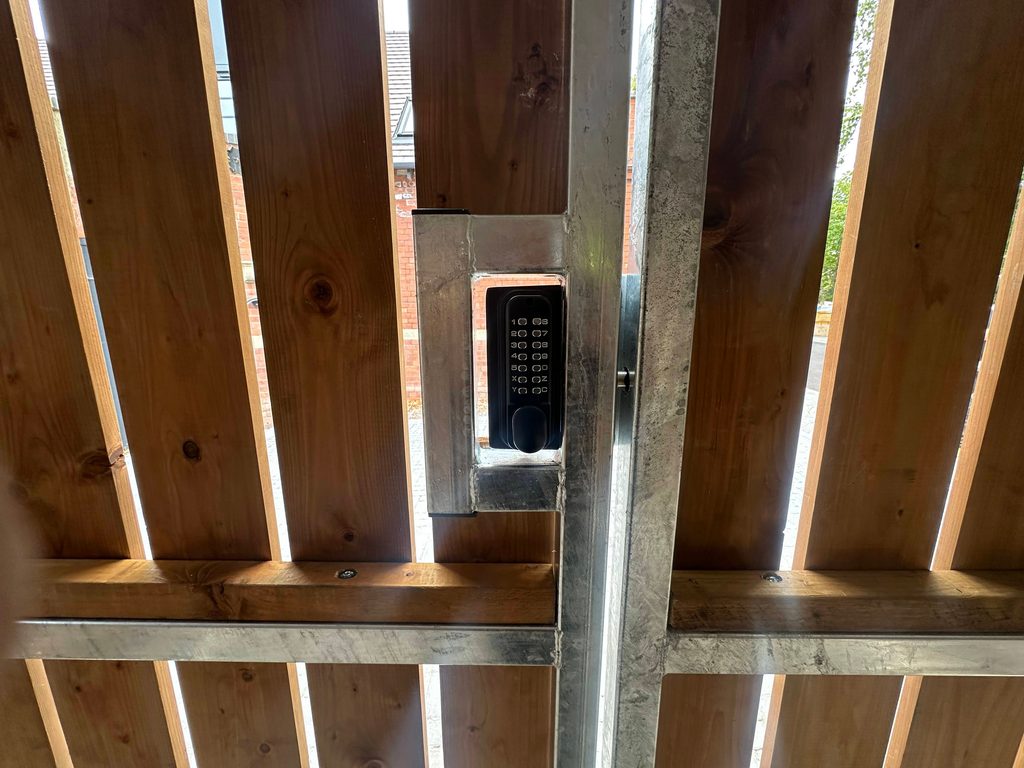
For additional security, the shelter features a double swing gate fitted with a digit combination lock and drop bolt, providing controlled access without the need for keys. A galvanised box profile roof, complete with front and side flashings, provides reliable protection, while the internal 4 Sheffield Standsaccommodate up to 8 bicycles, offering secure cycle parking for users.
This timber clad cycle shelter demonstrates how secure cycle parking can combine durability, controlled access and efficient bike storage within a compact footprint. The Trinity Timber Cycle Shelter is a practical choice for projects where both appearance and cycle security are priorities.
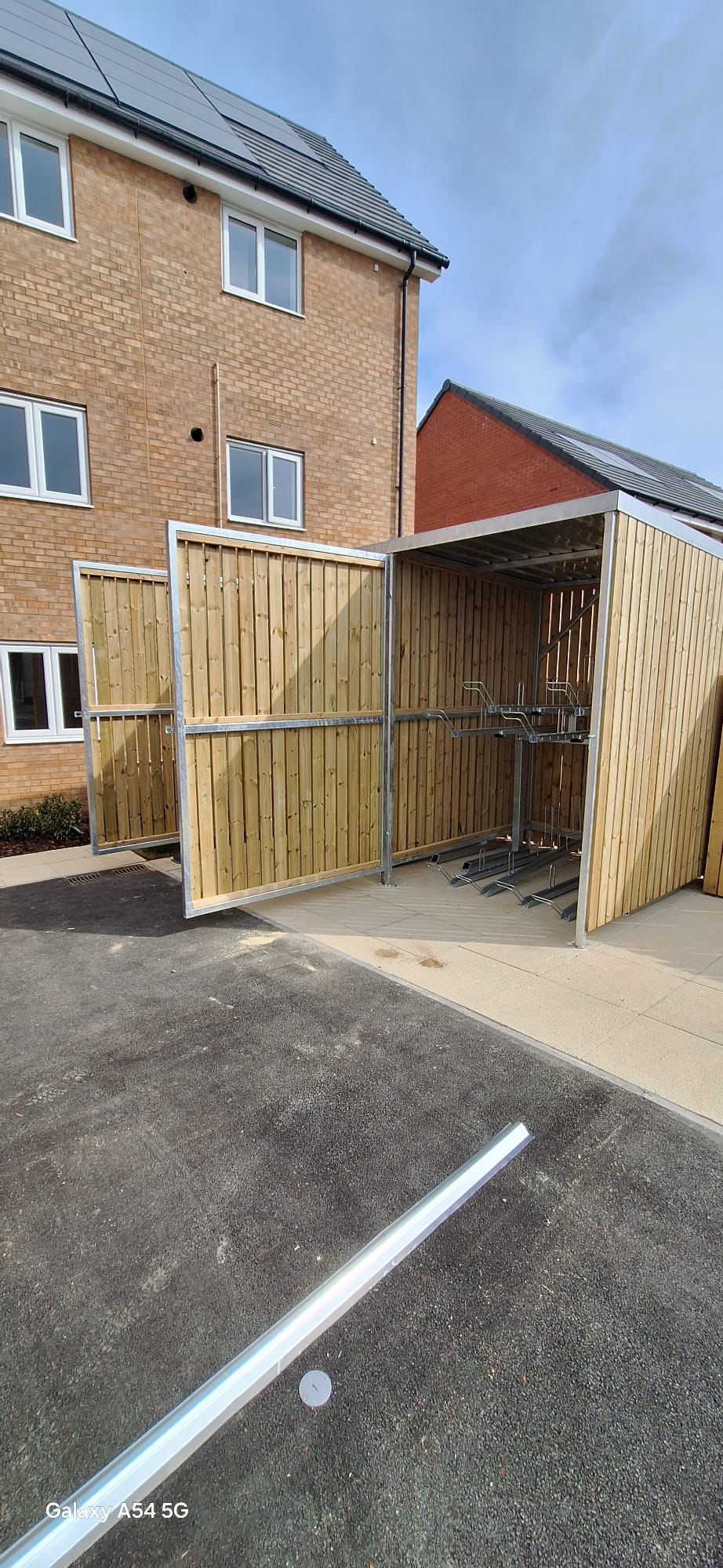
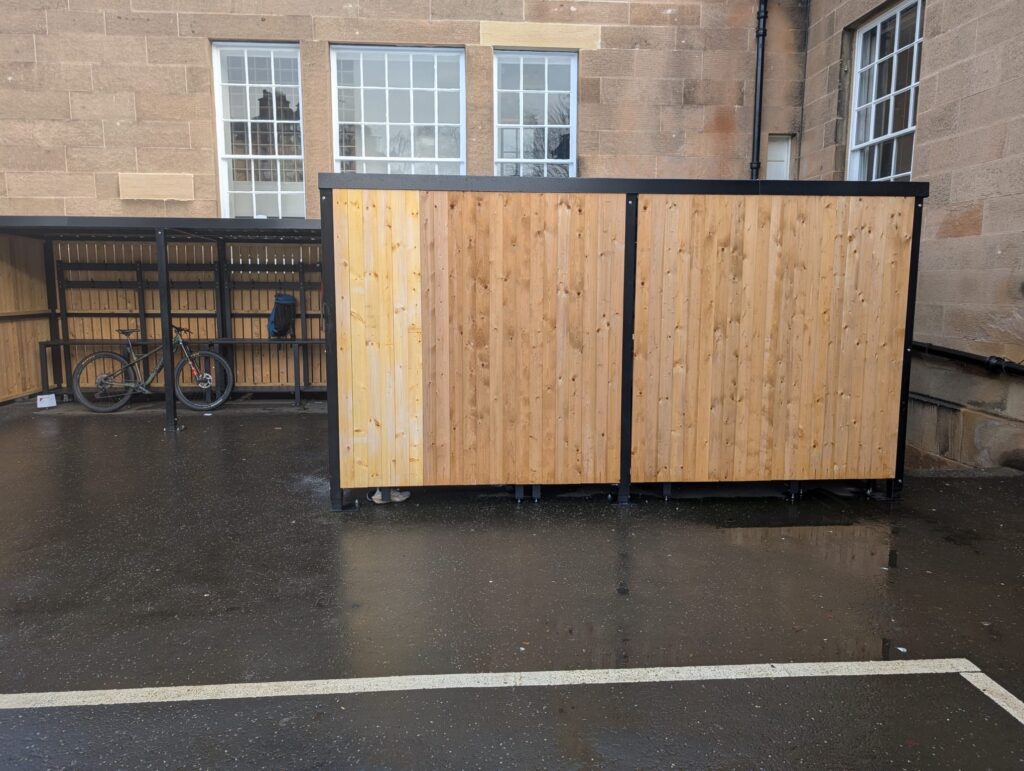
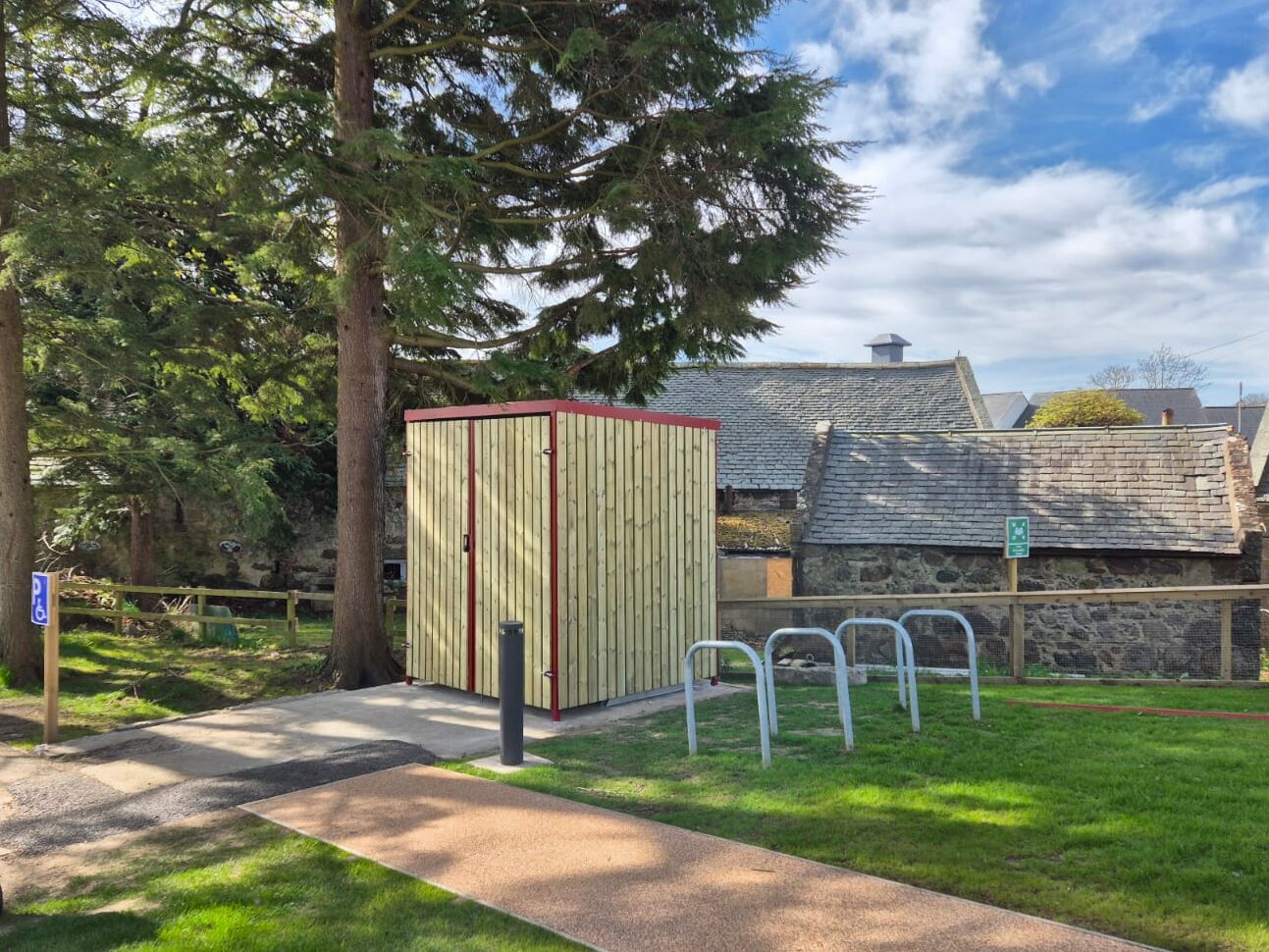
This project showcases the installation of an 8 Space Two Tier Timber Clad Cycle Shelter, providing a secure, space-efficient bicycle storage solution for sites where capacity and aesthetics are equally important. Designed to maximise cycle parking within a compact footprint, the shelter combines durable steel construction with high-quality timber cladding to create an attractive and long-lasting facility suitable for workplaces, schools, residential developments and public spaces.
Manufactured with a fully galvanised steel frame, the shelter features PAR treated timber hit-and-miss cladding on all sides, providing both weather protection and a natural finish that complements a wide range of environments. A single swing gate fitted with a hasp and staple offers controlled access, while galvanised box profile roof sheets and powder-coated flashings ensure reliable protection from the elements and minimal maintenance throughout the product’s lifespan.
Inside, the shelter is fitted with galvanised two tier cycle racks, delivering secure parking for up to eight bicycles while significantly reducing the ground space required compared with traditional Sheffield stands. Supplied in kit form for straightforward on-site assembly, the shelter offers a practical and cost-effective solution for organisations looking to increase secure cycle parking capacity and encourage sustainable travel. This installation demonstrates how timber clad cycle shelters can provide an ideal balance of security, durability and visual appeal while meeting the growing demand for high-quality bicycle storage across the UK.
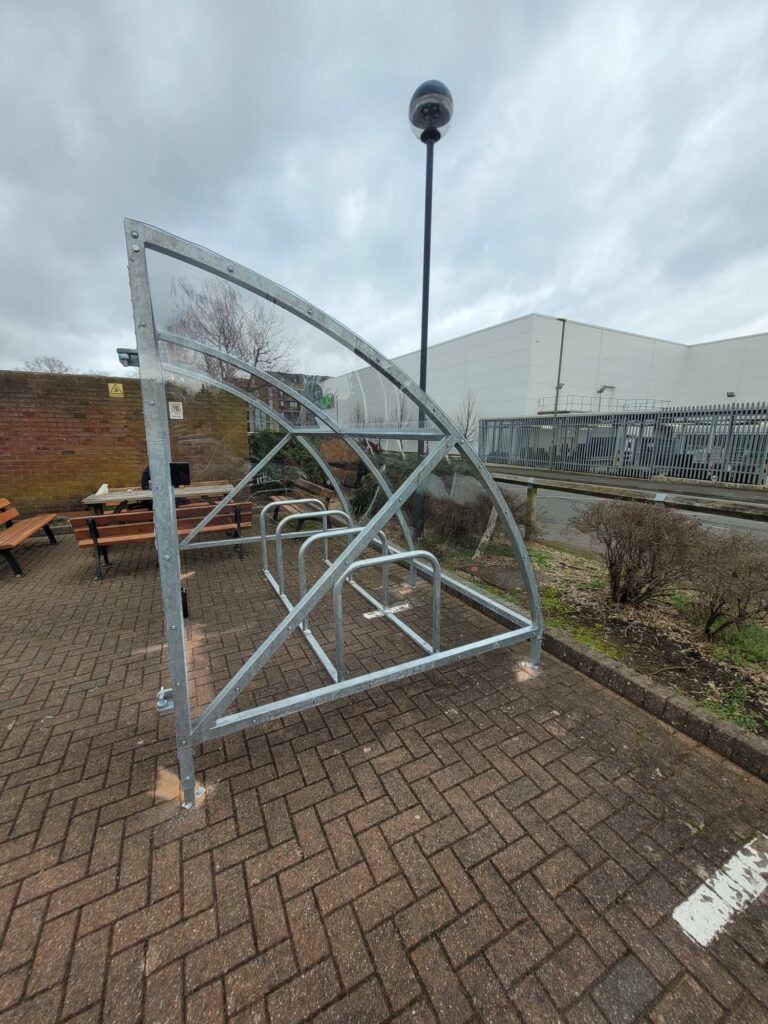
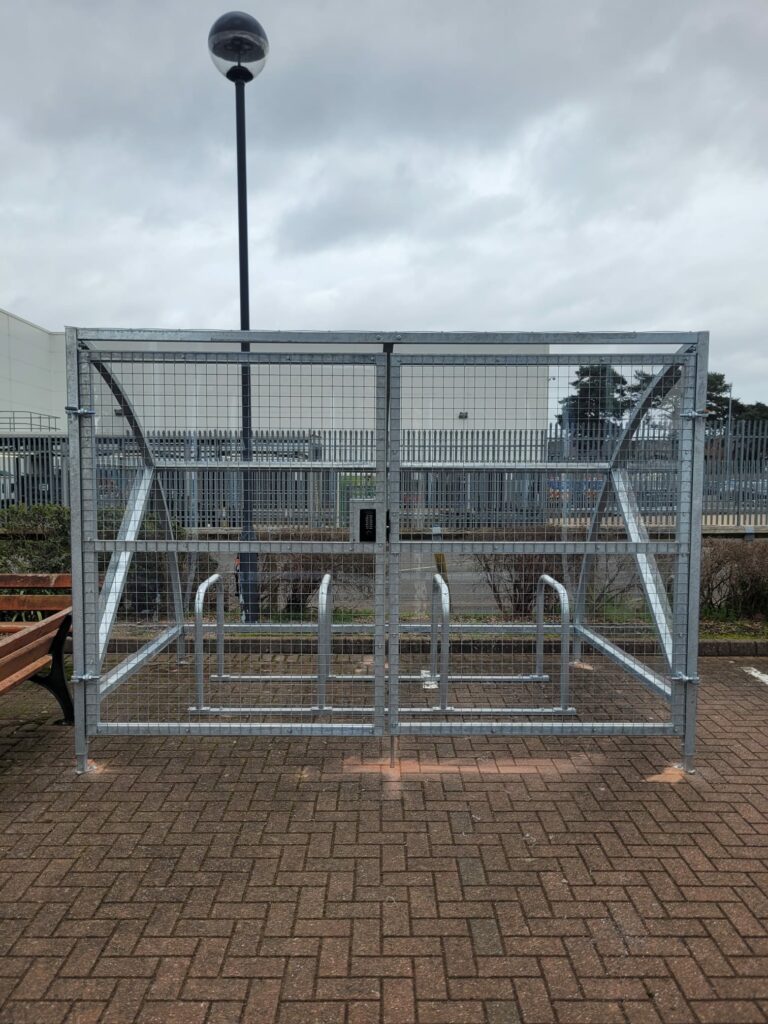
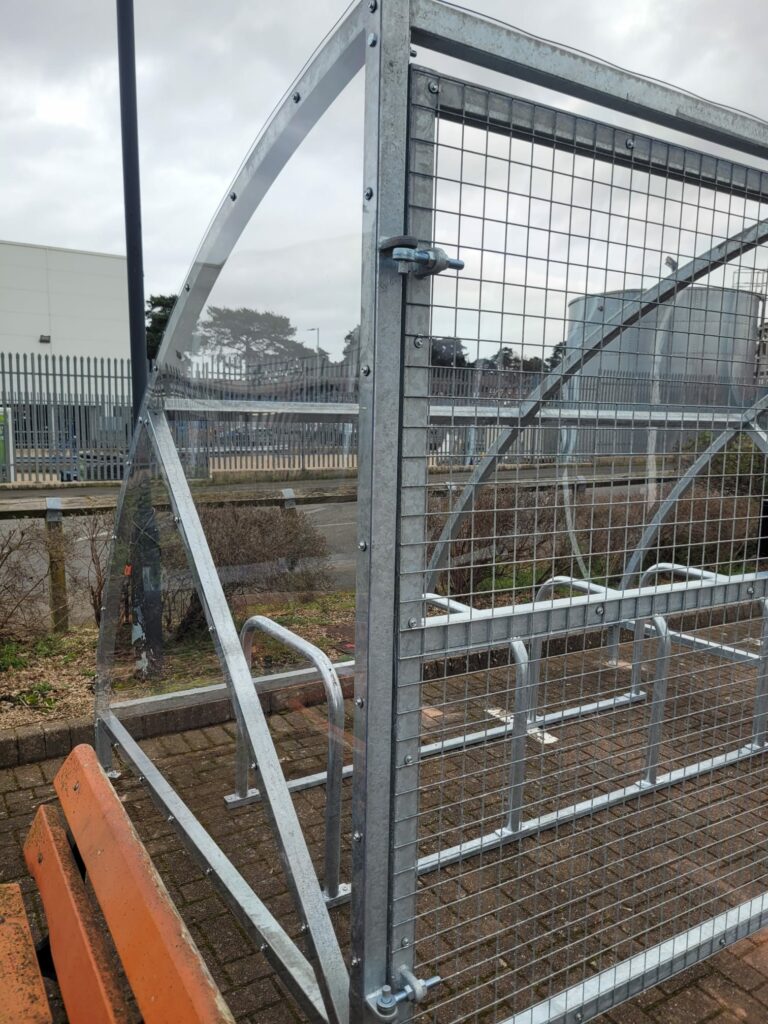
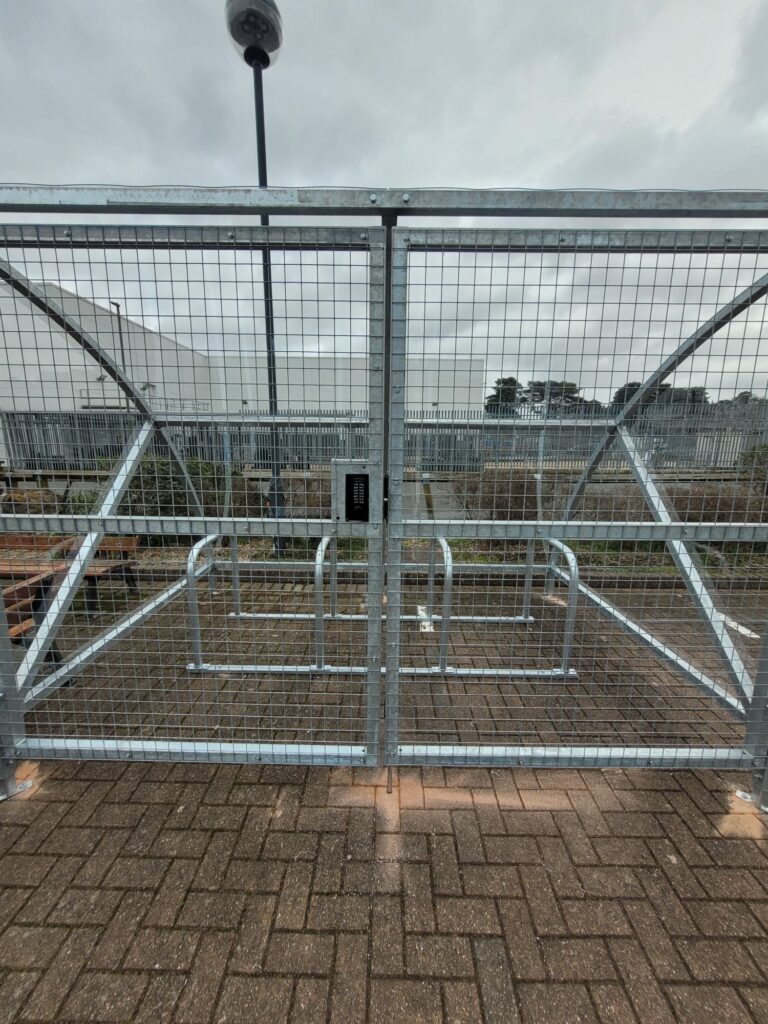
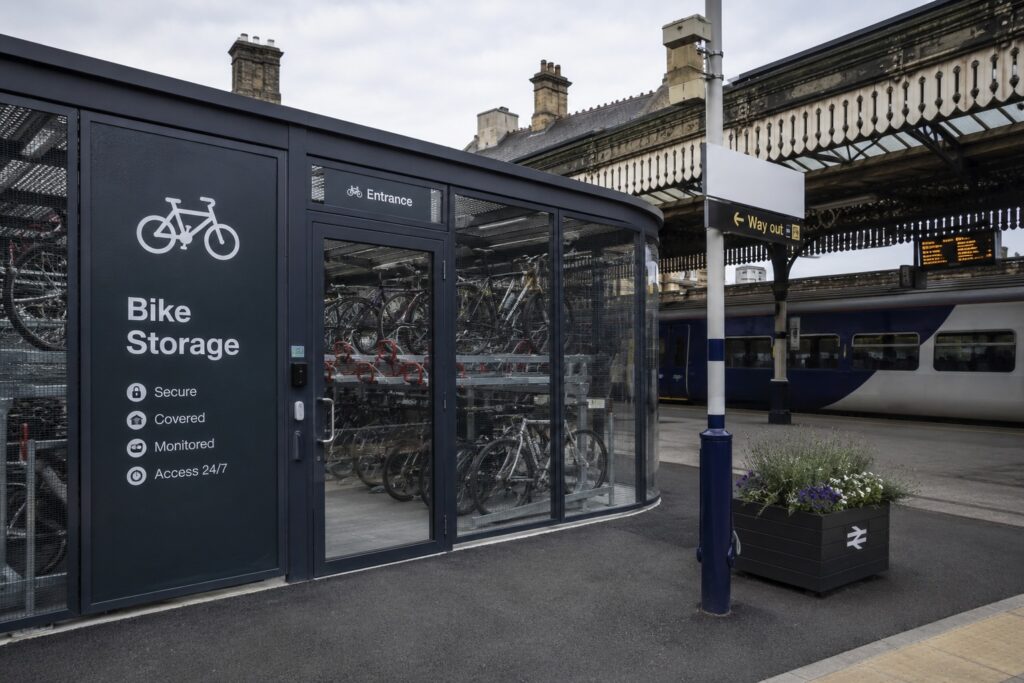
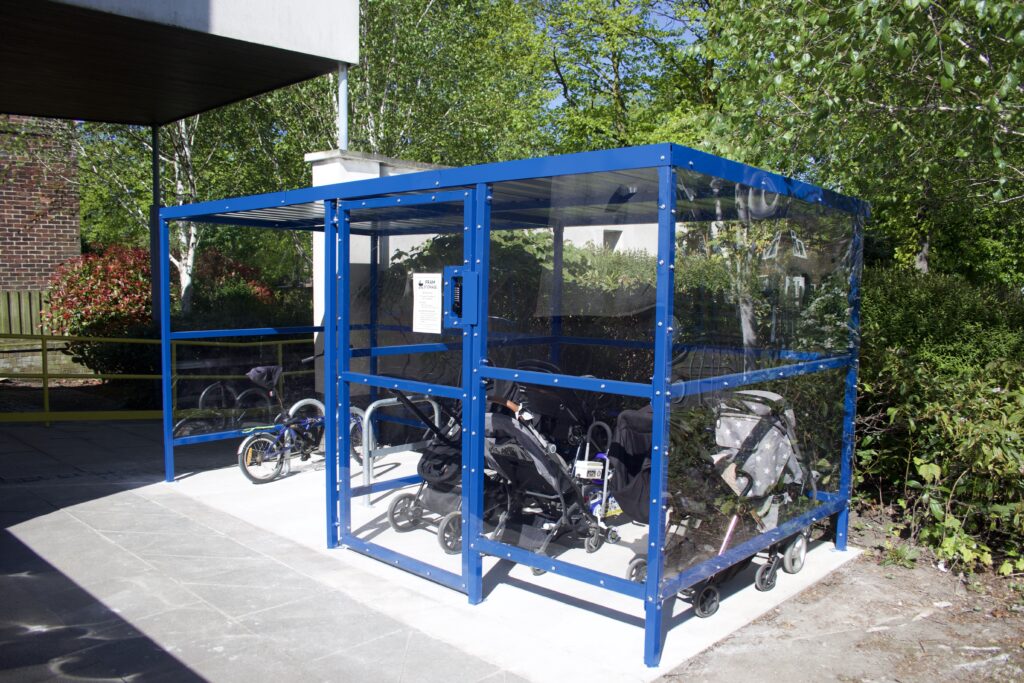
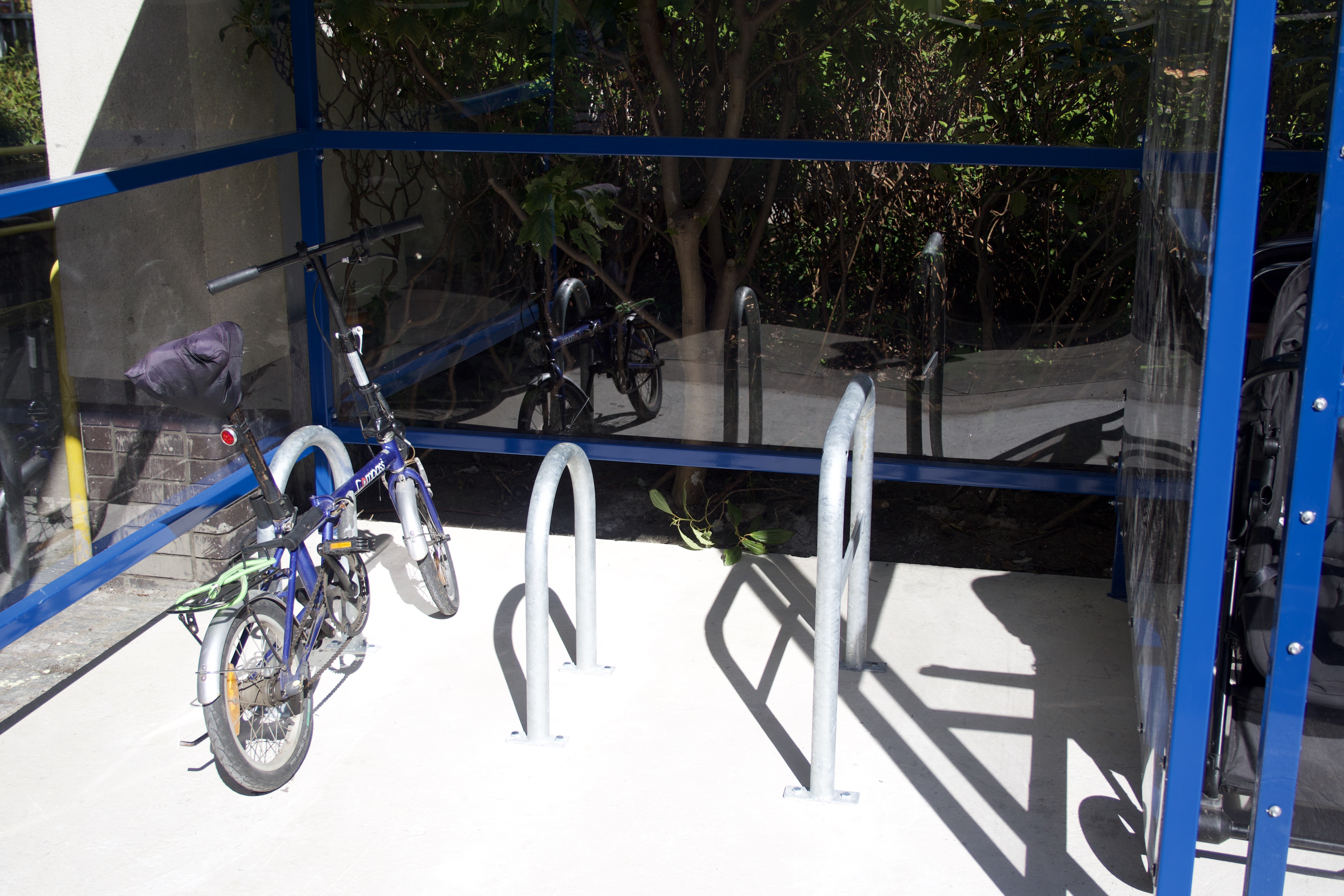
The installation of this bespoke 8 Space Canal Curve Cycle Shelter provides a secure, durable and visually appealing cycle parking solution designed to encourage active travel while protecting bicycles from the elements. Manufactured with a robust galvanised steel frame, the shelter measures 3100mm wide, 2100mm deep and 2100mm high, offering reliable long-term performance with minimal maintenance requirements.
Designed to maximise security without compromising visibility, the shelter features clear PETG cladding to the rear and side elevations, creating a bright and welcoming cycle storage area while providing excellent weather protection. Access is controlled through a galvanised mesh-clad double swing gate complete with a hasp and staple locking system, allowing the shelter to be secured when not in use.
Internally, four galvanised Sheffield cycle hoops provide secure parking for up to eight bicycles, giving cyclists multiple locking points for improved security. Supplied in kit form, the shelter was professionally assembled and installed on site, including the construction of the galvanised steel framework, installation and adjustment of the secure mesh gates, fitting of the PETG cladding panels and installation of the cycle stands.
The Canal Curve Cycle Shelter is an ideal choice for schools, workplaces, residential developments and public sector organisations looking for a high-quality covered bike shelter that combines secure cycle parking, weather protection and long-lasting galvanised construction. Its contemporary curved roof design, durable materials and practical layout make it an effective solution for increasing cycling facilities while supporting sustainable transport initiatives.
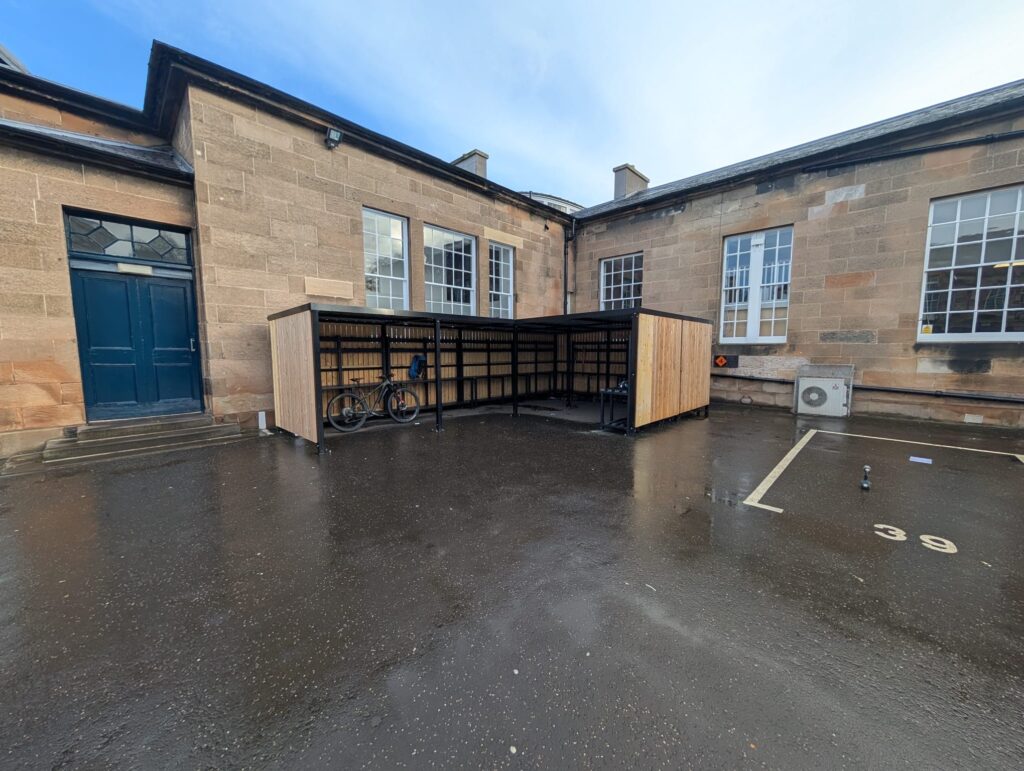
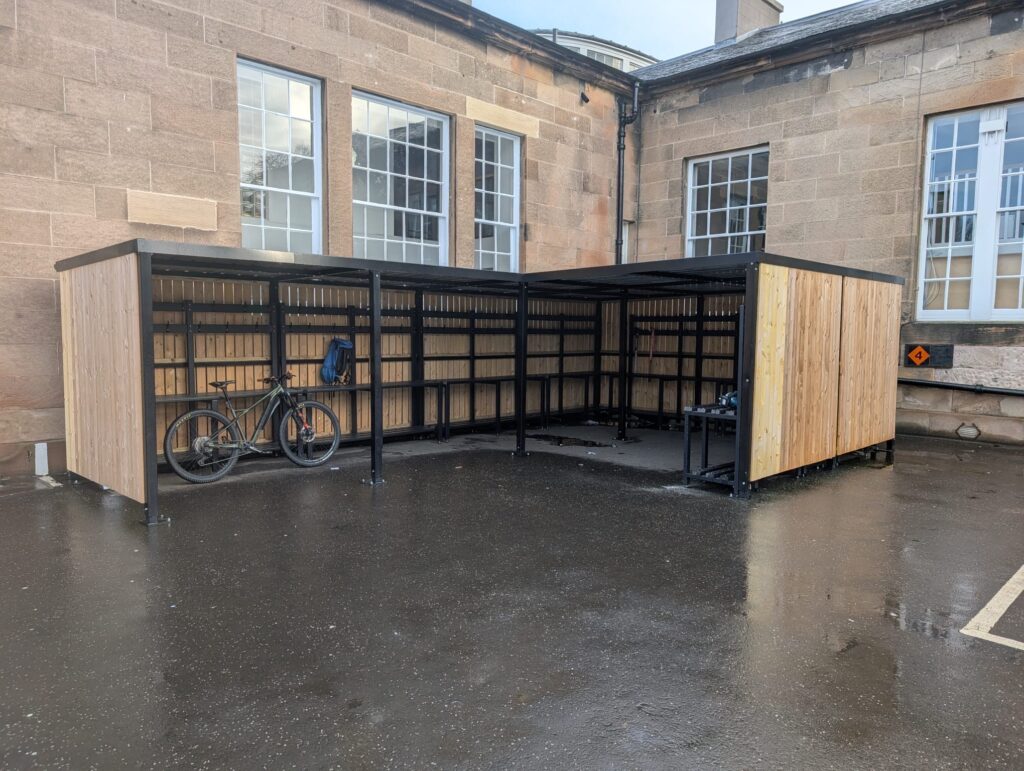
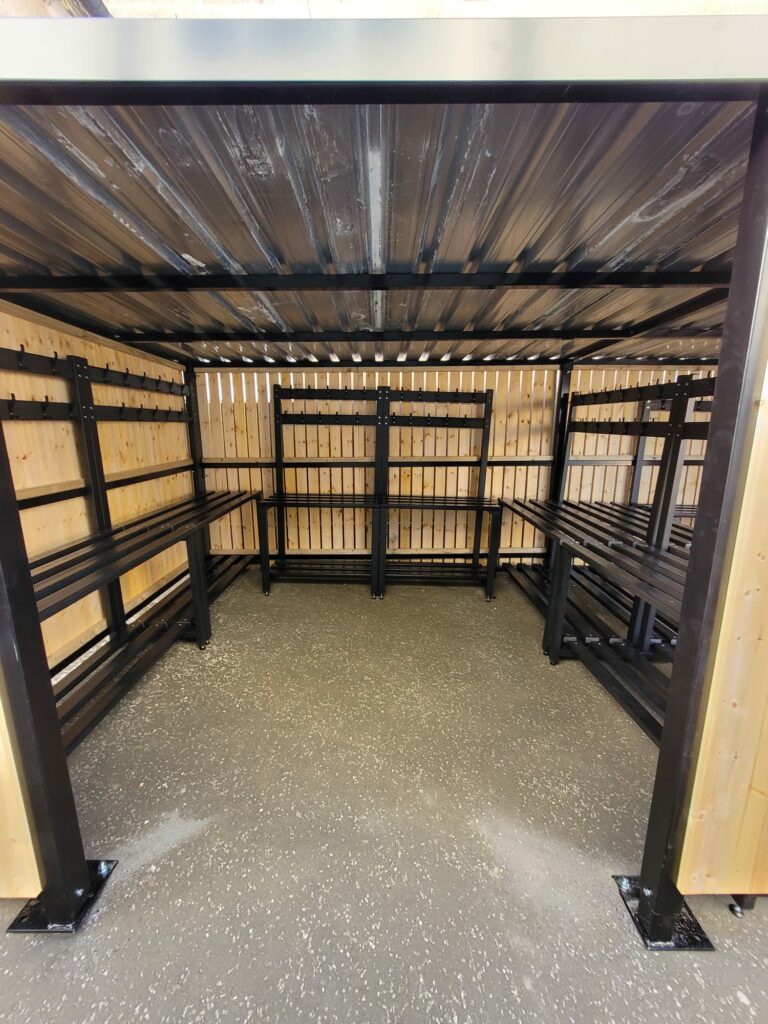
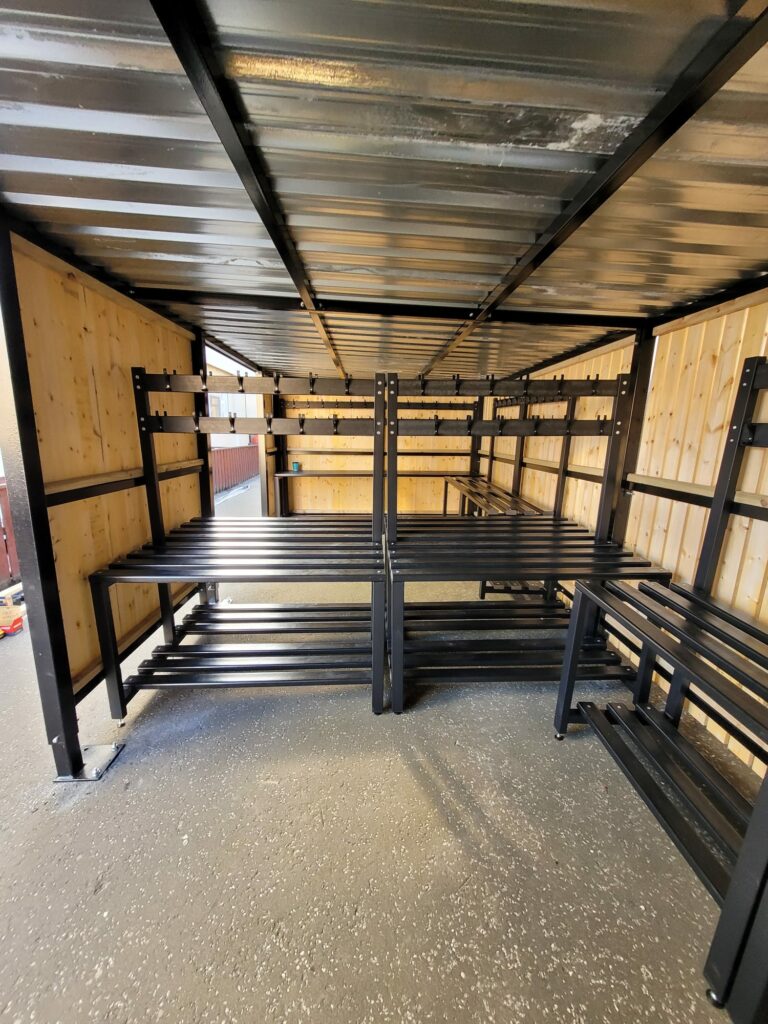
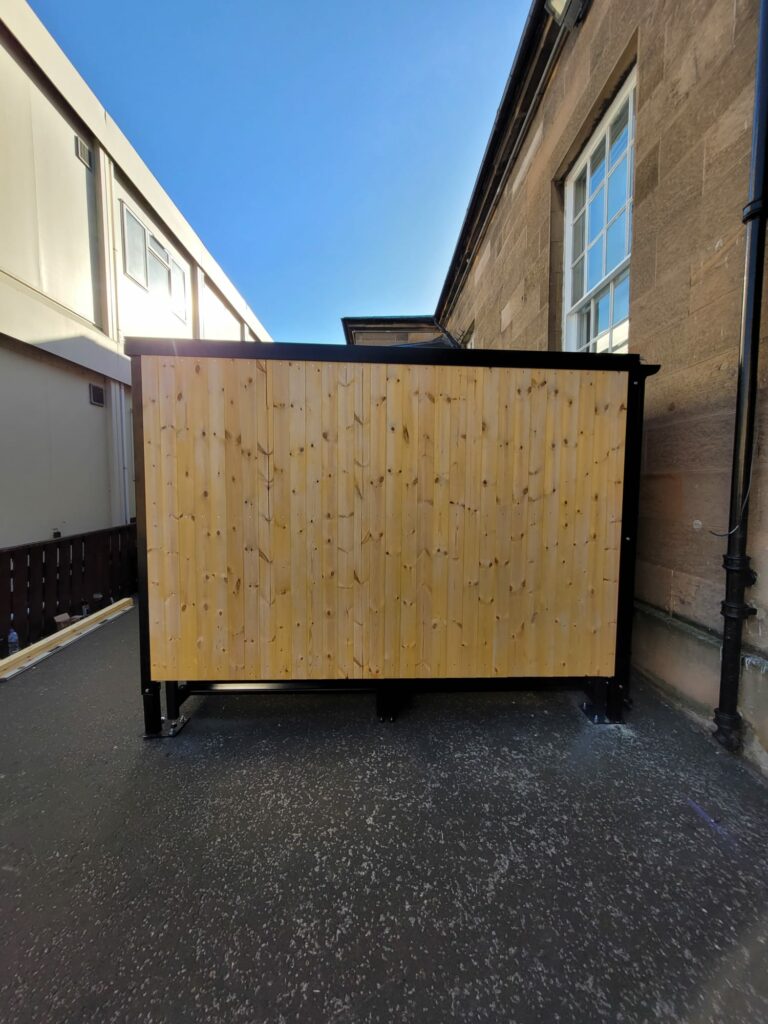
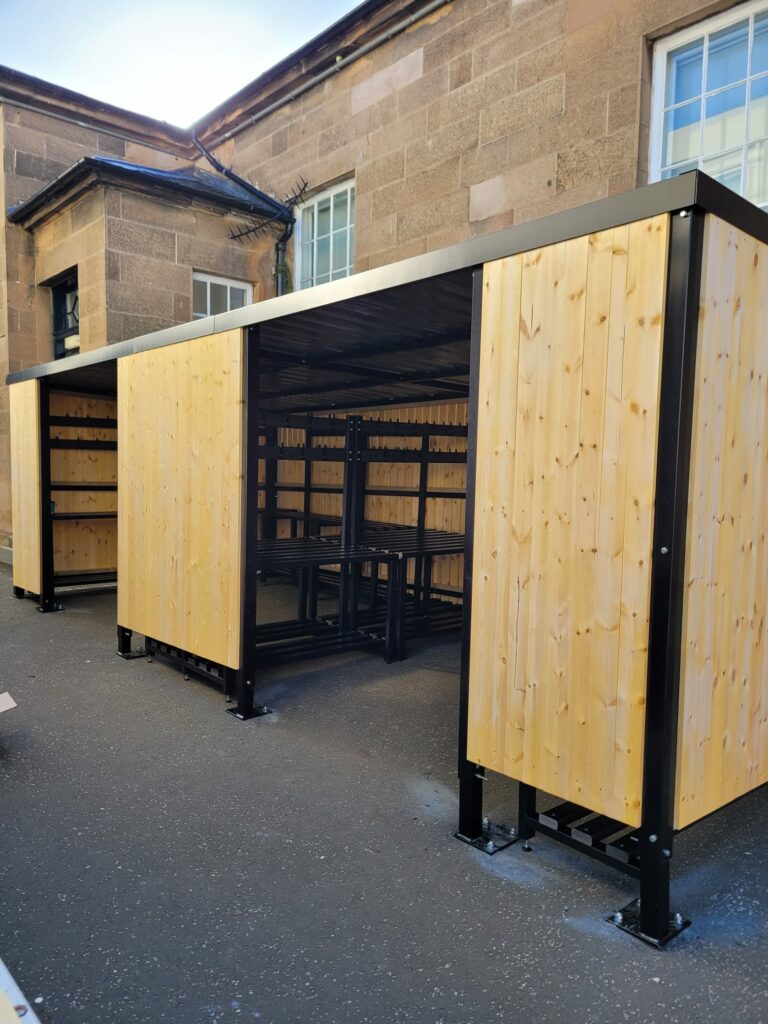
We recently delivered a bespoke Trinity Timber Clad Shelter solution designed to provide durable, weather-protected outdoor storage and welfare facilities for a commercial client. The project required two purpose-built structures that combined a contemporary appearance with long-term durability, while offering practical internal storage and seating for day-to-day operational use.
The first shelter was manufactured as a spacious open-fronted timber clad structure measuring 7000mm wide by 3000mm deep. Constructed using a fully galvanised and powder coated steel frame finished in RAL 9005 Black, the shelter was clad with pressure-treated PAR timber hit-and-miss boarding to the rear and side elevations, creating a natural finish that complements a wide range of commercial and industrial environments. The open frontage provides unrestricted access while galvanised box profile roof sheets and powder coated flashings deliver reliable weather protection. Internally, the shelter was fitted with seven perimeter benches together with two centrally positioned double-sided benches, creating generous seating capacity for staff.
Alongside this, we supplied a bespoke L-shaped timber clad shelter designed to maximise the available footprint while creating a functional storage space. Manufactured with the same galvanised and powder coated steel framework and timber cladding specification, the shelter incorporated eight heavy-duty bench style shelving units, each featuring two storage shelves and additional structural crossbars to allow the client to install hanging hooks for equipment and PPE. The open-fronted design ensures quick and convenient access while maintaining a clean, modern appearance.
Both shelters were supplied in kit form for efficient on-site assembly, reducing transportation costs while allowing the structures to be installed quickly. Combining galvanised steel construction, pressure-treated timber cladding and high-quality roofing materials provides a low-maintenance solution built to withstand demanding outdoor environments for many years.
This project demonstrates Secure Cycle Store’s ability to design and manufacture fully bespoke timber clad shelters tailored to individual customer requirements. Whether providing covered seating, equipment storage, welfare facilities or multi-purpose outdoor spaces, every shelter is manufactured to exact specifications using robust materials and finishes that deliver long-term performance, security and visual appeal.
The 10 Space Two Tier Timber Clad Cycle Shelter provides a secure, space-efficient cycle parking solution designed for schools, workplaces, residential developments and public sector environments where security, durability and appearance are equally important. Measuring 2250mm wide, 2100mm deep and 2700mm high, the shelter combines a heavy-duty galvanised steel framework with attractive PAR treated hit-and-miss timber cladding on all sides, creating a robust cycle storage facility that blends naturally into its surroundings while offering long-term protection against the elements.
This installation featured galvanised V1 non-gas assisted two-tier cycle racks, delivering secure parking for up to 10 bicycles within a compact footprint. Access is provided through a timber-clad double swing gate fitted with a digital combination lock and drop bolt, while galvanised box profile roof sheets and matching flashings provide reliable weather protection and a clean, professional finish. Supplied in kit form for efficient on-site assembly, the shelter was installed onto a prepared level concrete base, with the galvanised steel structure erected before the timber cladding, roof system, gates and internal cycle racks were fitted. Once installation was complete, the locking mechanisms were fully checked, the cycle parking system secured in position and the work area cleared, delivering a high-quality, fully operational cycle shelter in a single continuous installation.
Designed to maximise cycle parking capacity without increasing the overall footprint, the 10 Space Two Tier Timber Clad Cycle Shelter offers an ideal solution for organisations looking to encourage cycling while protecting bicycles from theft and adverse weather. Combining durable galvanised steel construction, secure access control and premium timber cladding, it provides an attractive, low-maintenance cycle storage solution that enhances any outdoor environment while supporting sustainable travel and long-term active transport initiatives.
Does Where You Store Your Bike Actually Affect Your Insurance?
You’ve invested in a quality bike, you’ve got a Sold Secure Gold lock, you’re even covered by a specialist bike insurance policy. Job done, right?
Not just yet. There’s one question most cyclists never think to ask until it’s too late: does where you store your bike actually affect whether your insurance claim is valid? The short answer is yes, it matters more than most people realise.
Whether you’re parking up at home, leaving your bike at work all day, or locking up at the cafe, how and where your bike is stored matters, both for preventing theft in the first place and for making sure your cover holds up when something goes wrong.
When you make a theft claim on your bike insurance, your insurer will ask a series of questions. One of the most important is, where was the bike when it was stolen and was it secured appropriately?
Laka’s theft cover applies at home and on the go, including theft from inside a locked vehicle, but the keyword in any insurance policy is, Secured. Like all specialist insurers, Laka assesses whether reasonable precautions were taken at the time of a claim. That means the quality of your storage situation is never irrelevant, it’s an important factor for how a claim is assessed.
The Three Storage Scenarios
1. Stored at Home – Unsecured
Leaving your bike leaning against a wall in an unlocked garage, or propped in a communal hallway with uncontrolled access, is the scenario most likely to cause problems if it’s stolen. Even with a valid insurance policy, a claim may be challenged if the storage location wasn’t locked or access wasn’t controlled.
The principle is straightforward: insurers expect policyholders to take reasonable steps to prevent loss. A bike stored somewhere that isn’t locked or isn’t solely under your control can affect the validity of a claim.
What you could do instead: Store your bike in a locked, dedicated space, such as a purpose-built bike shed or locker that meets certified security standards.
2. Stored at Home – In Secure Storage
This is the most effective standard for home storage. A purpose-built, secured bike storage unit, bike locker, bike shed, or enclosed cycle shelter with a quality lock, can significantly strengthen your position when making a claim.
Secure Cycle Store manufactures a range of bike shelters, bike sheds, bike lockers and bike racks, many of which carry Secured by Design accreditation, which is a police-backed security standard that demonstrates your storage meets a recognised level of protection.
When your bike is stored in a Secured by Design structure and is also secured with a Sold Secure Gold or Diamond rated lock, you’re demonstrating that reasonable security precautions were in place at the time of any loss to keep your bike safe from those pesky thieves!
3. Stored Away from Home – At Work or in a Public Space
This is where cyclists are vulnerable, it’s where the gap between having insurance and having valid insurance is widest.
Laka recommends locking your bike in a public area with high footfall, securing the bike through the wheel and frame, not just the wheel alone and using a solid immovable object to secure your bike to. When your bike is at a work location all day, a standalone lock is only one aspect of valid security.
If your workplace provides a secure cycle shelter or lockable bike storage facility, that’s a significant layer of additional protection, both physically and in the context of any future insurance claim. If the only option is a railing outside the building, or an unsecured room, the security risk exposure is deemed higher.
– Complete (theft and third party liability with added crash and accidental damage, emergency travel expenses/roadside recovery and optional racing and travel cover).
How the bike was stored and secured is a relevant factor in any claim across both insurance products.
Key things to note as a Laka customer:
– Lock requirements matter – Most insurance policies require a Sold Secure Gold or Diamond rated lock as a condition of theft cover. Using a lower-rated lock, or no lock at all can invalidate a claim. You can read more about Laka’s locking requirements here.
– Away from home theft is covered – your bike must be locked through the frame to an immovable object using a qualifying lock.
– There’s no excess on bike claims with Laka – This means if a claim is valid, we’ll replace your bike like-for-like – plus there’s no excess, or deductible to pay. Simple as that. Secure storage and appropriate locking are key parts of keeping your bike protected.
Important note: Always refer to your specific Laka policy documents for the precise terms and conditions that apply to your cover. Policy wordings are the definitive guide, and requirements can vary between products. If in doubt, contact Laka directly before assuming you’re covered.
The Storage Solutions That Can Give You The Best Protection
Not all bike storage is equal from an insurance perspective. UK household surveys estimate around 183,000 incidents of bicycle theft in England and Wales in the year to March 2025, more than three times the number recorded by police, underlining just how much theft goes unreported. Here’s a practical guide on what to look for when choosing bike security.
Bike lockers are the most secure option for home storage. A high-quality metal locker with a robust locking mechanism, ideally Secured by Design certified, offers the strongest protection against both opportunist and determined theft. The need for this level of security at home is evident through recent data explaining that 62% of bicycle thefts occur at or around the home location, making domestic storage the single most important security decision a cyclist can make. Check Out A Range Of Bike Lockers here.
Bike sheds are ideal for households with multiple bikes. Secure Cycle Store’s wooden bike sheds carry Secured by Design and Code for Sustainable Homes certifications, placing them among the most insurance-credible storage solutions available for domestic use. Pair with a Sold Secure Gold or Diamond rated lock inside the shed for maximum protection. The financial case is clear, the mean cost of a stolen bicycle is £487, a figure that makes quality storage a sound investment against a potentially significant loss. Check Out A Range Of Bike Sheds Here: https://securecyclestore.com/products/cycle-storage/bike-sheds/
Secure Cycle Store works across the commercial, residential, education, healthcare and transport sectors, designing and installing storage solutions that meet the security standards cyclists (and their insurers) require. If your workplace’s bike security isn’t up to standard, it may be worth raising with your employer. Better infrastructure benefits every cyclist in the building!
The Lock + Storage Combination
Here’s the thing most cyclists fall short on. A great lock in poor storage, or great storage with a weak lock. The two work together. Think of it like a two-factor authentication for your bike’s security:
– Factor 1 – The lock: Sold Secure Gold or Diamond rated, used correctly (through the frame, not just the wheel, to a fixed immovable object).
– Factor 2 – The storage: A secure, purpose-built structure that limits access and demonstrates responsible ownership.
When both factors are in place, you’re in the strongest possible position to prevent theft in the first place.
The Bike Storage Checklist: Is Your Storage Secure?
Use this before your next renewal or claim:
– Is your bike stored in a dedicated, lockable structure at home?
– Does that structure carry a recognised security certification (e.g. Secured by Design)?
– Are you using a Gold or Diamond rated lock as part of the bike’s storage?
– Is the workplace storage secure enough to meet your policy’s storage and locking requirements?
– Have you read your Laka policy to confirm the specific storage and locking requirements for your cover?
– Is your bike’s value accurately reflected on your policy, particularly if you have any upgraded components? It’s worth checking periodically.
If you’ve answered no to any of these, it’s worth addressing before you need to make a claim, not after.
The Bottom Line
Insurance is there for when things go wrong, but the steps you take before things go wrong are what determine whether your cover actually does what you’re expecting it to do.
Getting a Secure By Design Storage Security Kit, storing your bike in a certified, purpose-built structure and locking your bike correctly every single time puts you in the strongest possible position, both to prevent theft and to demonstrate that reasonable precautions were taken.
For storage solutions built to the standards that matter, take a look at Secure Cycle Store. For cycle insurance that’s built by cyclists, for cyclists with no excess, no depreciation and claims handled by people who actually understand the needs of cyclists, Laka are here to help.
Always refer to your Laka policy documents for the specific terms, conditions and requirements that apply to your cover. Policy wordings are the definitive guide. If you have any questions about your policy, Laka’s team is here to help.
Guest post written in partnership with Secure Cycle Store. UK specialists in cycle shelters, lockers, racks and bike sheds, supplying and installing nationwide.
This article has been written for informational purposes only and does not constitute insurance advice. Always refer to your individual Laka policy documents for the specific terms, conditions and requirements that apply to your cover. If you have questions about your policy, contact Laka directly at [email protected].
10 Space Mesh Cycle Shelter Installation with Secure Access Control
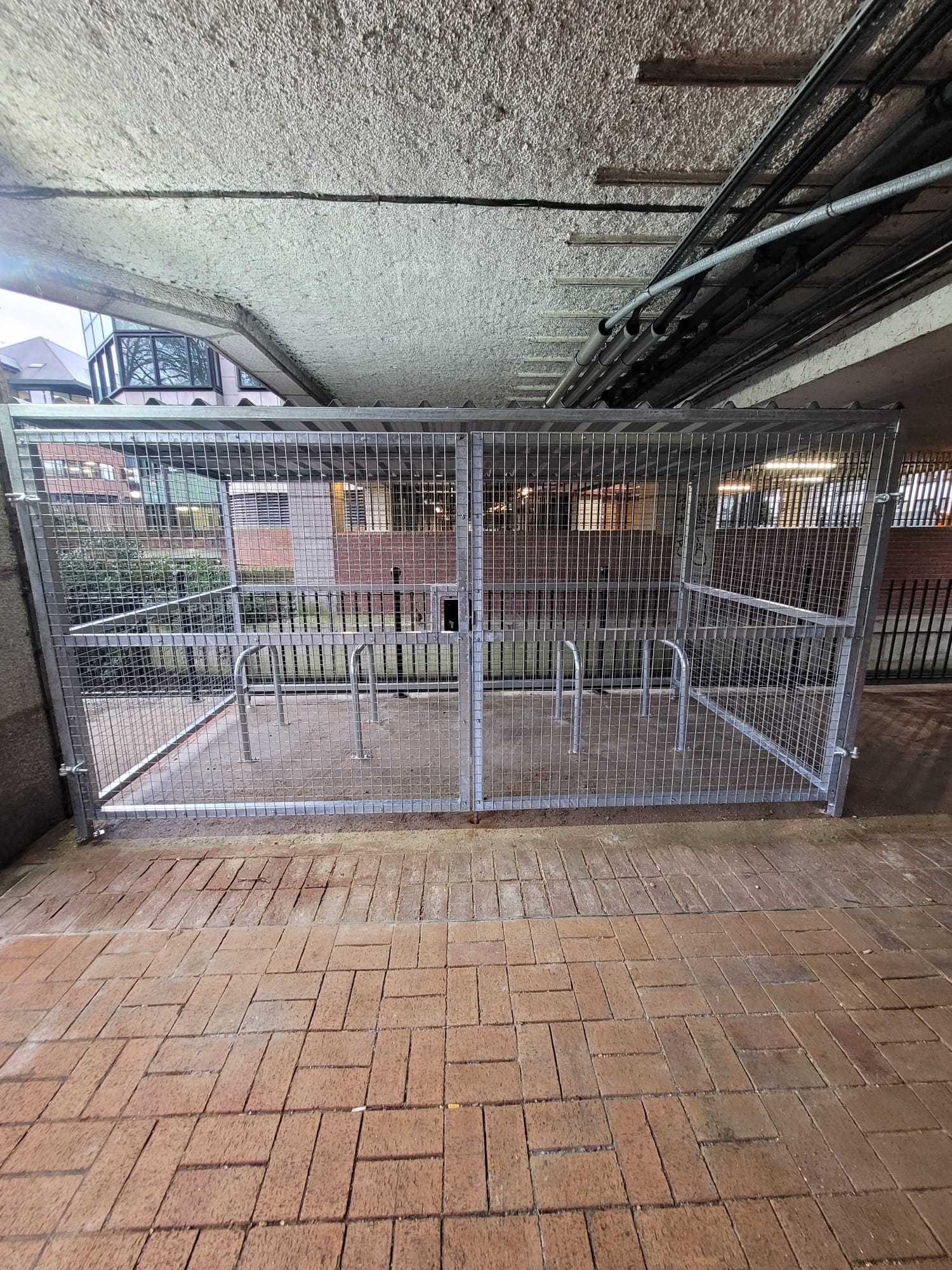
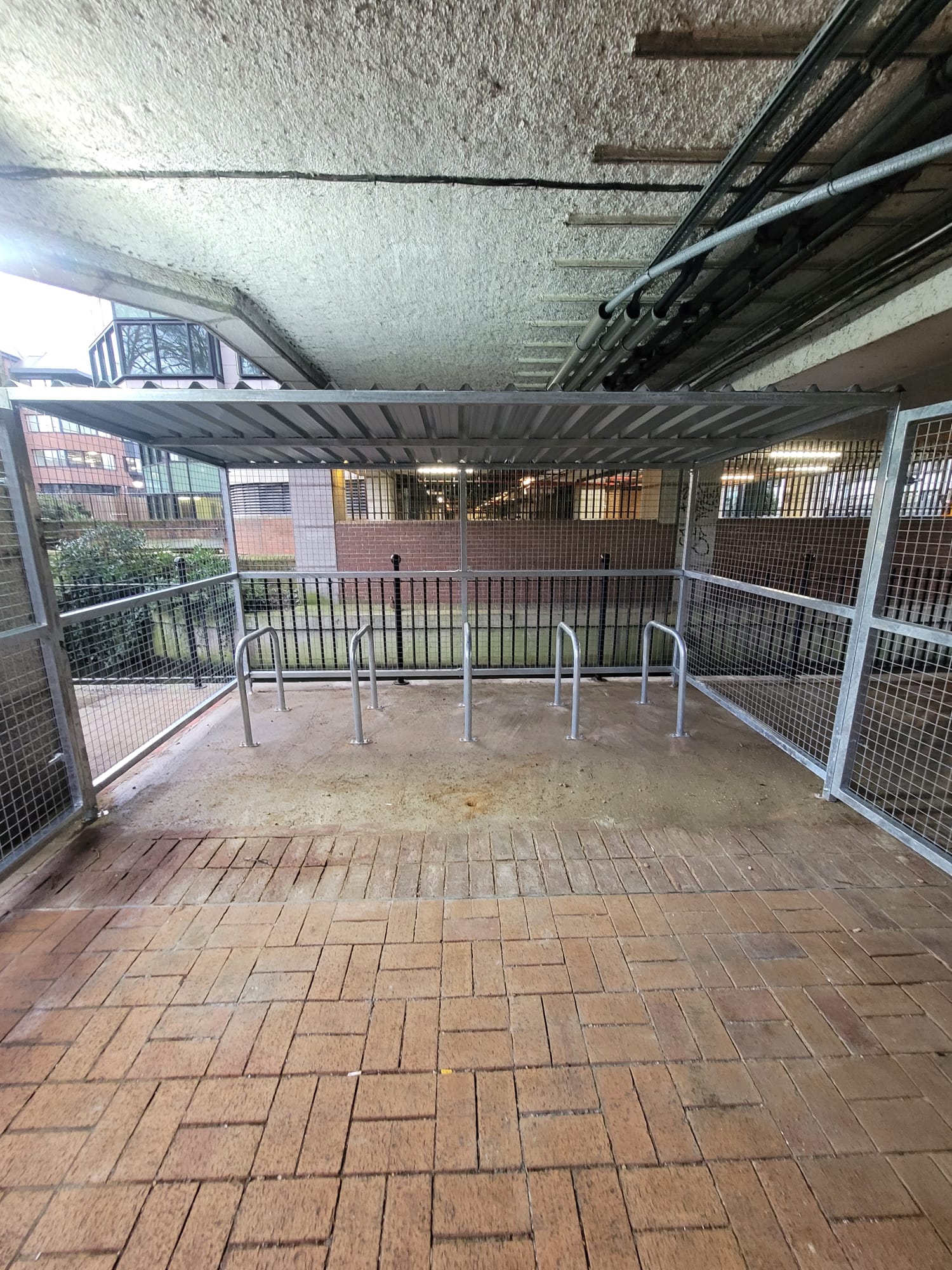
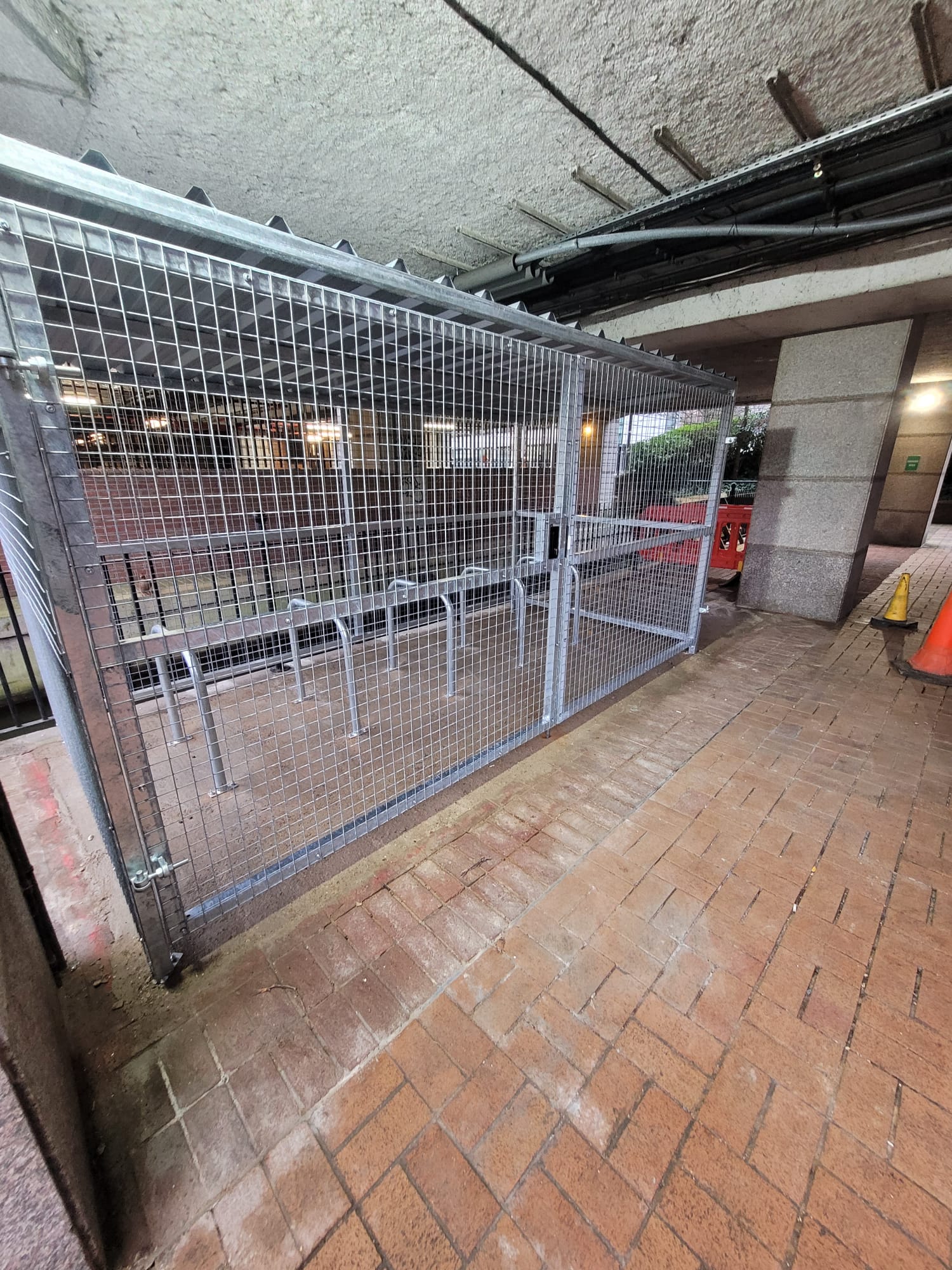
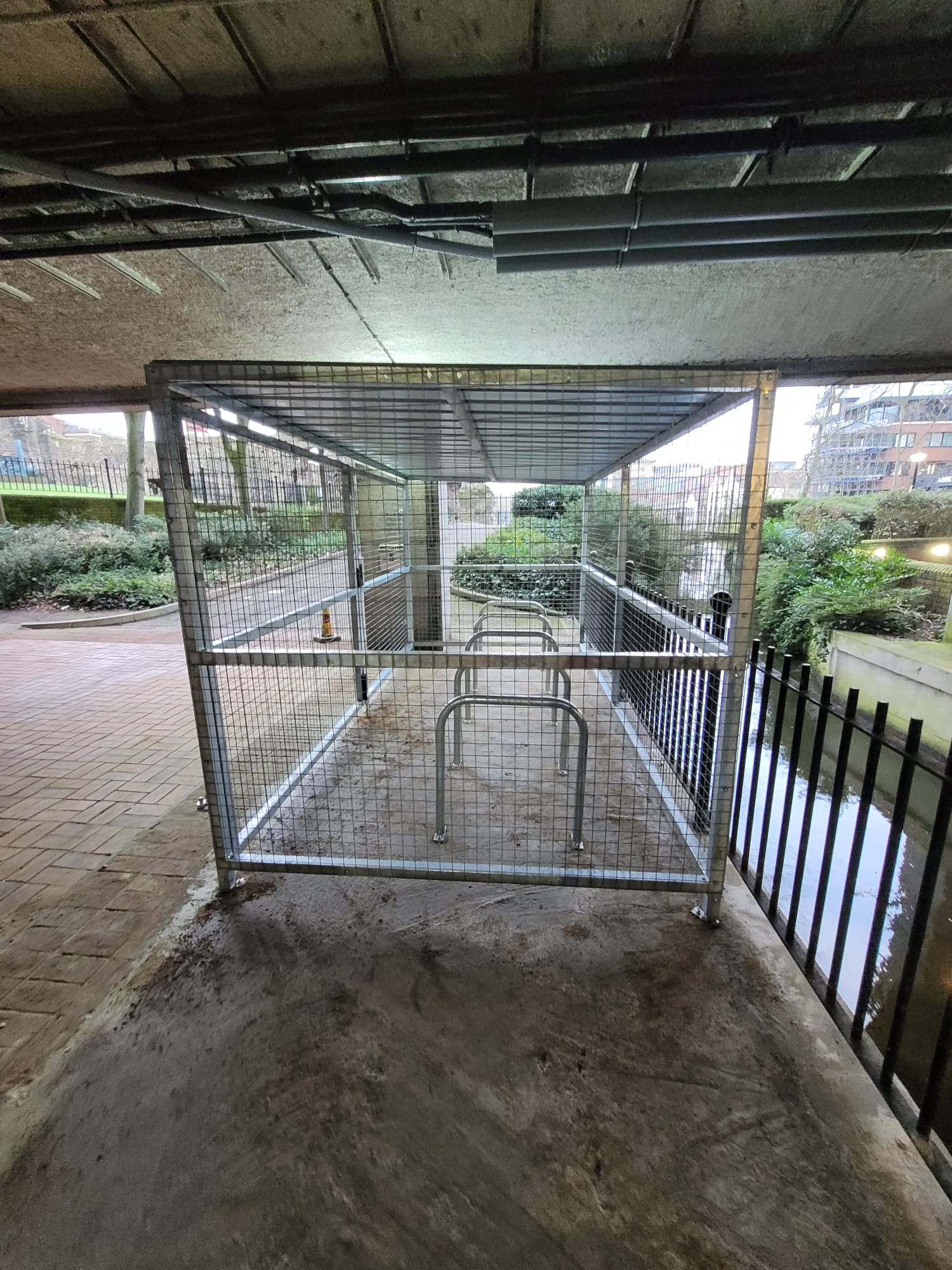
We recently completed the supply and installation of a 10-space mesh clad cycle shelter designed to provide secure, weather-protected bicycle storage for staff and visitors. The shelter measured 4100mm wide x 2100mm deep x 2100mm high and featured a fully galvanised steel frame with heavy-duty mesh cladding on all sides, offering durability, visibility and long-term resistance to corrosion.
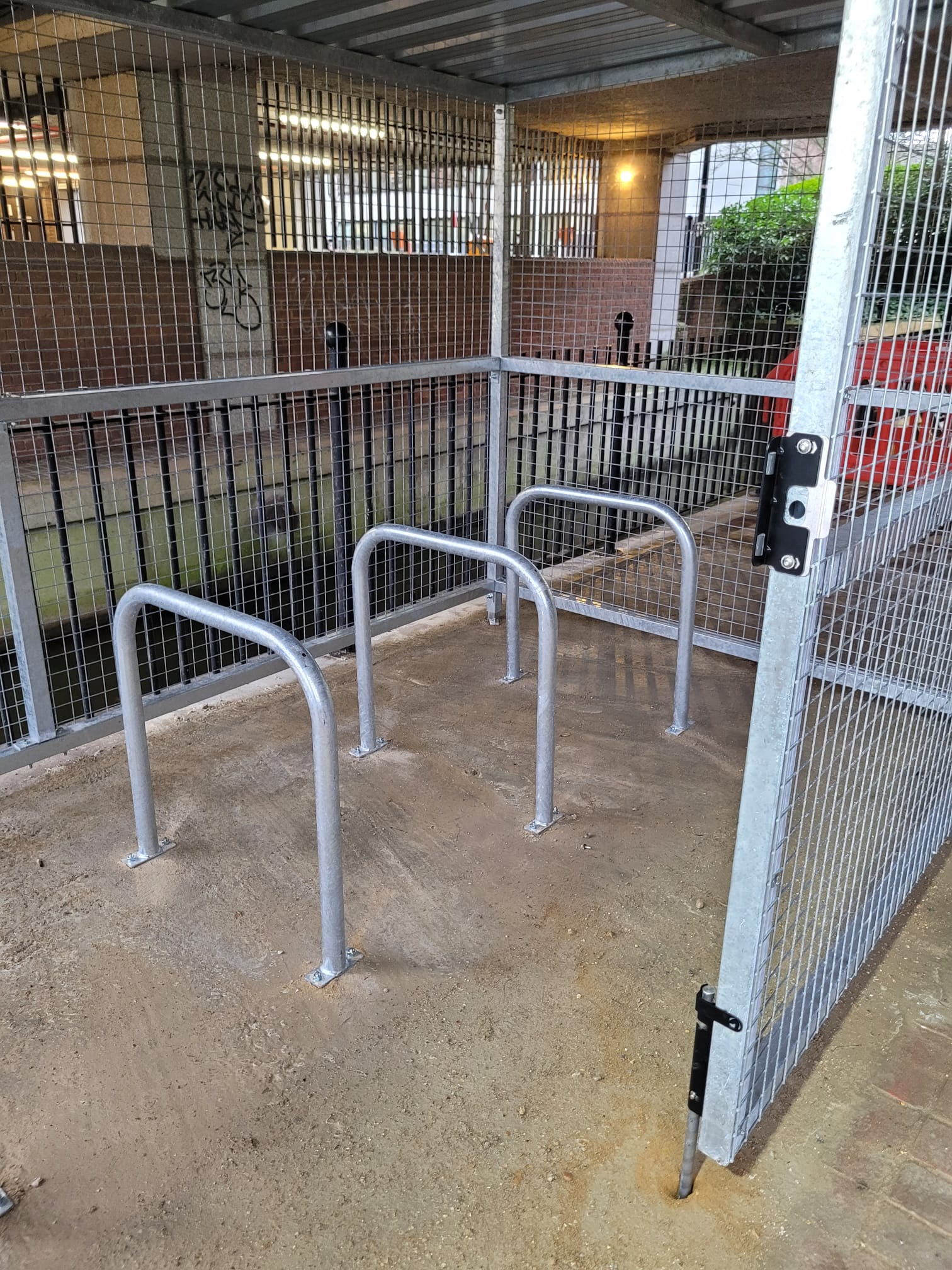
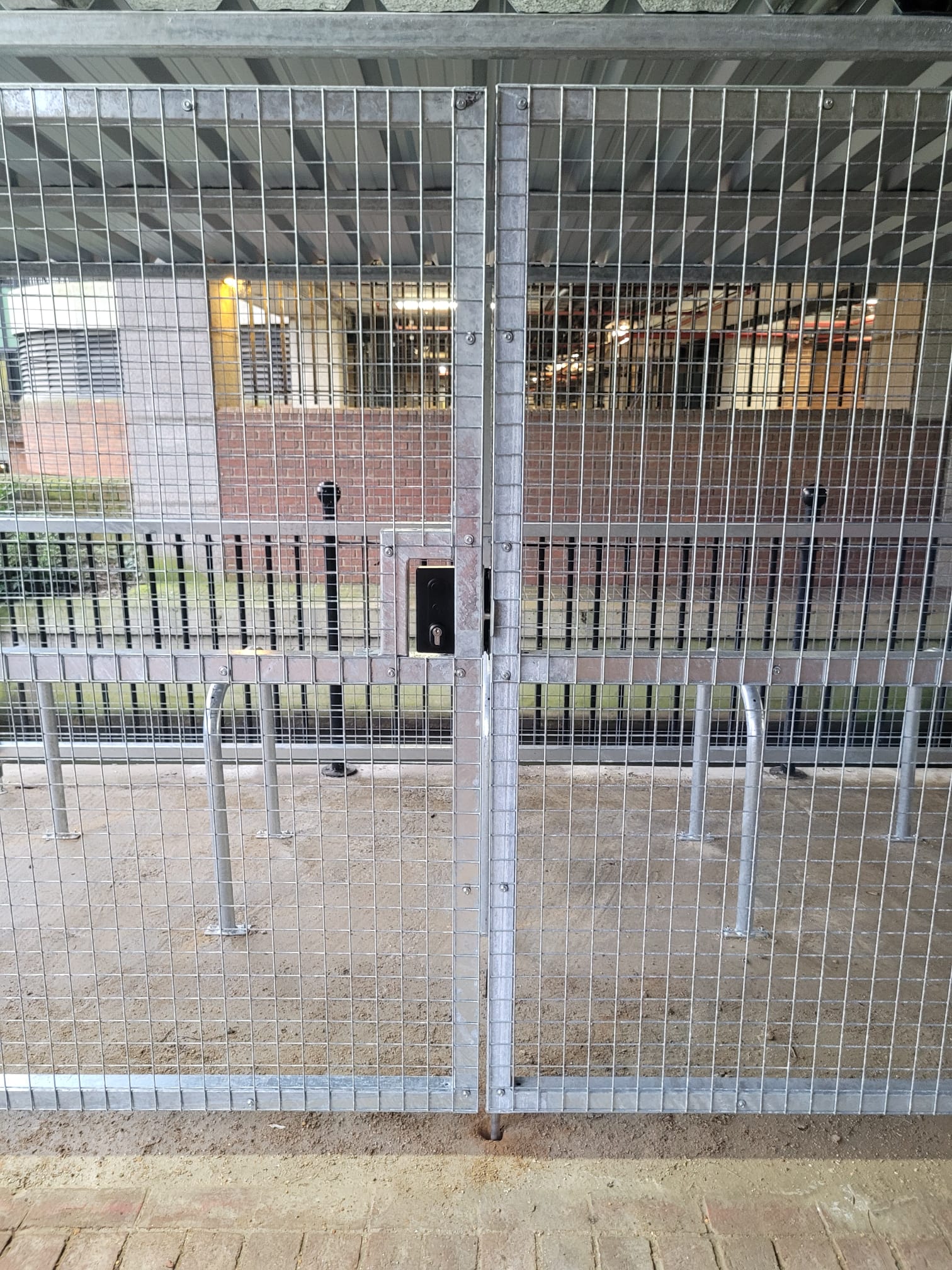
The project included the installation of five Sheffield cycle stands, providing secure parking for up to ten bicycles. To enhance security, the shelter was fitted with a double swing gate incorporating a digital access lock, providing controlled entry while maintaining ease of use for authorised users. Galvanised box profile roof sheets were also installed to deliver reliable all-weather protection.
Our installation team completed the assembly and installation in a single planned visit, erecting the steel framework, fitting the mesh panels and gates, installing the roofing system and securely positioning the cycle stands on an existing level concrete base. All works were carried out efficiently with minimal disruption, leaving the client with a robust, low-maintenance cycle parking solution that encourages sustainable travel while improving site security.
This secure mesh cycle shelter combines strength, functionality and long-term performance, making it an ideal choice for workplaces, schools, public sector facilities and commercial premises seeking high-quality bicycle storage solutions.
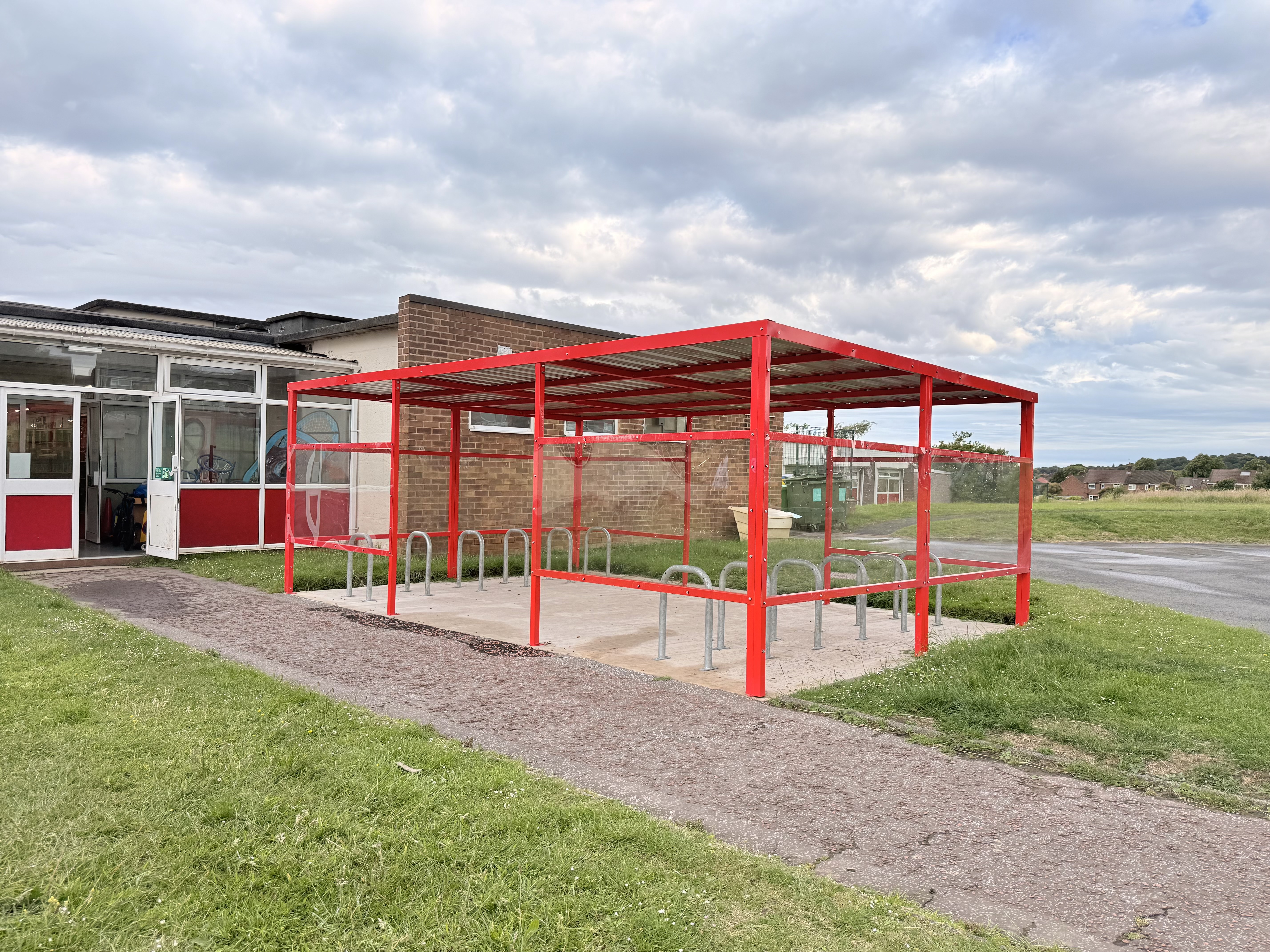
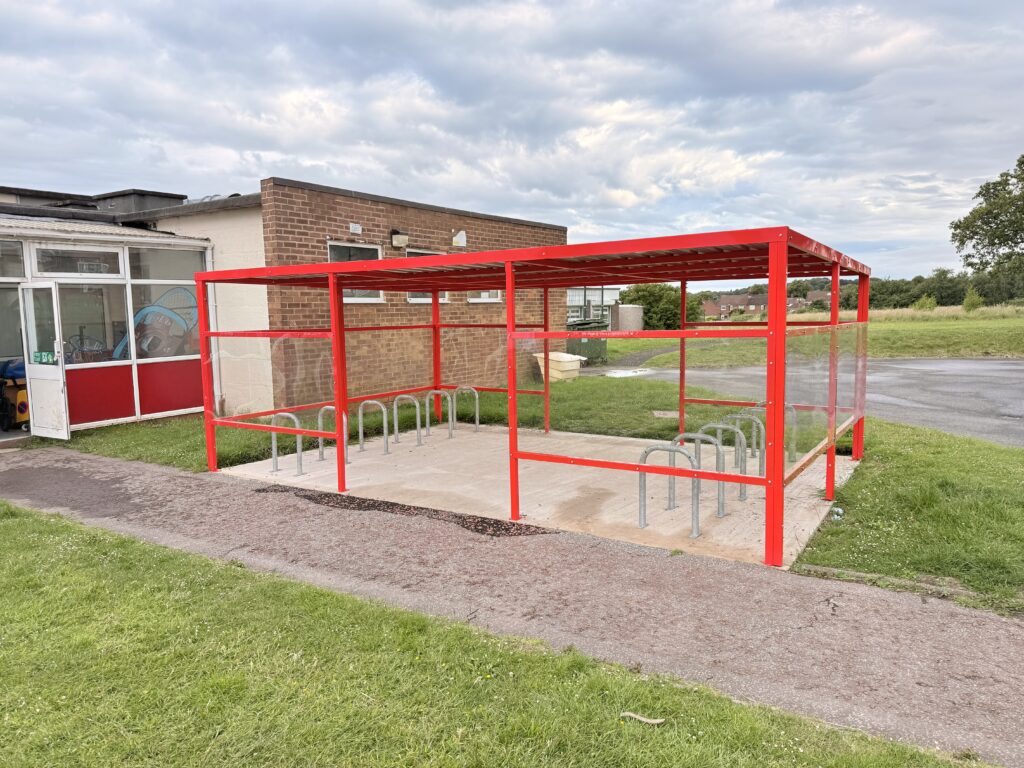
We recently delivered a bespoke cycle shelter solution designed to provide secure, high-capacity bicycle parking while enhancing the site’s cycling infrastructure. Measuring 6000mm wide x 4000mm deep x 2100mm high, the shelter was constructed from a galvanised steel framework with a durable Red RAL 3028 powder-coated finish, offering long-term protection against the elements and a striking appearance.
The shelter features a galvanised box profile steel roof, clear PETG cladding to both ends and additional rear roadside sections to improve weather protection while maintaining excellent visibility and natural light. To maximise cycle parking capacity, 12 junior Sheffield cycle stands were integrated into the structure, creating secure parking for up to 24 bicycles.
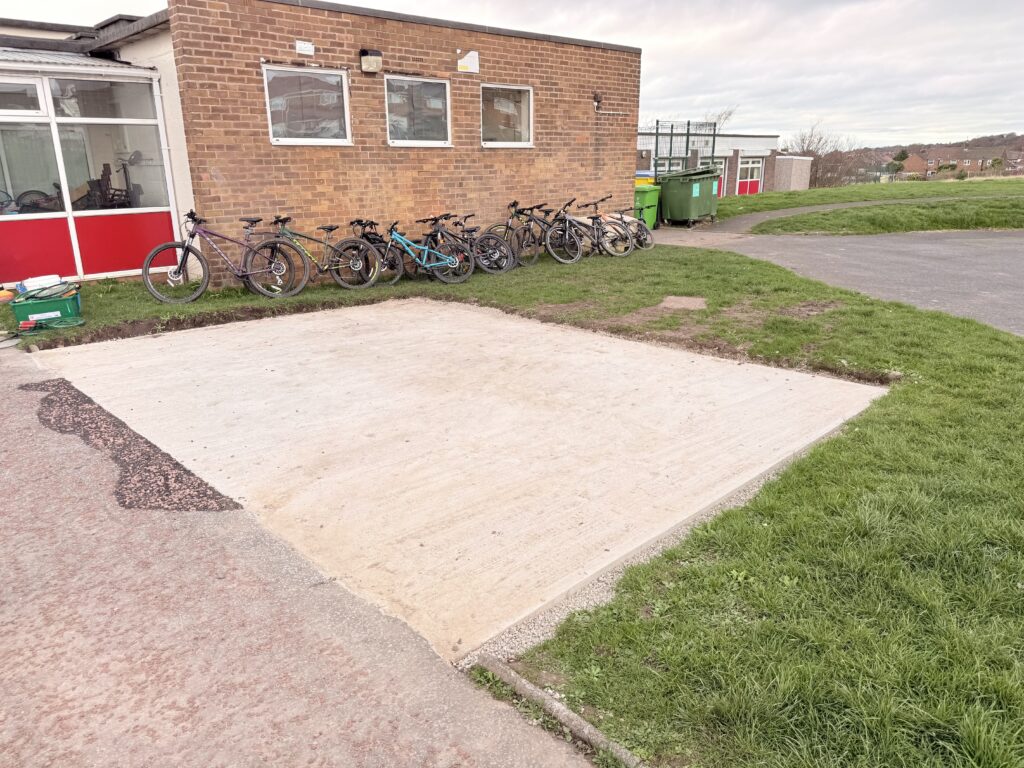
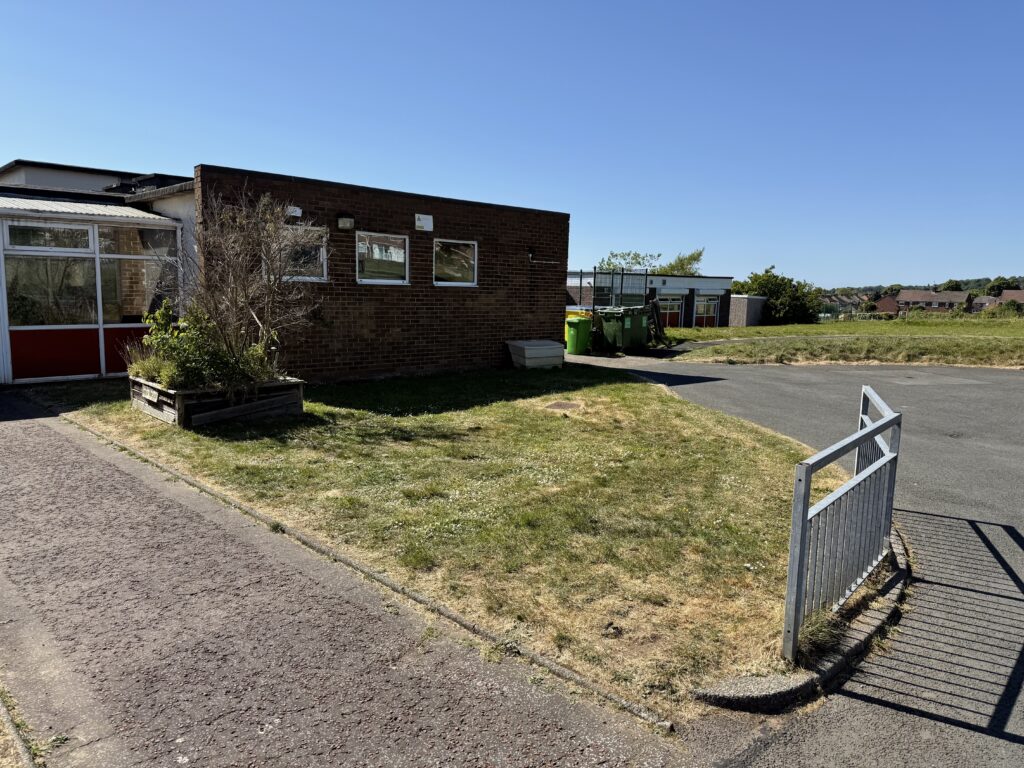
Supplied in kit form and assembled on site, the project included the installation of the steel framework, cladding, roofing and cycle stands, with works completed over multiple site visits by our installation team. The finished Shelter provides a robust, low-maintenance cycle parking solution that encourages sustainable travel and delivers secure, weather-protected bicycle storage for schools, workplaces, public facilities and commercial developments.
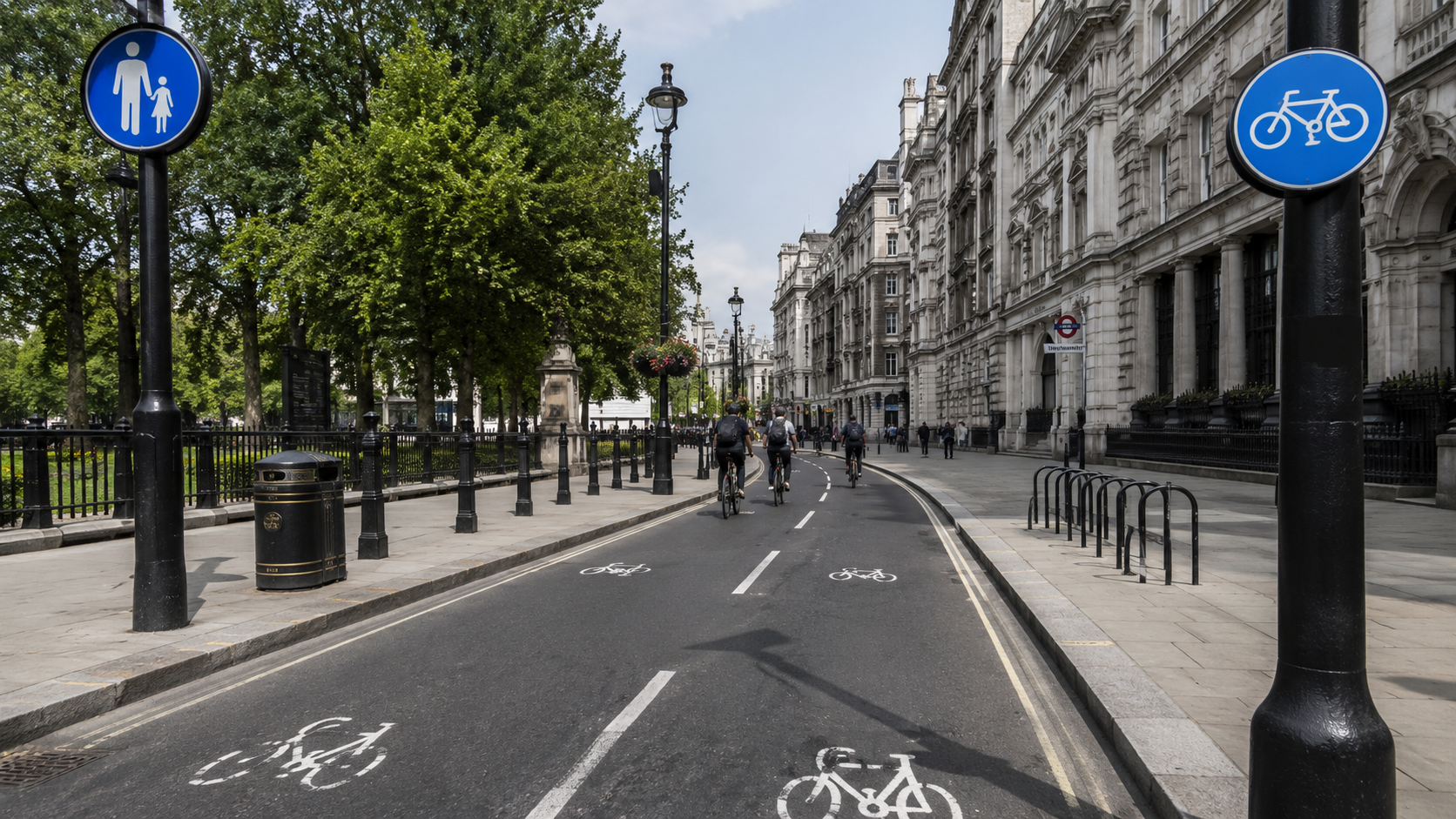
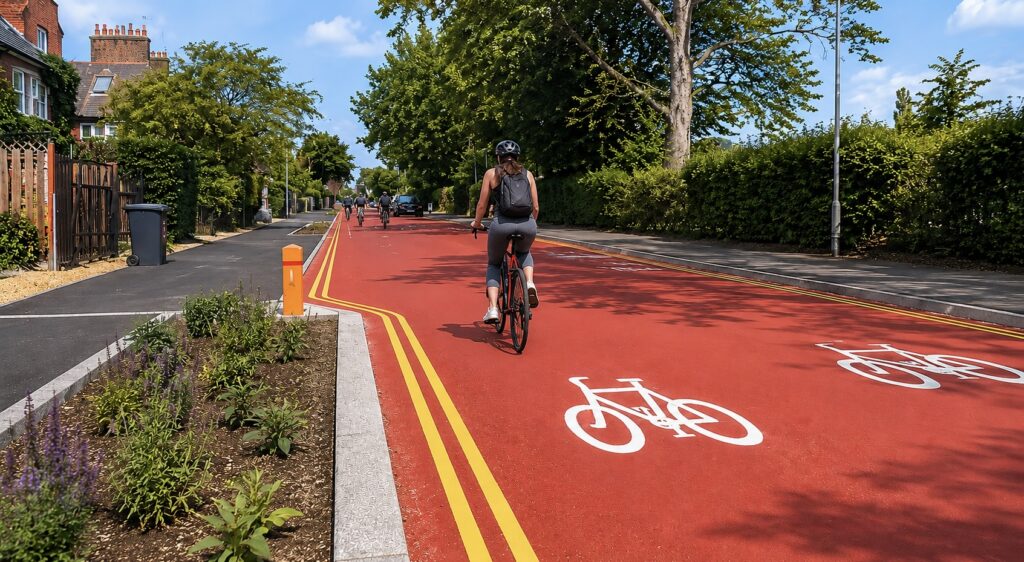
The UK Government has published its third statutory Cycling and Walking Investment Strategy, backed by over £4.5bn of projected investment across England over the next five years.
The strategy sets two clear priorities, making active travel safe and making it feel like the easy choice. Those might sound straightforward, but they represent a meaningful shift in how the government is framing the challenge. It is not just about building infrastructure. It is about removing the barriers that stop people, particularly children and less confident users, from choosing to walk, wheel or cycle in the first place.
The headline targets are 55% of short urban journeys made by active modes by 2035, and 60% of 5 to 16 year olds usually walking, wheeling or cycling to school by the same year. £1.1bn has been ringfenced for Active Travel England, which will oversee delivery alongside local authorities.
The new performance framework covering infrastructure, travel behaviour and wider health and economic outcomes will be key to keeping momentum going. It is good to see accountability built in from the start.
Bike Week is back. This year it’s bigger than ever. Running from 8th –14th June 2026, the UK’s most celebrated annual cycling event is once again inviting riders of every level to get on their bikes, connect with their communities and experience everything that makes cycling so brilliant.
Organised by Cycling UK , a charity that has championed cycling for over 140 years, Bike Week is a week-long national celebration with a simple but powerful message, cycling makes life healthier, happier and greener.
What Is Bike Week?
Bike Week has been running for more than a century, making it one of the longest-standing cycling initiatives in the country. Each year, it brings together everyday riders, families, commuters and complete beginners to celebrate the cycling in their communities.
Whether you’re already a dedicated cyclist, someone who occasionally dusts off the bike at weekends, or a complete beginner who’s never quite found the confidence to get started, Bike Week is designed for you.
How to Get Involved This Year
There are two main ways to take part in Bike Week 2026:
1. Host a Bike Week Brunch
One of the most popular ways to celebrate is by hosting a Bike Week Brunch, a sociable event that brings people together around cycling and community.
Your brunch can take almost any form. It might be coffee and cake with friends before a morning ride, a workplace breakfast, a school bake sale, or a neighbourhood get-together. The idea is simply to bring people together in a way that’s enjoyable and easy to organise, raising funds to support Cycling UK’s year-round work.
When you register to host a Bike Week Brunch, you’ll receive a fundraising pack full of ideas, tips and resources to help you plan your event and make the most of the week.
2. Join the Big Bike Revival
If you’ve been out of the saddle for a while, or have never quite got started, the Big Bike Revival is the perfect opportunity. Run by Cycling UK and delivered by local organisations across England, it offers free, friendly sessions designed to help adults start cycling, return to it, or simply feel more confident on their bikes.
Sessions vary by location but can include:
Learn to ride – whether you’re an absolute beginner or returning after years away
Basic maintenance workshops – pick up simple repair skills to keep your bike roadworthy
Bike safety checks – have minor issues looked at and your bike given a once-over
Guided local rides – explore your area at a relaxed pace and meet fellow cyclists
Of course, you don’t need to sign up to an event to mark Bike Week. Some of the simplest ways to get involved include:
Swap a short car journey for a bike ride – even just once during the week, it all adds up
Encourage a friend or family member to ride with you – here’s no better way to share a love of cycling
Explore a new local route – Cycling UK has a library of GPX routes across the country to inspire you
Why Bike Week Matters
The numbers speak for themselves. Cycling reduces carbon emissions, eases congestion, improves physical health and has well-documented benefits for mental wellbeing.
Make the Most of Bike Week with Secure Cycle Store
Planning to ride during Bike Week? Make sure your bike is ready for it. Whether you need a solid storage solution to protect your investment, security for your workplace bike rack, or a reliable lock for a new commuting route, we’ve got you covered at Secure Cycle Store.
Great job done from ordering, advice, delivery and construction. Two man crew worked solidly from 7 am to 1pm, refused all offers of coffee and got the bike shelter built despite high winds and rain. Also dismantled our old bike rack.
Excellent company to deal with, all queries and questions answered promptly. Very happy with the service. Very quick delivery from order, the cycle repair stands were well packed and protected and secured to the pallet for transport.
Peter and Joanne were excellent to deal with and hopefully will be dealing with them again to purchase more units.
We received this and it was exactly as described, arrived quickly and securely. The company were a pleasure to deal with and throughout our order made sure we were kept up to date regarding delivery times. An all round great service.

/tcs/uploads/categories/20260106-09-59-00_2452a0ee-5d2f-4f0a-ad18-1d653e48926a.jpg)
/tcs/uploads/categories/20260106-09-24-54_fa149ae6-6b92-41a2-8c58-6872c3f98f46.jpg)
/tcs/uploads/categories/20260420-14-42-55_6x4-pent-2.jpeg)
/tcs/uploads/categories/cycle-storage-cycle-lockers.jpeg)
/tcs/uploads/categories/20260420-14-39-09_parkis-5.jpg)
/tcs/uploads/categories/20260106-09-51-52_img-1458.jpg)
/tcs/uploads/categories/cycle-storage-bike-pump-repair-stands.jpeg)
/tcs/uploads/categories/20260420-14-44-33_whatsapp-image-2026-02-24-at-131821-4.jpeg)