
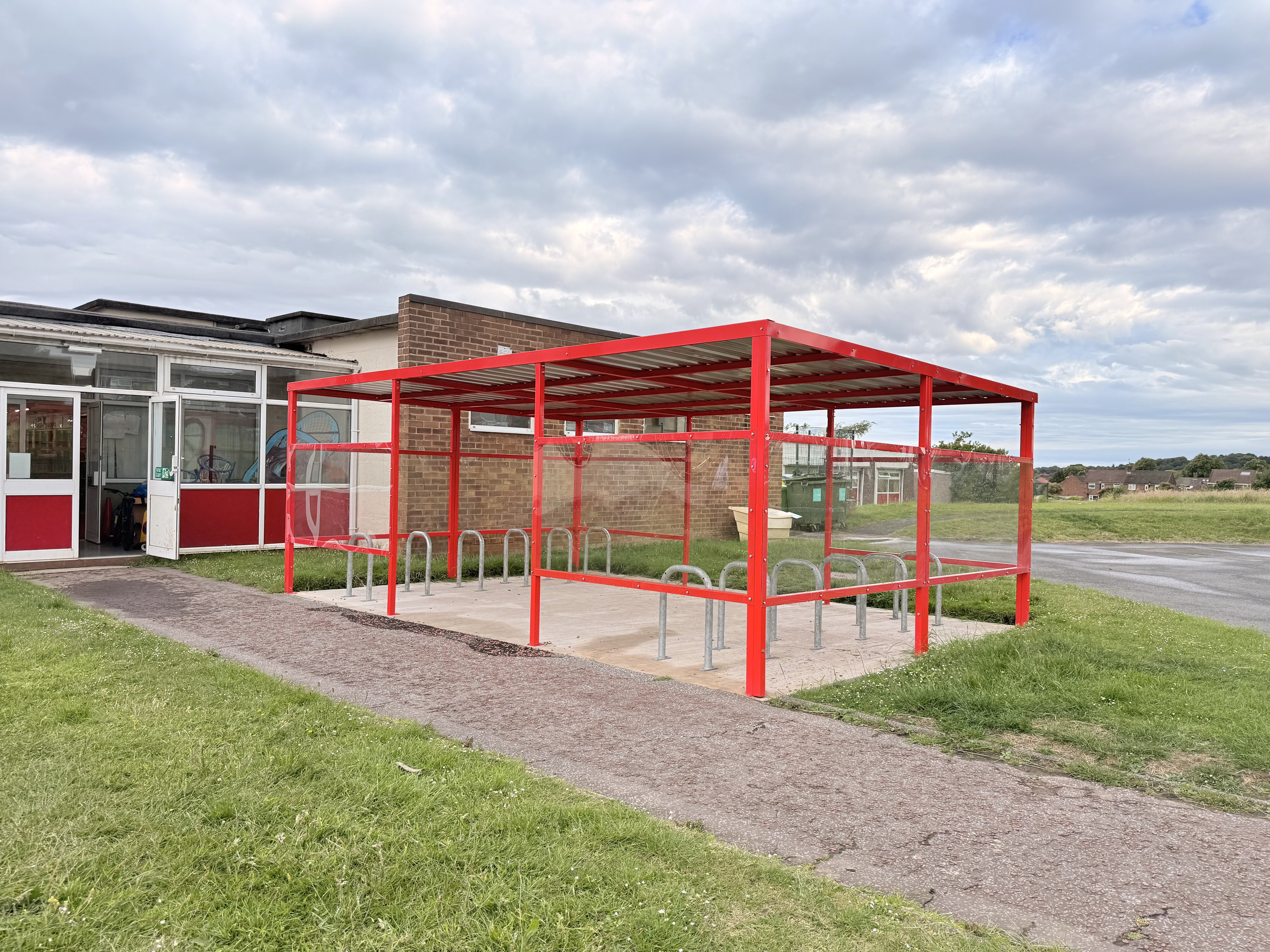
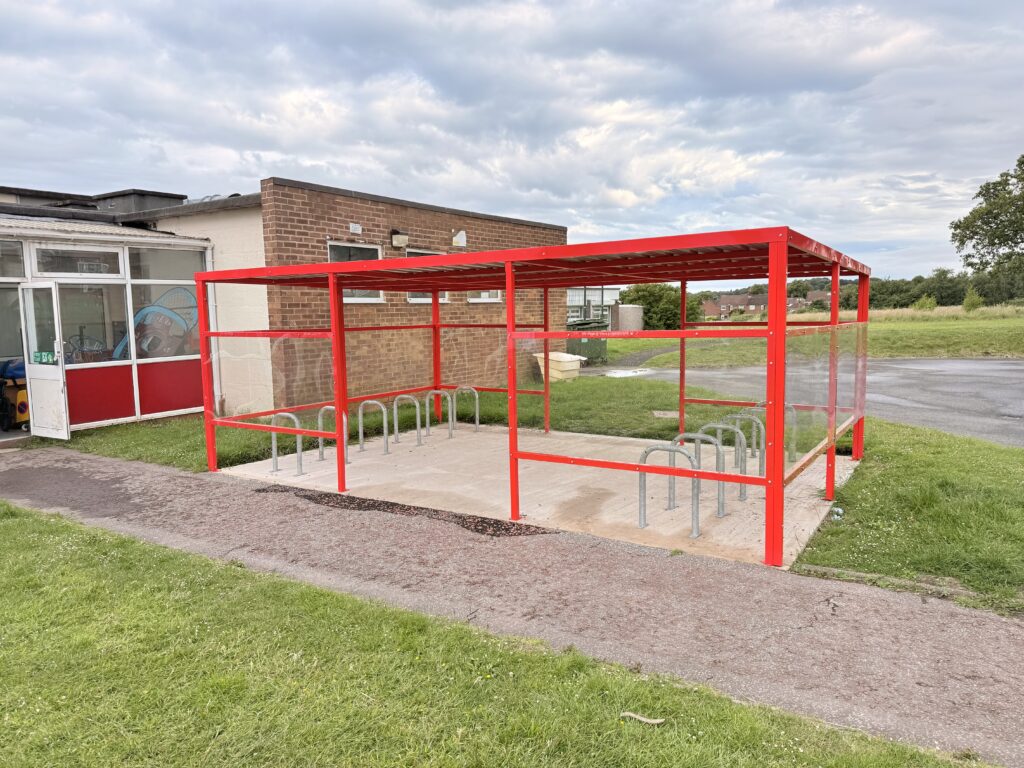
We recently delivered a bespoke cycle shelter solution designed to provide secure, high-capacity bicycle parking while enhancing the site’s cycling infrastructure. Measuring 6000mm wide x 4000mm deep x 2100mm high, the shelter was constructed from a galvanised steel framework with a durable Red RAL 3028 powder-coated finish, offering long-term protection against the elements and a striking appearance.
The shelter features a galvanised box profile steel roof, clear PETG cladding to both ends and additional rear roadside sections to improve weather protection while maintaining excellent visibility and natural light. To maximise cycle parking capacity, 12 junior Sheffield cycle stands were integrated into the structure, creating secure parking for up to 24 bicycles.
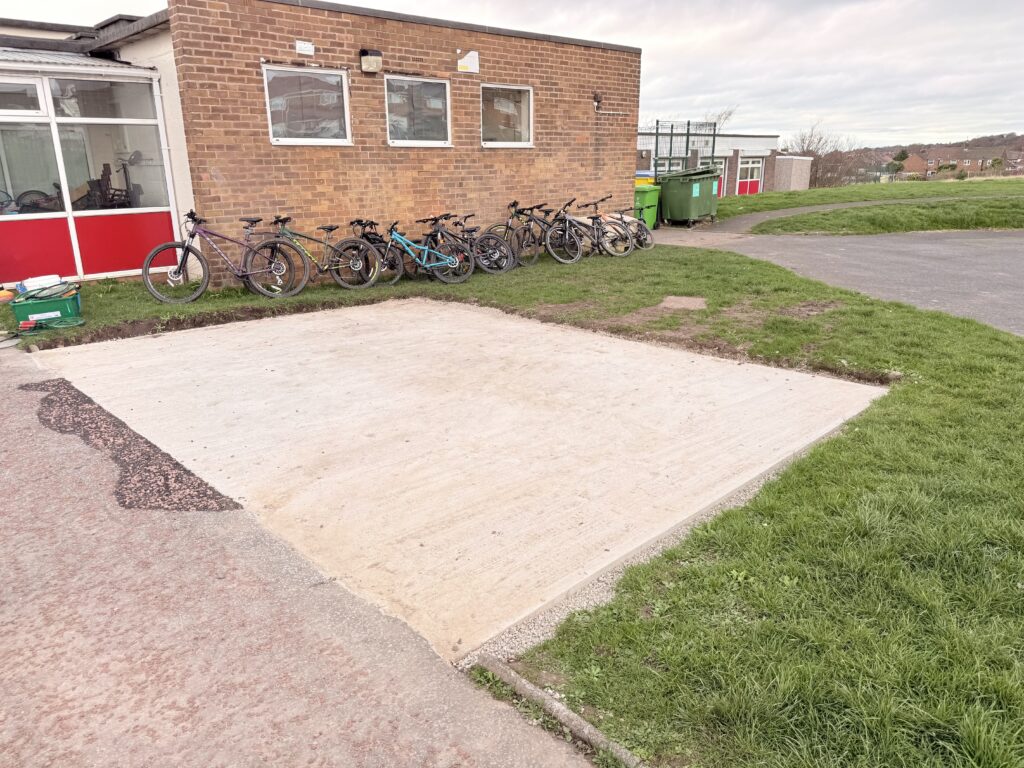
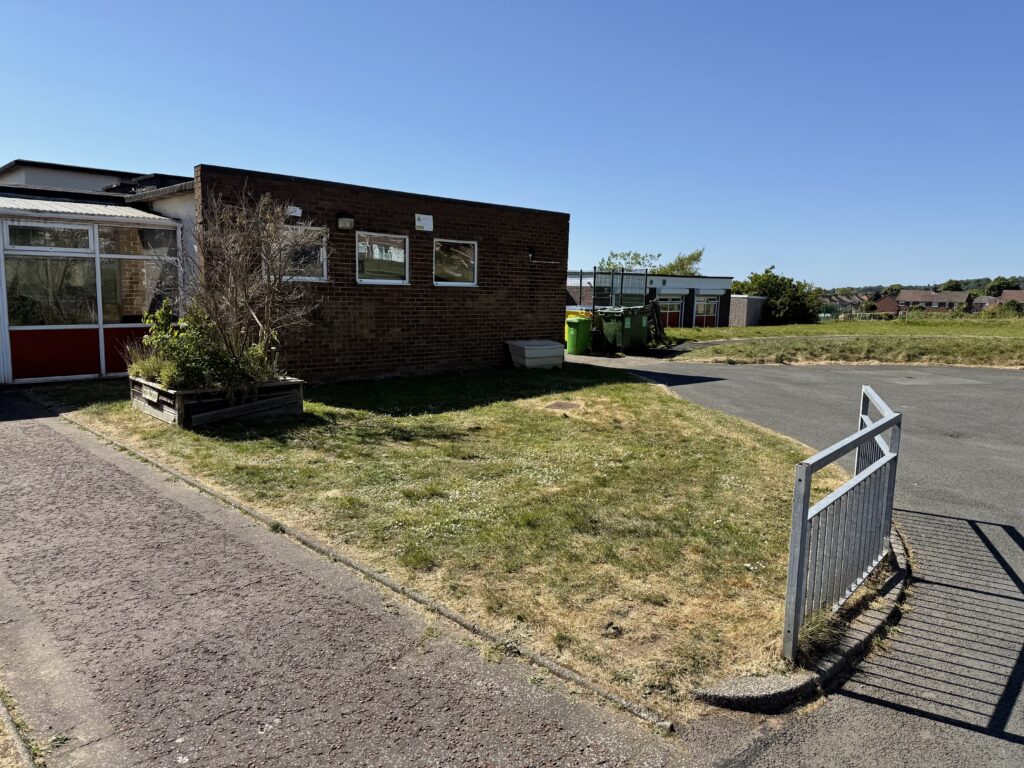
Supplied in kit form and assembled on site, the project included the installation of the steel framework, cladding, roofing and cycle stands, with works completed over multiple site visits by our installation team. The finished Shelter provides a robust, low-maintenance cycle parking solution that encourages sustainable travel and delivers secure, weather-protected bicycle storage for schools, workplaces, public facilities and commercial developments.

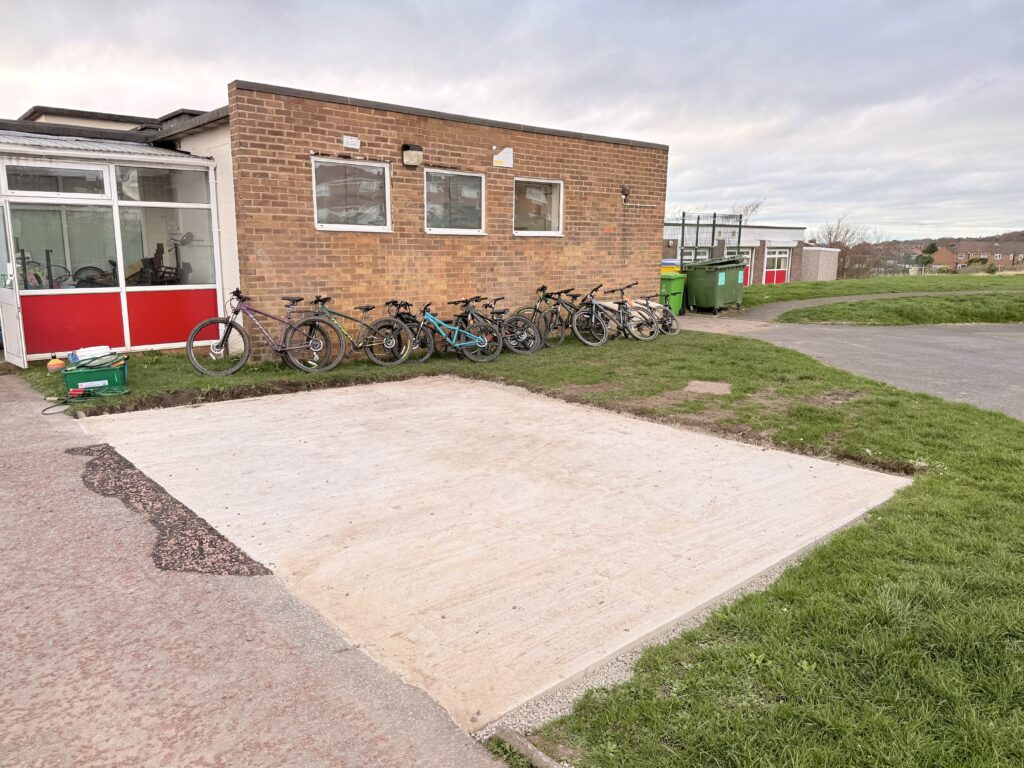
The UK Government has published its third statutory Cycling and Walking Investment Strategy, backed by over £4.5bn of projected investment across England over the next five years.
The strategy sets two clear priorities, making active travel safe and making it feel like the easy choice. Those might sound straightforward, but they represent a meaningful shift in how the government is framing the challenge. It is not just about building infrastructure. It is about removing the barriers that stop people, particularly children and less confident users, from choosing to walk, wheel or cycle in the first place.
The headline targets are 55% of short urban journeys made by active modes by 2035, and 60% of 5 to 16 year olds usually walking, wheeling or cycling to school by the same year. £1.1bn has been ringfenced for Active Travel England, which will oversee delivery alongside local authorities.
The new performance framework covering infrastructure, travel behaviour and wider health and economic outcomes will be key to keeping momentum going. It is good to see accountability built in from the start.
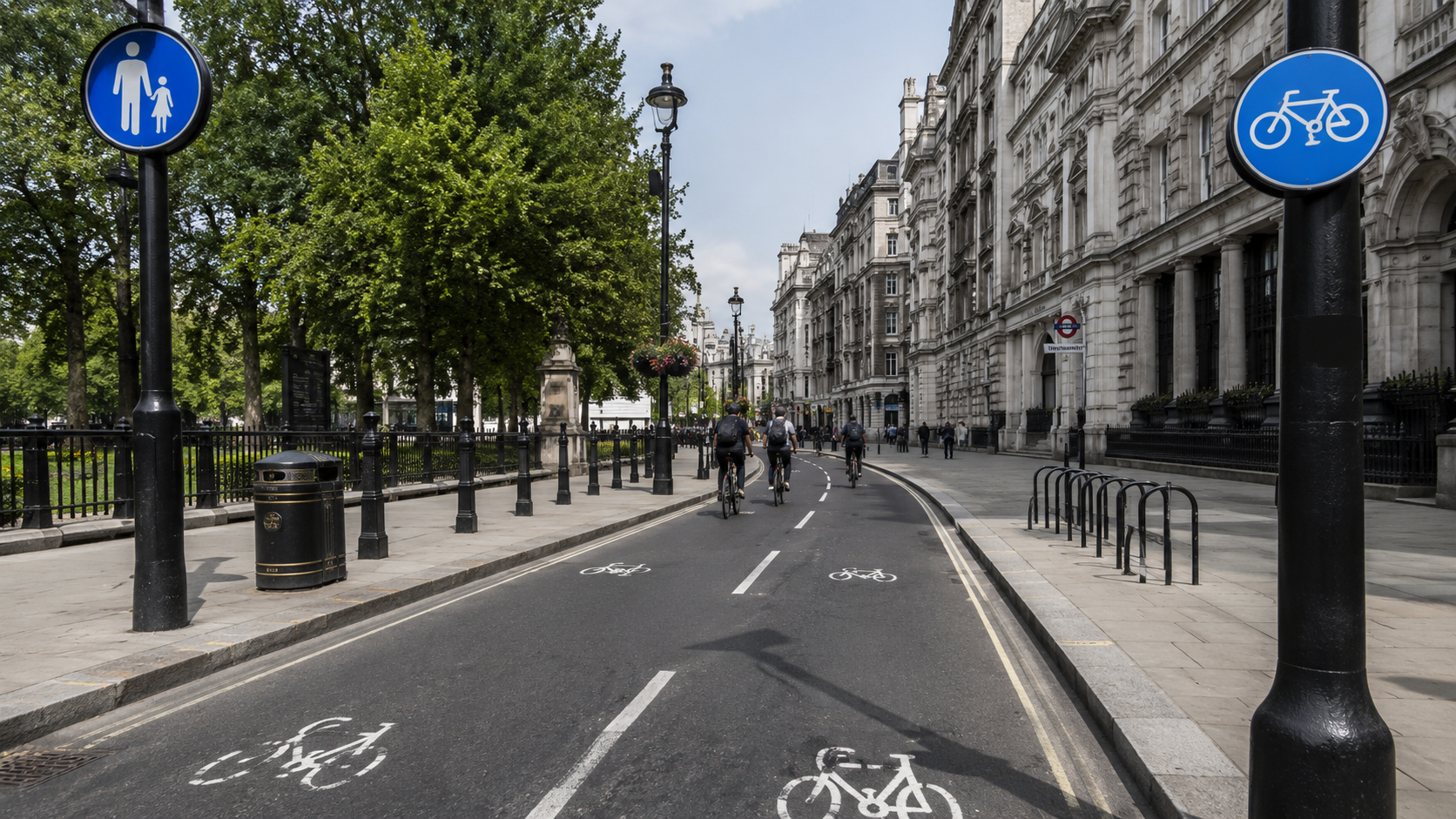
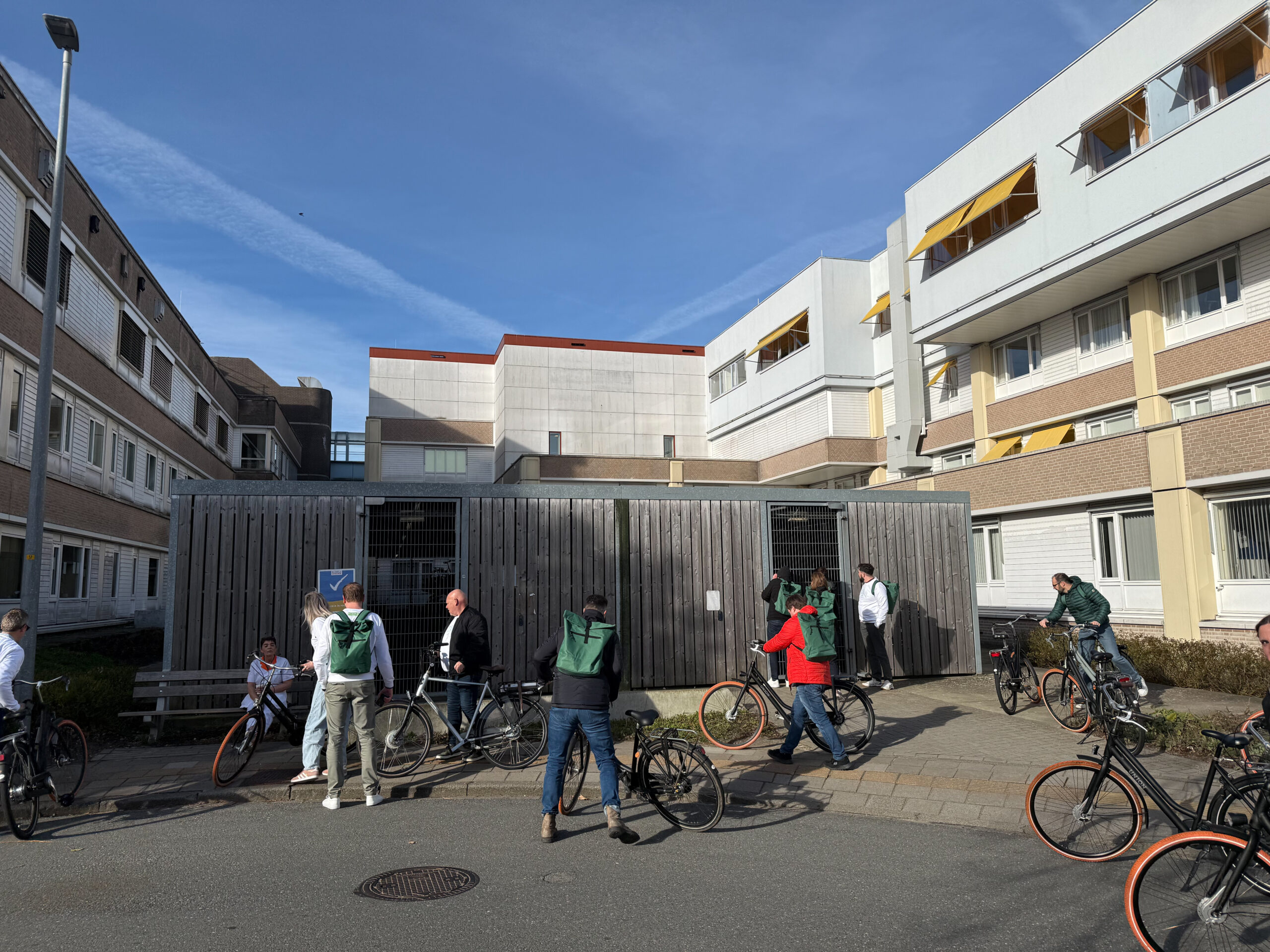
Bike Week is back. This year it’s bigger than ever. Running from 8th –14th June 2026, the UK’s most celebrated annual cycling event is once again inviting riders of every level to get on their bikes, connect with their communities and experience everything that makes cycling so brilliant.
Organised by Cycling UK , a charity that has championed cycling for over 140 years, Bike Week is a week-long national celebration with a simple but powerful message, cycling makes life healthier, happier and greener.
Bike Week has been running for more than a century, making it one of the longest-standing cycling initiatives in the country. Each year, it brings together everyday riders, families, commuters and complete beginners to celebrate the cycling in their communities.
Whether you’re already a dedicated cyclist, someone who occasionally dusts off the bike at weekends, or a complete beginner who’s never quite found the confidence to get started, Bike Week is designed for you.
There are two main ways to take part in Bike Week 2026:
One of the most popular ways to celebrate is by hosting a Bike Week Brunch, a sociable event that brings people together around cycling and community.
Your brunch can take almost any form. It might be coffee and cake with friends before a morning ride, a workplace breakfast, a school bake sale, or a neighbourhood get-together. The idea is simply to bring people together in a way that’s enjoyable and easy to organise, raising funds to support Cycling UK’s year-round work.
When you register to host a Bike Week Brunch, you’ll receive a fundraising pack full of ideas, tips and resources to help you plan your event and make the most of the week.
If you’ve been out of the saddle for a while, or have never quite got started, the Big Bike Revival is the perfect opportunity. Run by Cycling UK and delivered by local organisations across England, it offers free, friendly sessions designed to help adults start cycling, return to it, or simply feel more confident on their bikes.
Sessions vary by location but can include:
These sessions are welcoming, pressure-free, and open to all. Find a Big Bike Revival session near you.
Of course, you don’t need to sign up to an event to mark Bike Week. Some of the simplest ways to get involved include:
The numbers speak for themselves. Cycling reduces carbon emissions, eases congestion, improves physical health and has well-documented benefits for mental wellbeing.
Planning to ride during Bike Week? Make sure your bike is ready for it. Whether you need a solid storage solution to protect your investment, security for your workplace bike rack, or a reliable lock for a new commuting route, we’ve got you covered at Secure Cycle Store.
Browse our full range of cycle security products – https://securecyclestore.com/products/cycle-storage/bike-shelters/
For full details on all Bike Week 2026 events, registration, and resources, visit cyclinguk.org/bikeweek.
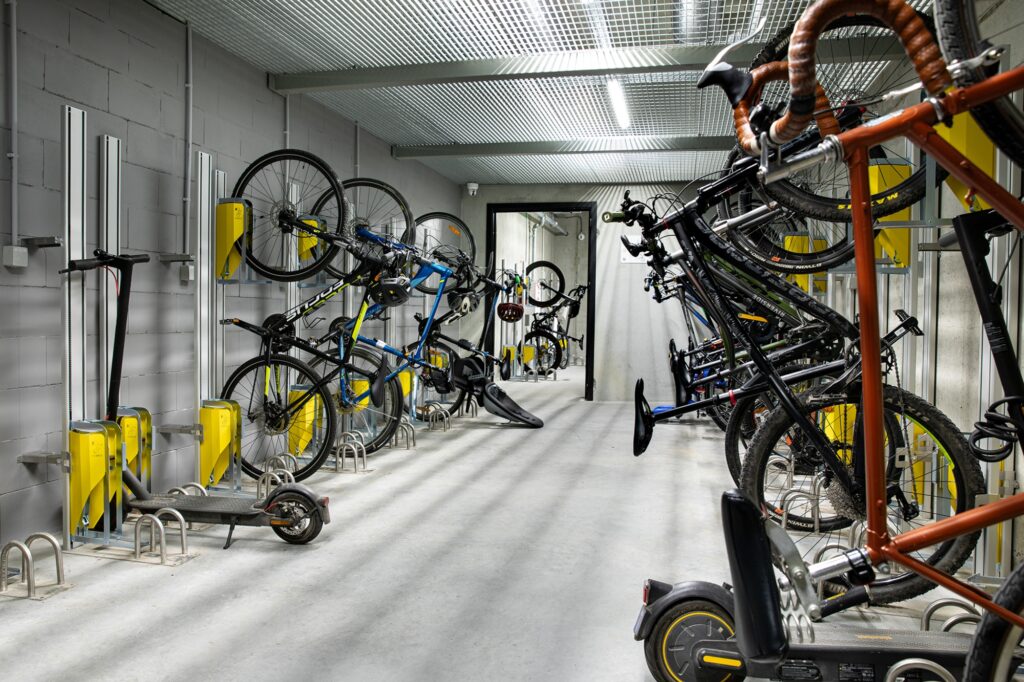
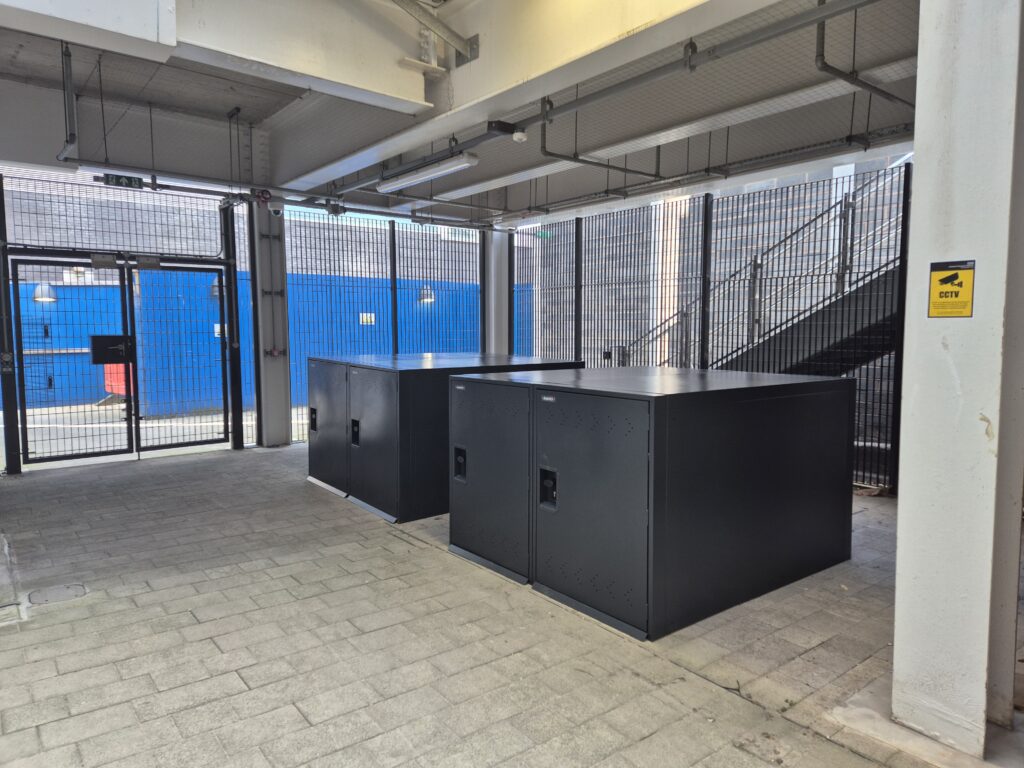
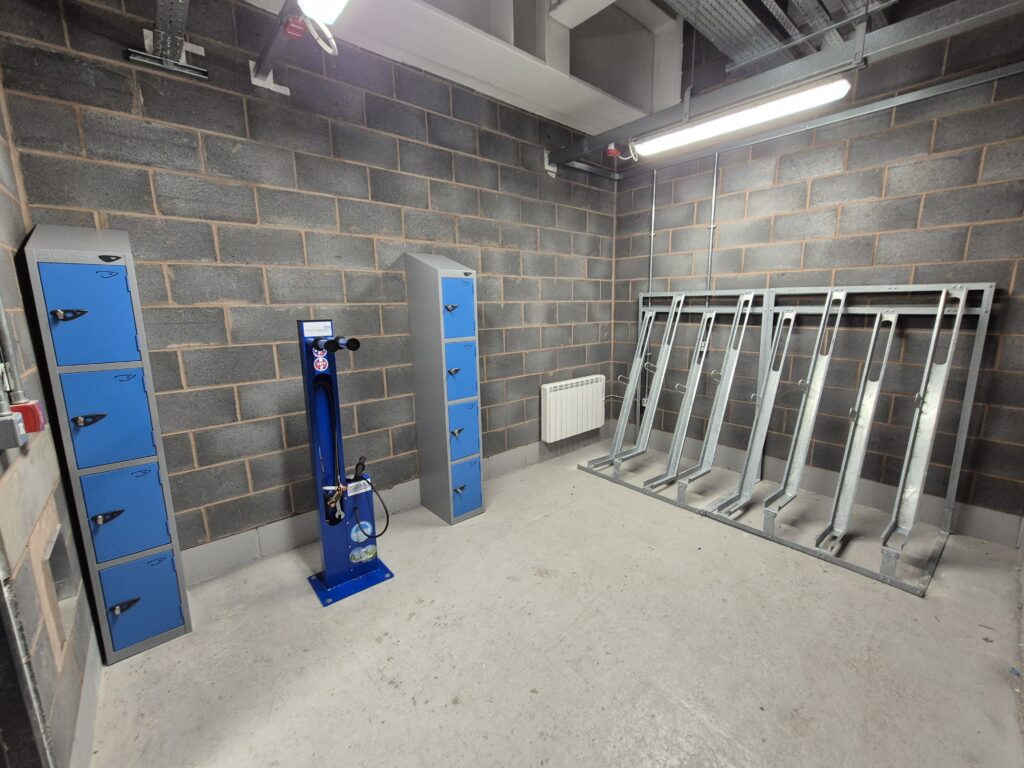
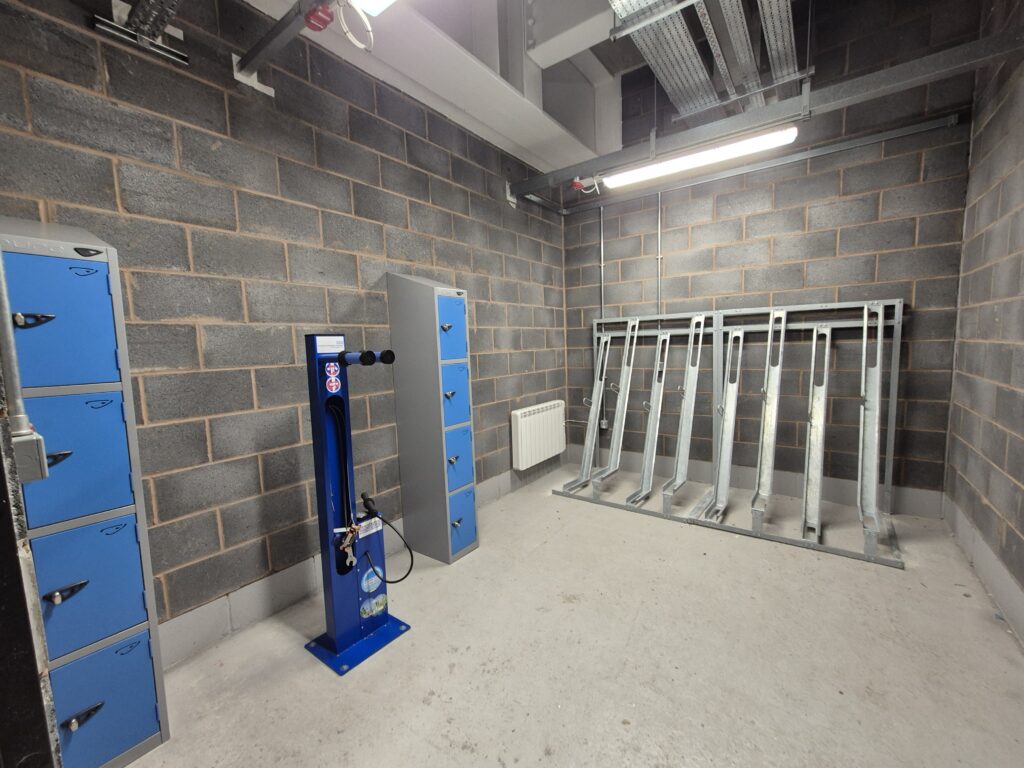
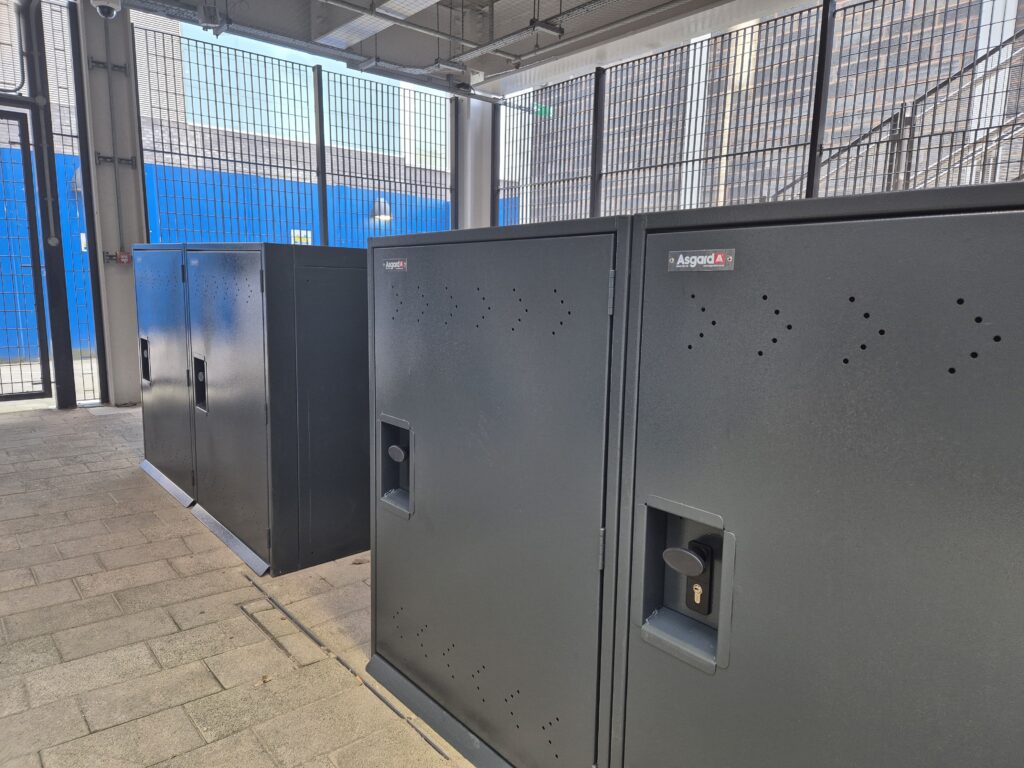
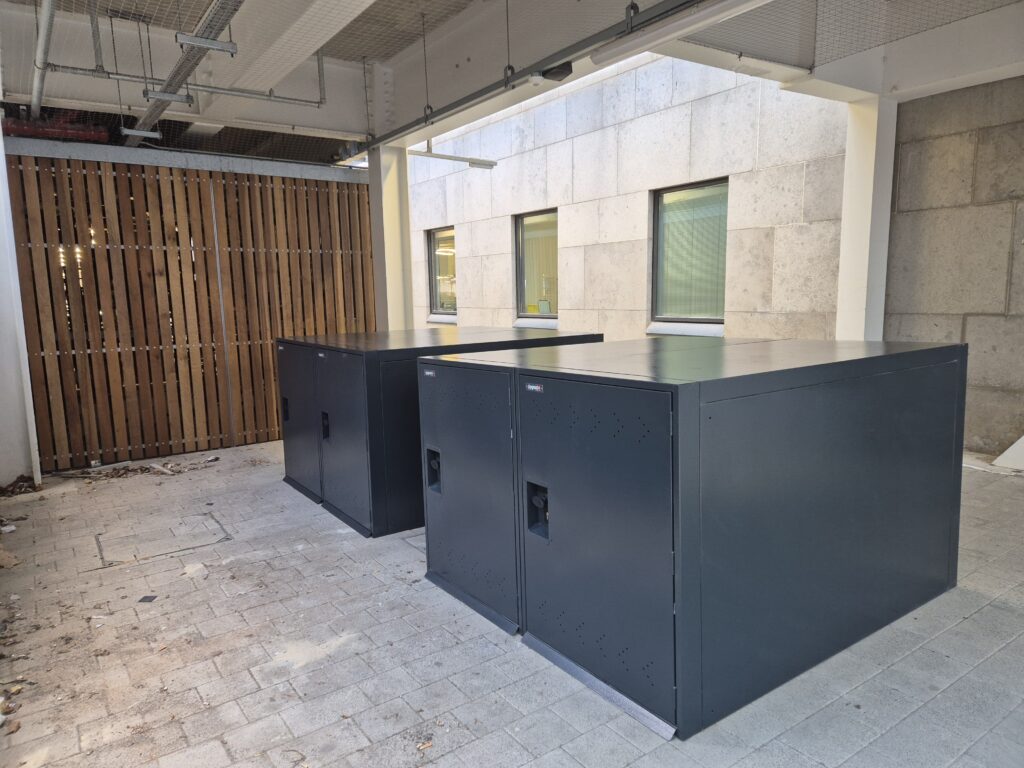
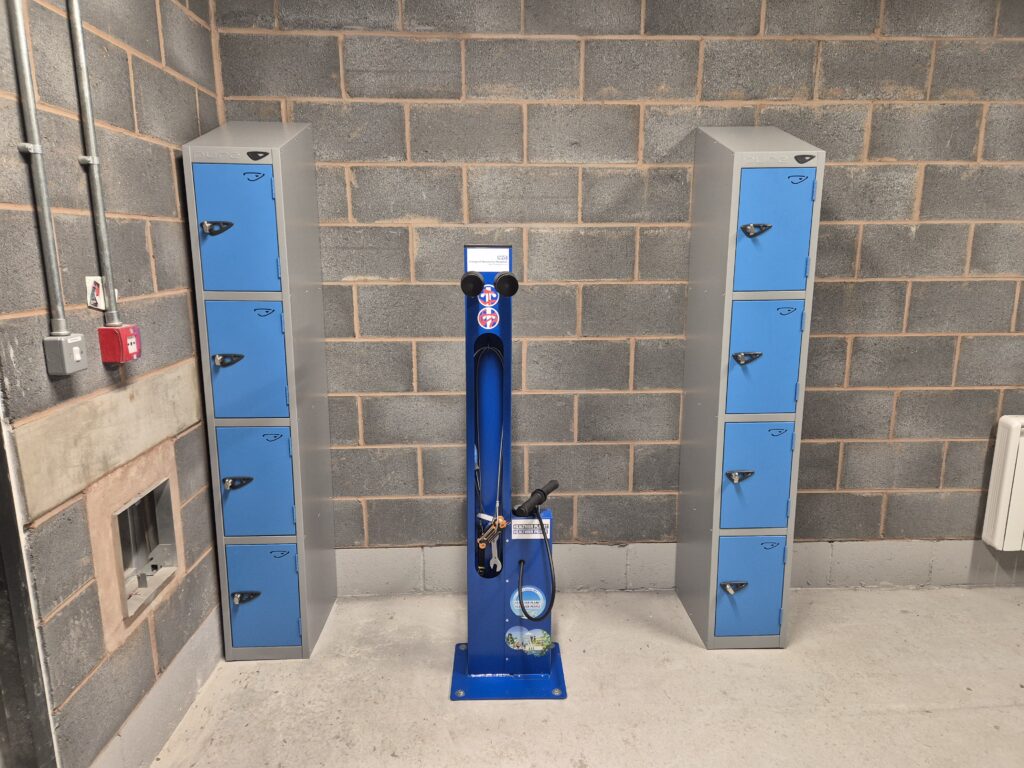
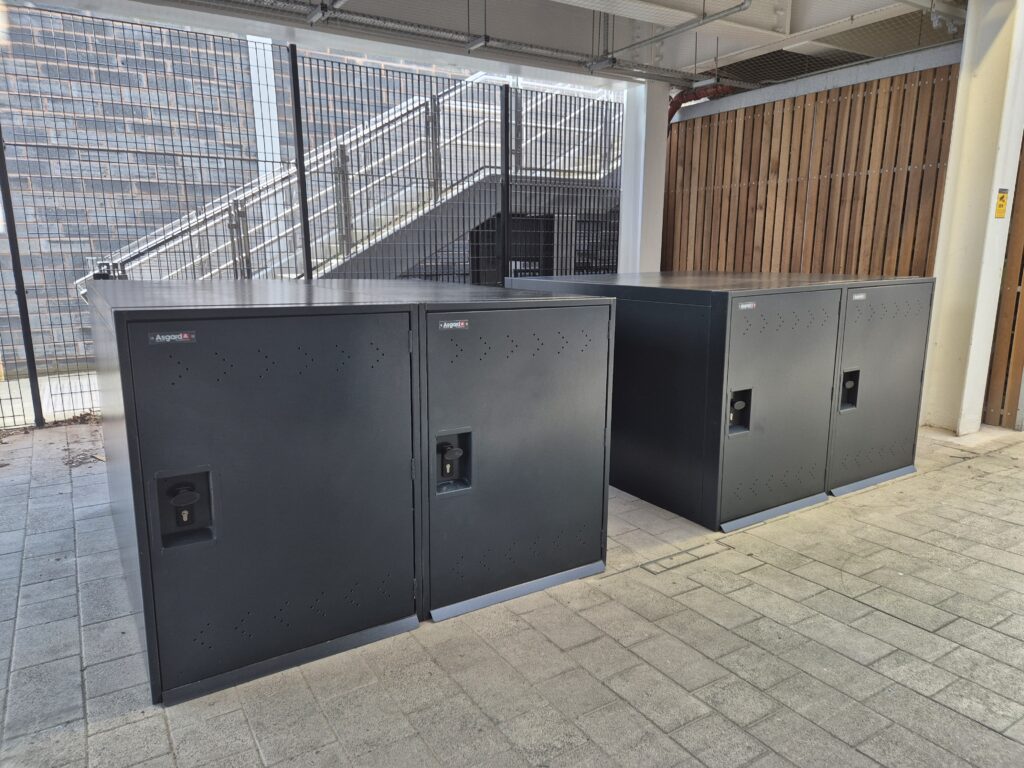
This project involved the supply and installation of a secure 22-space bespoke cycle compound designed for high-density bike storage in a compact footprint. The completed installation combined Secure Bike Bunker Lockers, Semi-Vertical Bike Racks, Solar Lighting, Personnel Lockers, Mesh Fencing Security, Self Closing Swing Gates Equipped with a Digital Combination Lock and a Public Bike Repair Stand to create a modern, low-maintenance cycling facility suitable for residential developments, apartment blocks, commercial sites, schools and public sector environments.
The cycle shelter measured 4600mm x 4100mm and featured a fully mesh-clad steel fencing for increased visibility and security. A mesh access gate was fitted with a self-closing system and double-sided combination latch lock, helping to provide controlled access while maintaining ease of use for cyclists.
To maximise cycle parking capacity, the compound was fitted with Semi-Vertical Cycle Racks and 2 Double Sided Bike Bunker Lockers, totalling a 22-space bike capacity. The semi-vertical bike rack design allows bikes to be stored efficiently while reducing the overall footprint required for cycle parking. Each rack incorporated a secure three-point locking system, allowing cyclists to secure frames and wheels safely.
The installation also included integrated solar-powered LED lighting, delivering a powerful 1400-lumen light output for improved visibility and security during evening and low-light conditions. The intelligent motion-activated lighting system uses a high-performance 12v solar panel capable of supporting up to 500 activations per night, eliminating the need for mains electrical connections while reducing ongoing energy costs.
To support cyclist convenience and further support Active Travel UK initiatives, 8 Personnel Lockers and a Public Bike Repair Stand With Integrated Pump where installed inside the shelter. The repair stand provides users with easy access to essential tools for quick adjustments and repairs, making it ideal for public spaces, residential developments, cycle hubs, schools, and workplace environments.
This secure cycle shelter installation showcases the benefits of combining space-saving bike storage, durable galvanised steel construction, secure access systems, solar lighting, and public cycle maintenance facilities into one cohesive cycling infrastructure solution. The result is a secure, attractive, and highly functional cycle parking facility built for long-term everyday use.
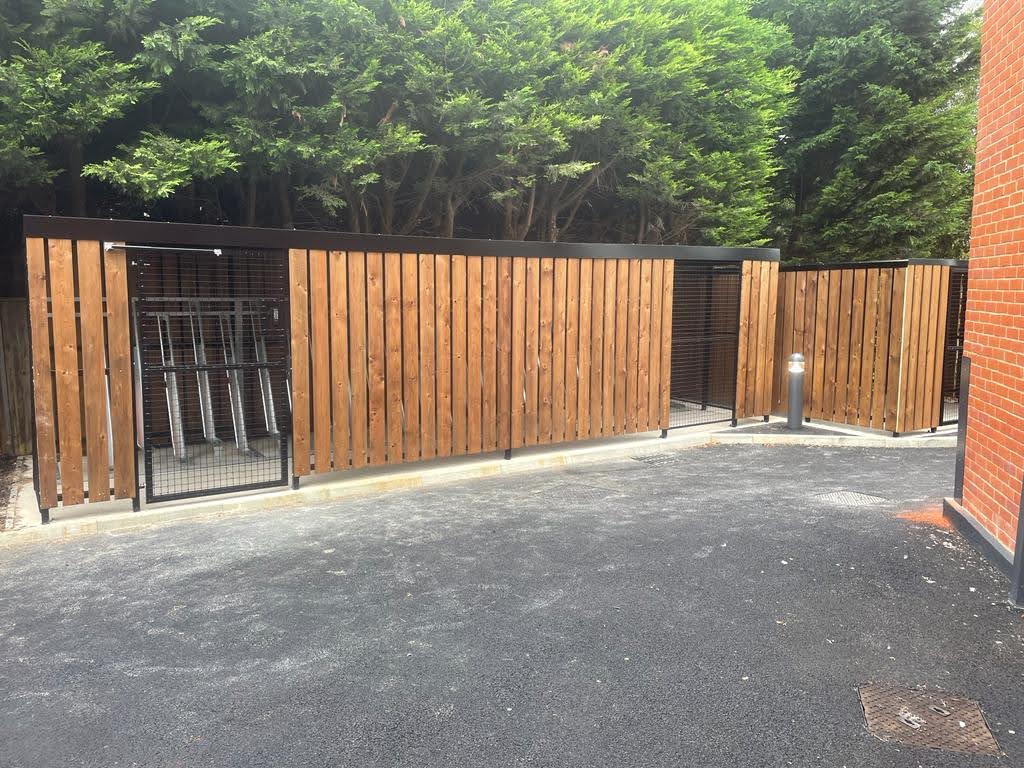
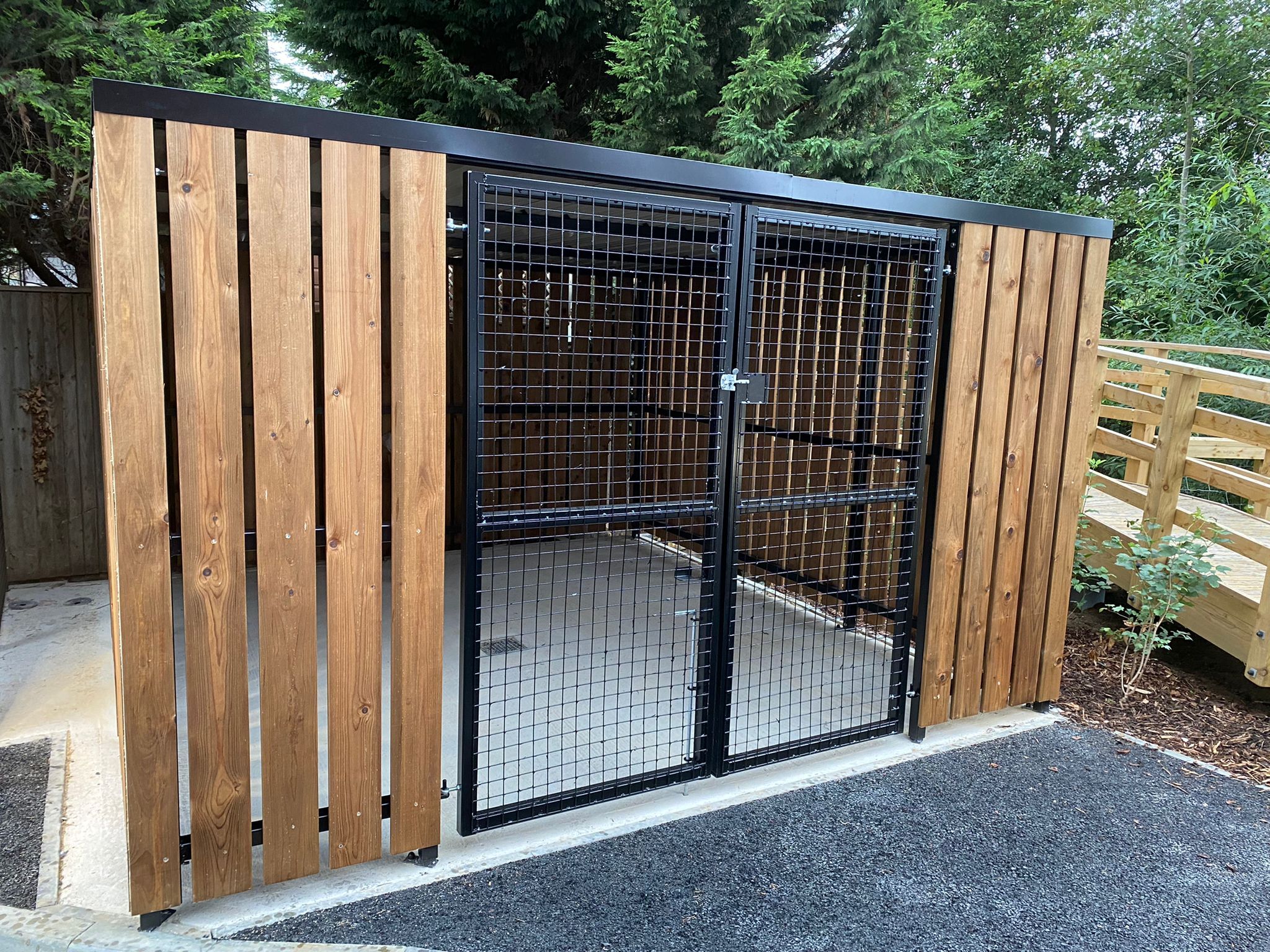
At Riverside Court in Oxford, we were commissioned to design, manufacture, and install a cycle storage and waste management solution that balanced durability, security, and visual consistency. The project, required a robust yet refined approach to accommodate both high-capacity Bespoke Cycle Parking and practical Bin Storage within a residential setting.
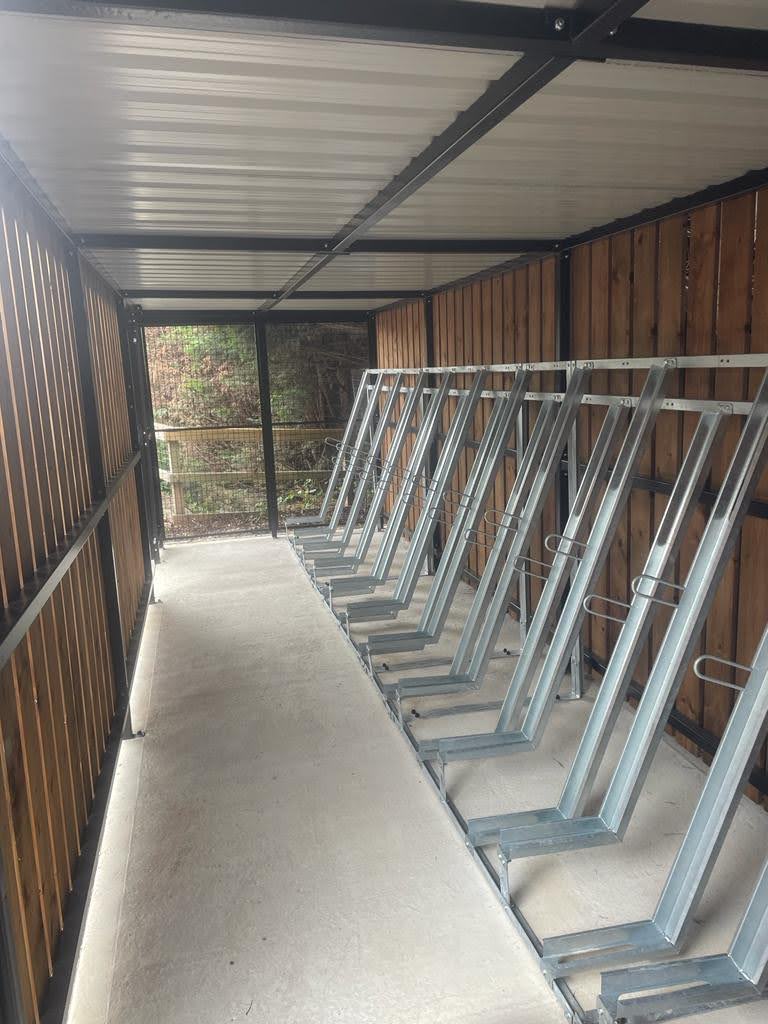
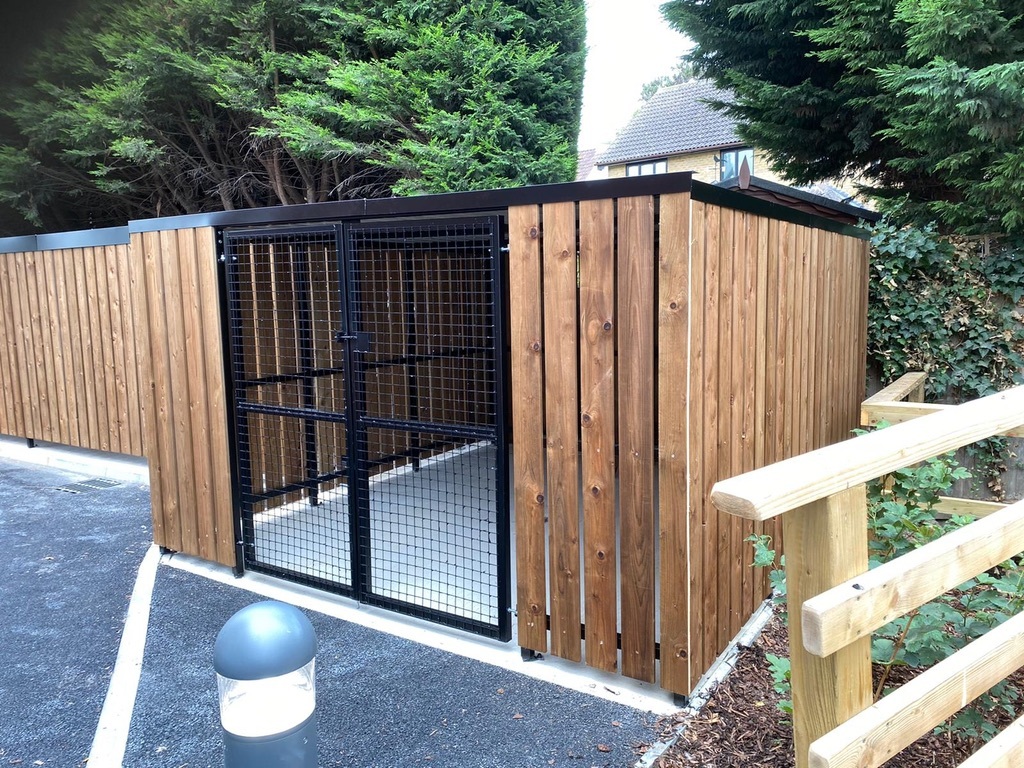
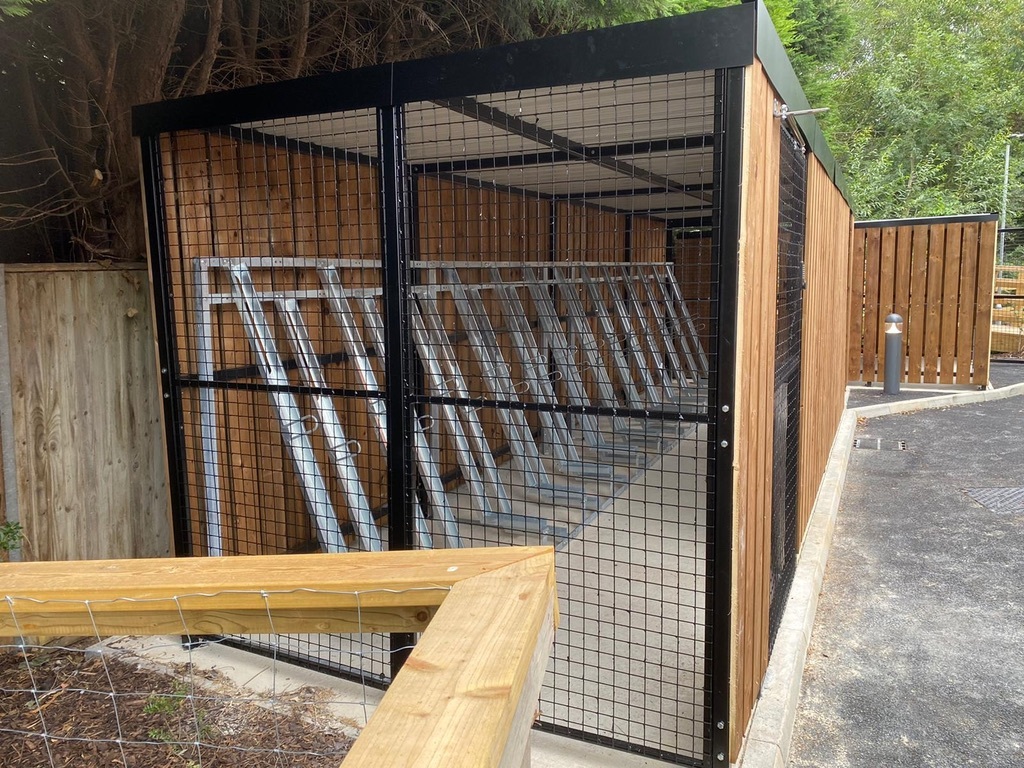
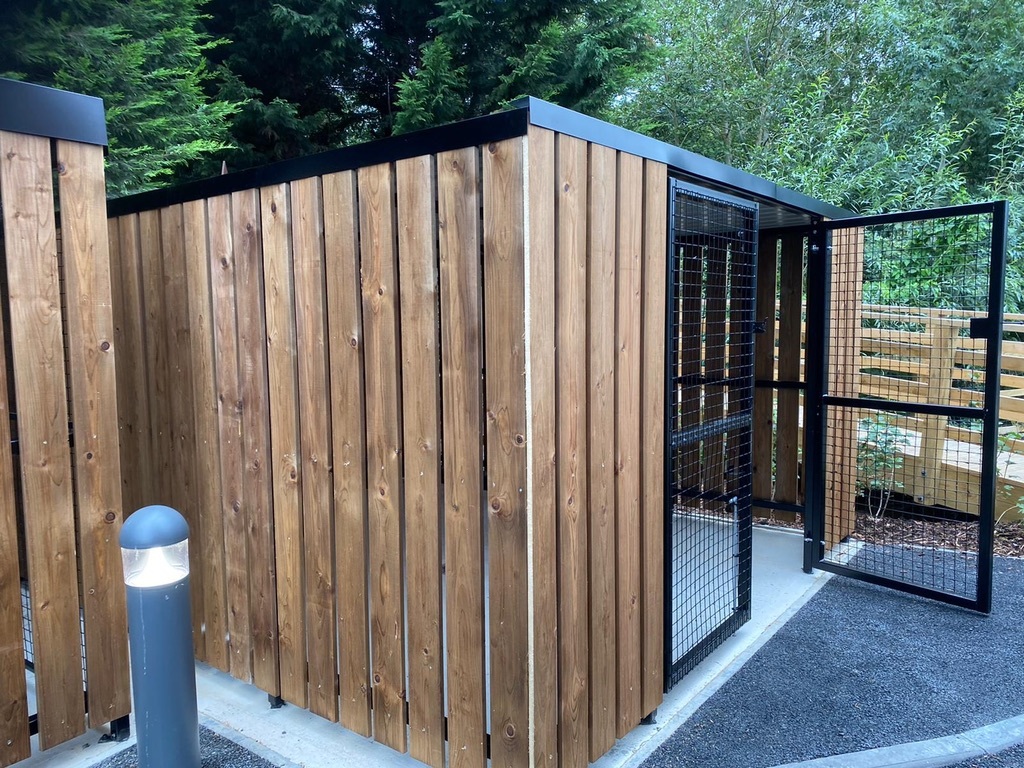
The brief called for a large-scale cycle shelter alongside two separate bin storage units, all unified through consistent materials, finishes, and thoughtful detailing. Measuring 8350mm in length, 2300mm in width, and 2150mm in height, the shelter provides secure, weather-protected storage for up to 26 bicycles. The structure features a steel framework with galvanised roof sheets and flashings, all powder coated in Black RAL 9005 for a clean, modern appearance and long-term resilience against the elements. The front and rear elevations are clad in pressure-treated brown PAR timber, offering a natural finish.
The shelter has galvanised mesh sides and a mesh gate system with a self-closing mechanism. A double-sided combination latch lock ensures ease of access for users while maintaining security and latch protectors add an extra layer of durability and tamper resistance. 26 Semi-Vertical Galvanised Cycle Racks were installed internally, each designed with a 3 point locking system to maximise security while optimising space efficiency.
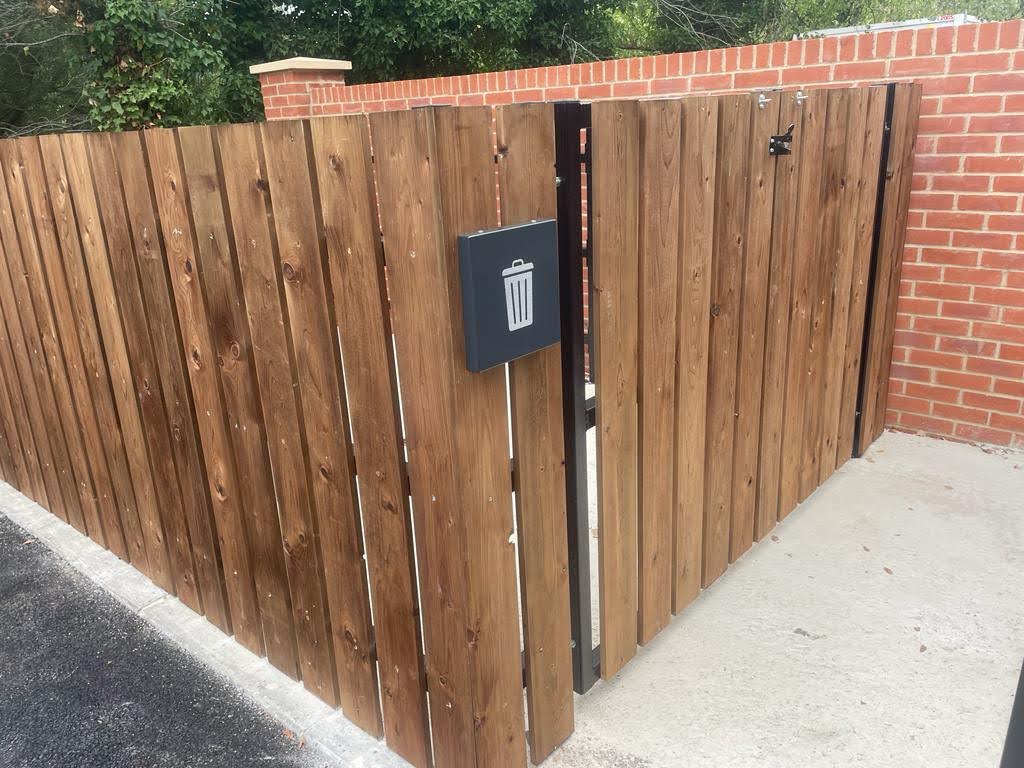
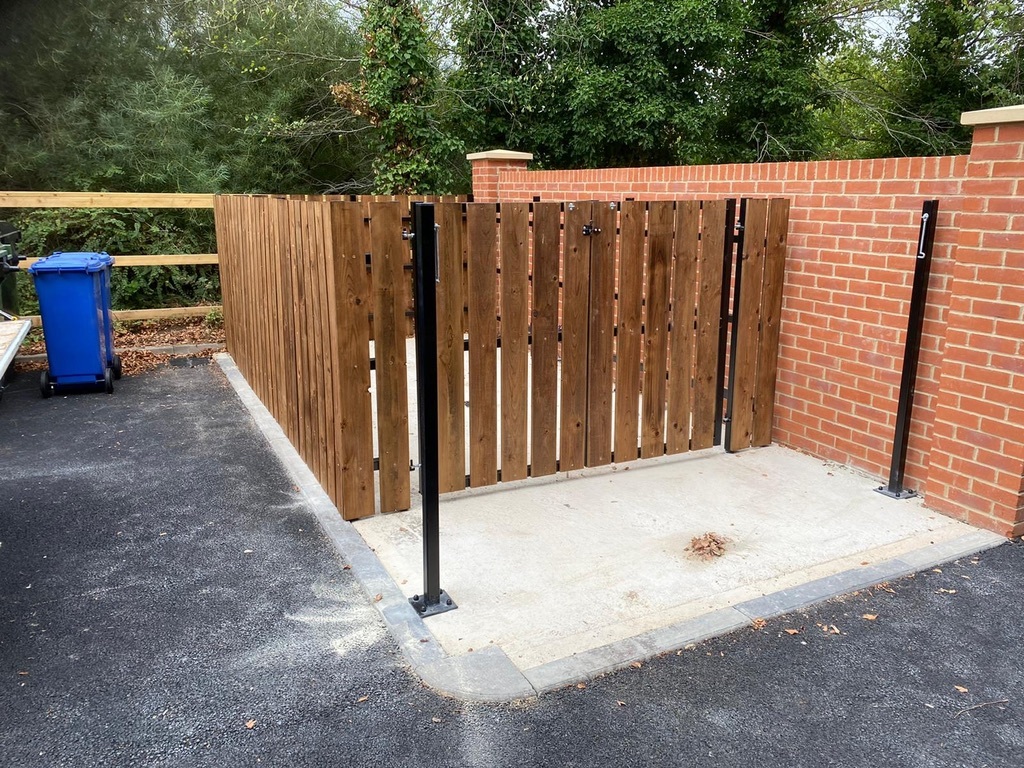
Complementing the cycle shelter are two bespoke bin storage units, each tailored to different spatial and functional requirements within the site. The first Bin Store measures 3600mm by 3810mm with a height of 2100mm. Constructed with surface-mounted galvanised posts connected by crossbars, it is fully clad in the same pressure-treated brown timber using a hit-and-miss arrangement. This unit includes a roof with galvanised sheets and flashings, all finished in Black RAL 9005 to match the cycle shelter. Access is provided via 2000mm mesh-clad doors fitted with a drop bolt mechanism and heavy-duty automatic gate latches, ensuring both practicality and secure containment of waste bins.
The second Bin Store was designed as a more open structure, measuring 4550mm by 2600mm with a height of 1500mm and incorporating 300mm infill panels. Built using over-ground fixed galvanised posts and crossbars, this unit is similarly clad in brown treated timber in a hit-and-miss style but intentionally designed without a roof to suit its specific location and use.
This project at Riverside Court demonstrates how practical infrastructure such as cycle and bin storage can be elevated through careful design, material selection, and attention to detail. The finished installation not only meets functional requirements but also enhances the overall appearance and usability of the space for residents.
In retail, fire risk rarely announces itself. It does not arrive with sirens or warning signs, it begins quietly. A charger left plugged in, a device placed on a counter, a battery reaching the end of its life cycle. On the surface, nothing out of the ordinary. Yet recent events, including widely shared footage from a Glasgow city centre fire, have highlighted just how quickly a seemingly minor incident can escalate into something far more serious.
At the centre of that incident was a factor now common across high streets everywhere, lithium batteries. Over the past decade, lithium batteries have become embedded in the day to day operations of retail environments. From vape products and cordless tools to e-bikes, scooters and mobility aids, they’re now part of infrastructure and services many shops rely on.
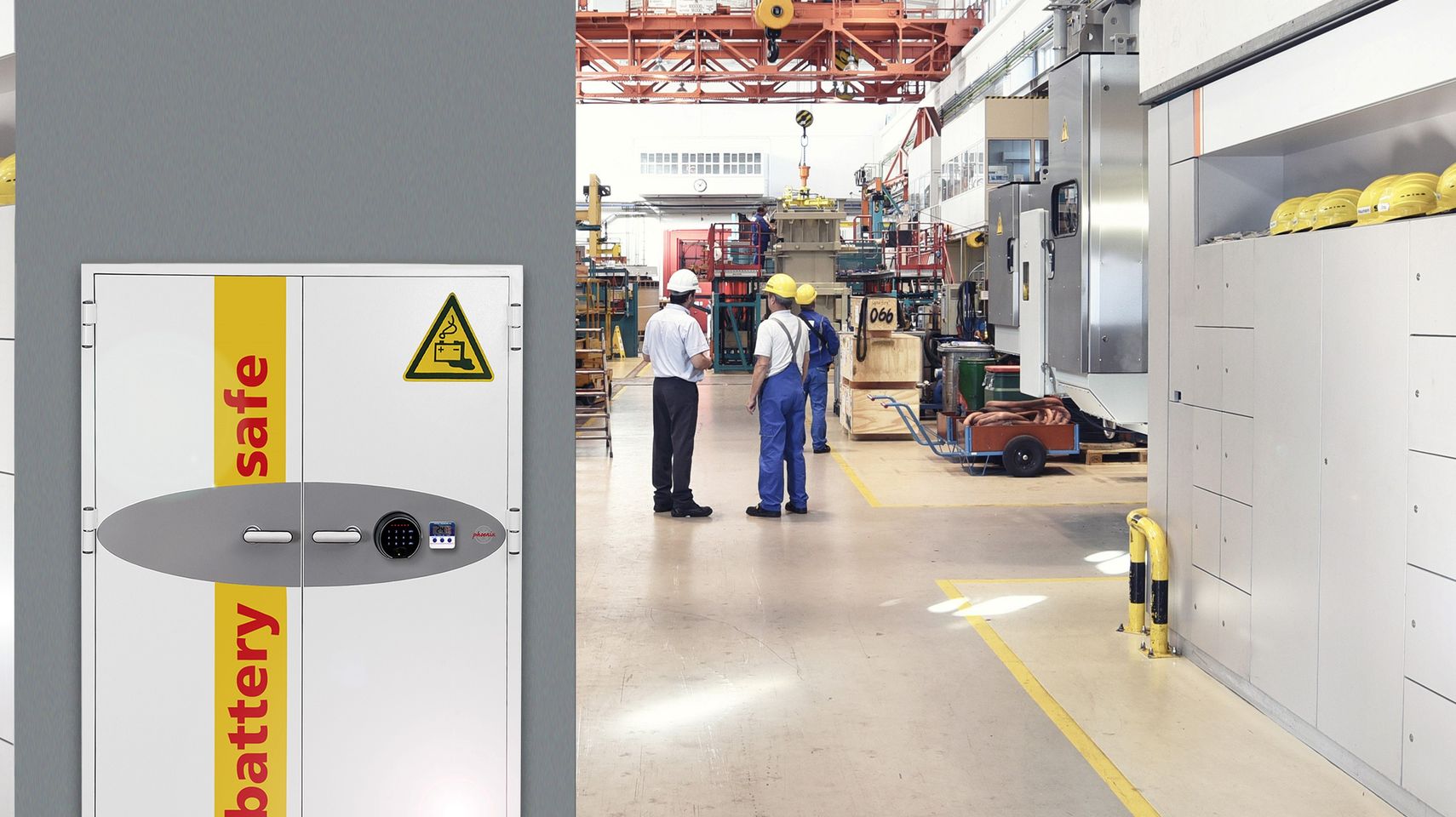
For fire prevention, it is essential to store lithium products in dedicated fire safe units due to the unique way these batteries fail. When a lithium battery enters thermal runaway, it can generate intense heat, flames and gases independently, allowing a fire to escalate rapidly and unpredictably, early footage of the Glasgow fire incident shows exactly this. Even when a fire appears to have been suppressed, it can reignite unexpectedly, sometimes minutes or even hours later. For firefighters, this presents a complex challenge.
Storing lithium powered items within a fire rated unit introduces a critical layer of control. The purpose is not only to protect contents from external fire, but to contain an internal failure at source. By isolating lithium batteries within a fire resistant enclosure, the impact of a single battery failure can be confined, preventing escalation into a wider incident.
Fire safety rated lockers are designed for initial fire prevention. Acting as a fire containment unit, these safes can withstand and contain fire for up to 90 minutes, preventing heat and flames from affecting the surrounding environment during that period. This containment window is a key advantage, providing sufficient time for emergency services to be alerted and attend the scene before the fire can spread beyond the unit. As a result, what could develop into a significant shop fire can instead be managed as a controlled incident, reducing damage, protecting property and significantly improving overall safety outcomes.
A professionally conducted fire risk assessment should now go beyond identifying ignition sources. It should consider how modern risks, including lithium batteries, interact with the physical layout of the premises, how they are managed operationally and how assets are protected in a worst case scenario.
The reality is that shop fires are no longer defined solely by traditional hazards. As technology evolves, so should the approach to safety. The Glasgow incident is not an isolated incident, it is part of a broader pattern across the retail sector.
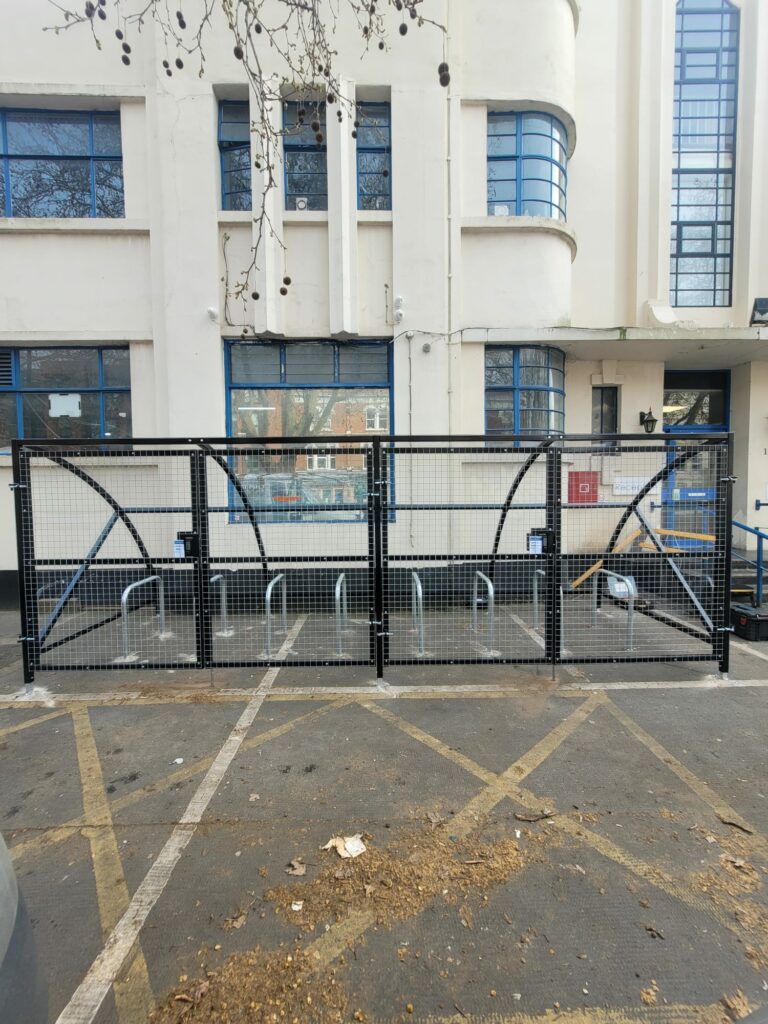
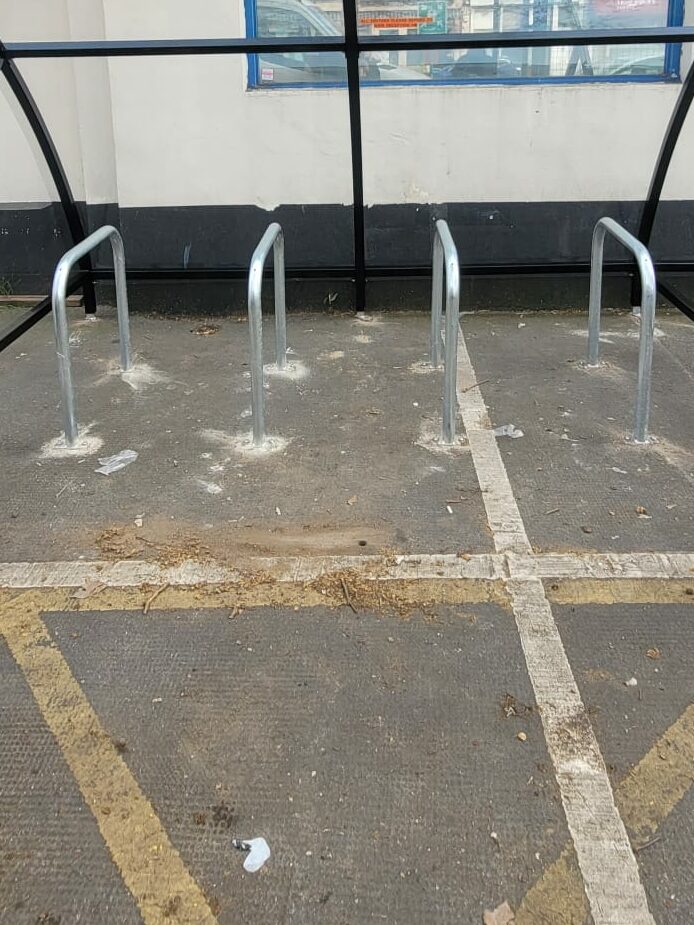
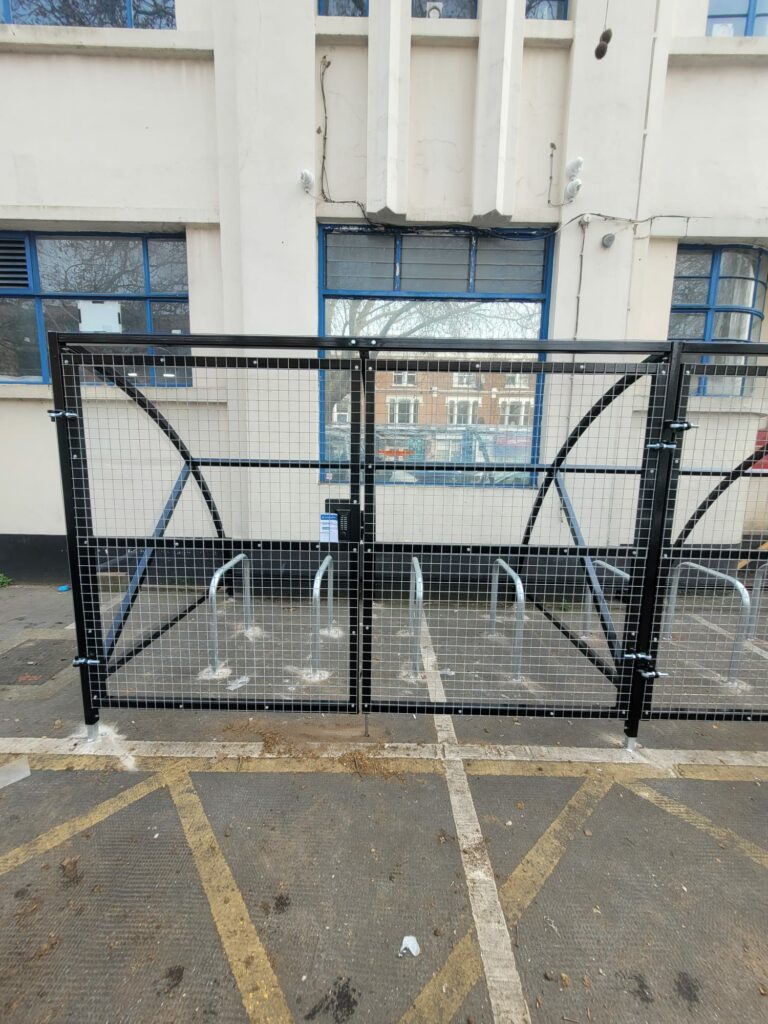
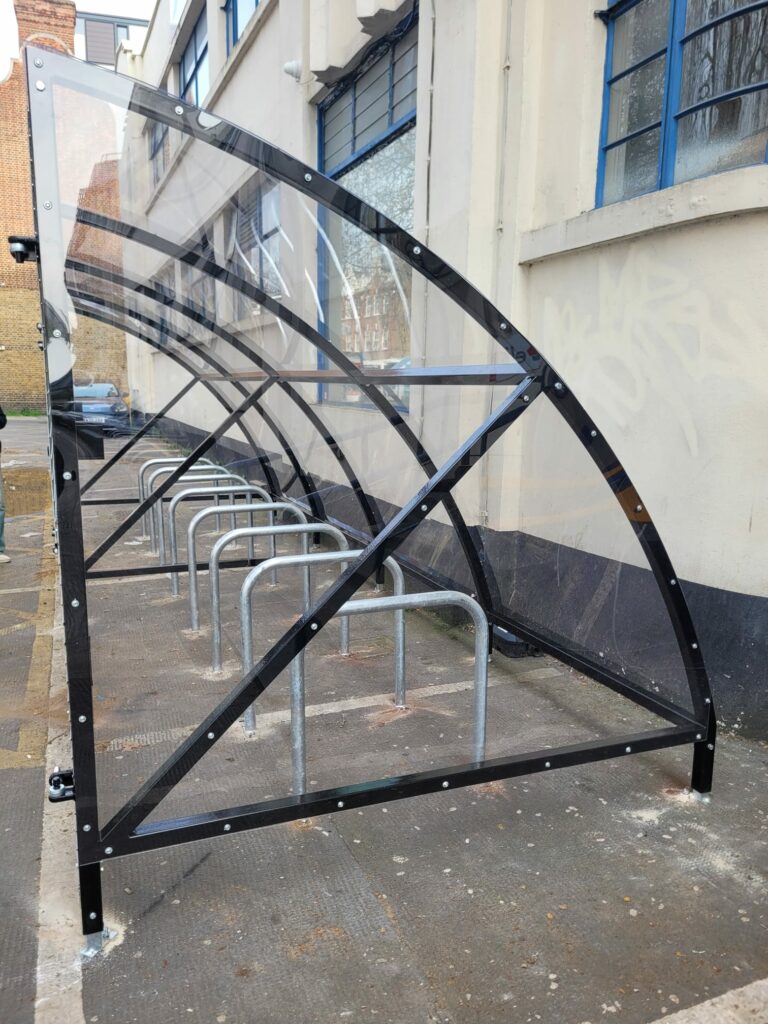
Delivering practical, durable and visually appealing cycling infrastructure requires efficient on-site execution. This project involved the supply, assembly and installation of a 16-space Canal Curve Sycle Shelter, designed to provide secure, weather-protected bicycle storage while complementing its surrounding environment.
The specified structure measured 6100mm in width, 2100mm in depth, and 2100mm in height, offering a compact yet highly functional footprint. Constructed from galvanised steel and finished with a black powder coating (RAL 9005), the frame is designed to withstand long-term exposure to the elements while maintaining a clean appearance. The choice of finish not only enhances durability but also ensures the shelter integrates seamlessly into both urban and landscaped settings.
Clad with clear PETG panels along the rear and sides, the shelter provides effective protection from wind and rain without compromising visibility or light transmission. The transparent finish enhances user safety by maintaining clear sight lines, which is an important consideration in public environments. A key feature of this installation was the inclusion of two sets of galvanised double swing gates. These gates were fitted with digital combination locking mechanisms, providing a secure yet accessible solution for controlled cycle storage. Careful attention was given to the alignment and operation of these gates during installation, ensuring smooth functionality and reliable locking performance.
Internally, the shelter was fitted with 8 Sheffield Cycle Stands, accommodating up to sixteen bicycles. These stands were positioned and installed with precision to maximise space efficiency while allowing ease of use for cyclists. The Sheffield stand design was selected for its robustness, simplicity, making it an ideal choice for high-traffic cycle parking.
This project highlights the importance of combining high-quality materials with specialist installation. From structural assembly to final detailing, every stage was executed with precision, delivering a reliable cycle storage solution built to perform over the long term.
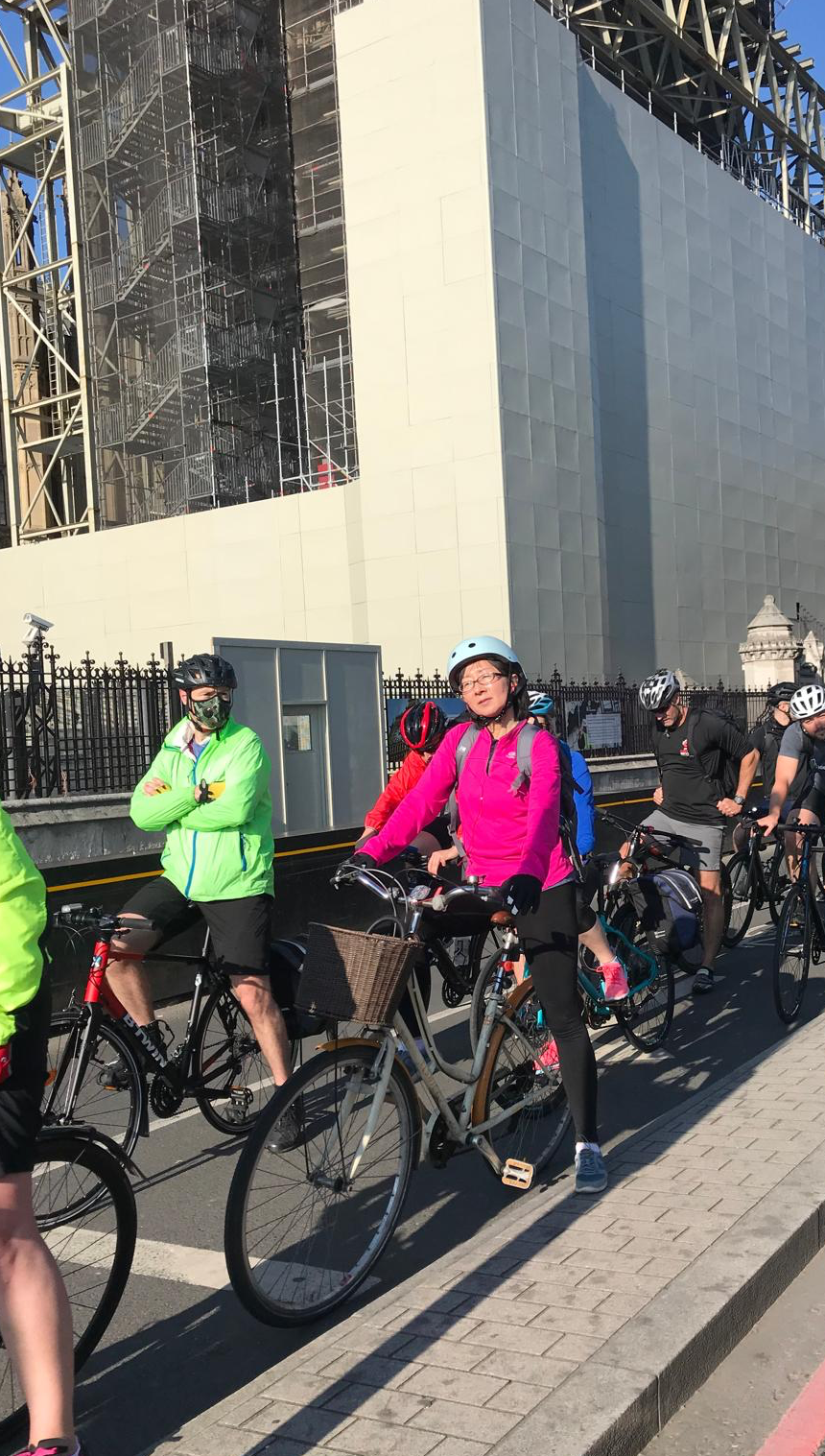
For years, conversations around cycling uptake have focused on infrastructure, government policy, and individual motivation. While these are all important, one influence is often underestimated, the workplace. Where we work, how we work and accessibility quietly shape whether cycling feels realistic, convenient, or even possible.
For many people, the decision to cycle isn’t just about owning a bike or wanting to be more active. It’s about whether their daily routine supports it. Lack of facilities and concerns about appearance or productivity can all act as barriers. Even in cities where cycling infrastructure has improved, these workplace-related factors can still prevent people from making the shift.
On the other hand, when employers actively support cycling, the impact can be immediate and meaningful. Simple measures, secure bike storage, access to showers, flexible start times, or participation in cycle-to-work schemes can transform cycling from an inconvenience into a viable option. Just as importantly, workplace culture plays a role. When cycling is normalised and encouraged, it becomes part of the everyday culture rather than an exception.
There is a broader opportunity here. Supporting cycling isn’t just about commuting, it feeds into wellbeing, productivity and sustainability goals. Employees who cycle regularly often report improved mental health, higher energy levels and reduced stress. For organisations, this can translate into better engagement, lower absenteeism and a more positive workplace environment.
At a time when many businesses are refining their ESG commitments and looking for practical ways to reduce their environmental impact, cycling offers a tangible, visible solution. Encouraging even a small percentage of employees to switch from car travel to cycling can contribute meaningfully to carbon reduction targets, while also strengthening employer and employee satisfaction.
The key point is this, workplaces are not just passive environments where commuting habits play out, they’re active influencers of those habits. By recognising this role and taking relatively simple steps, employers can become powerful enablers of change.
If we want to see a real shift in cycling across the UK, the conversation needs to extend beyond roads and policies. It needs to include offices, organisations and leadership teams. Because the journey to more cycling doesn’t just start at home, it starts with where and how we work.
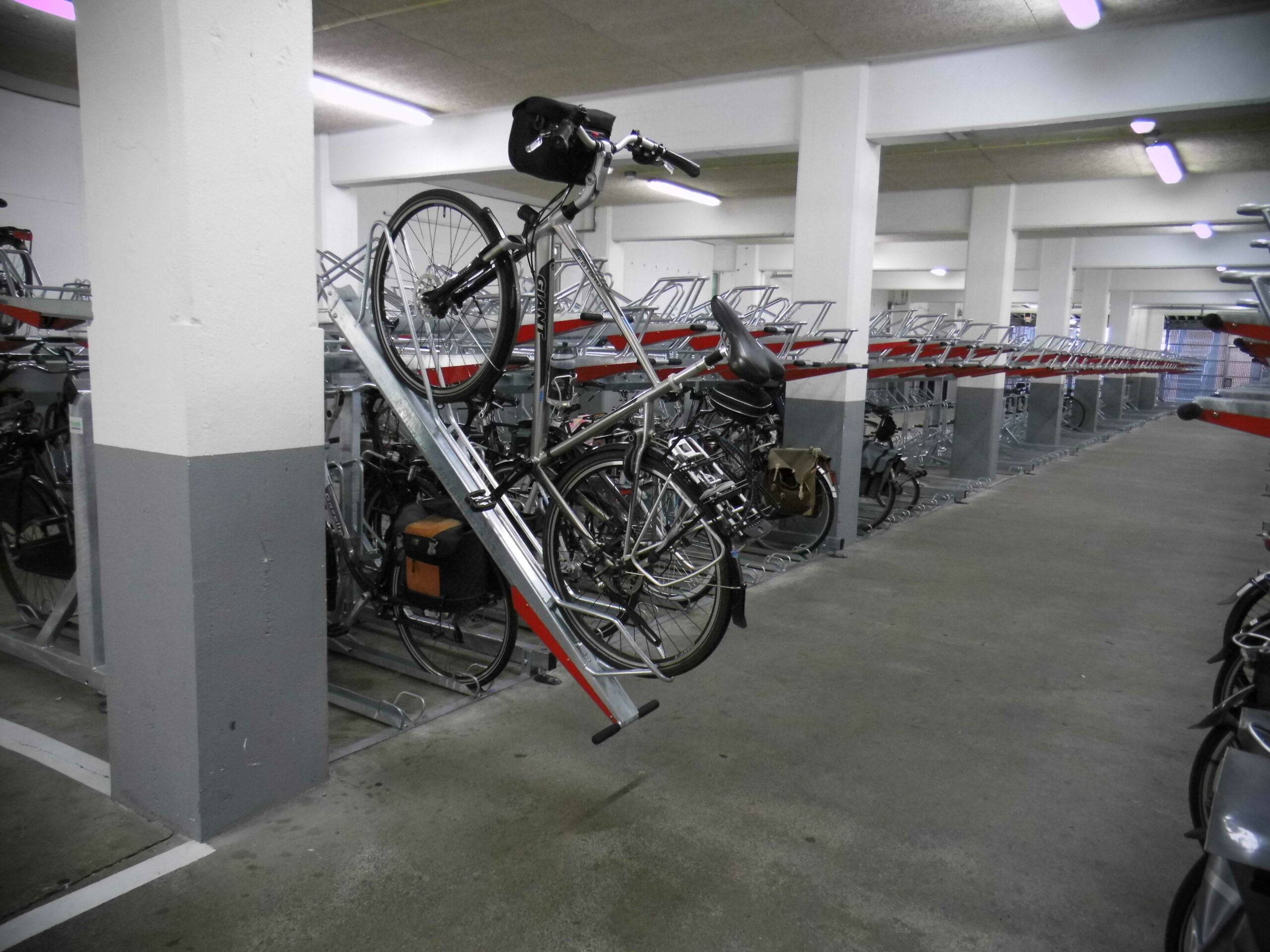
Cycle theft in the UK’s capital has reached a crisis point. According to the London Cycling Campaign’s (LCC) landmark Broken Locks, Broken Promises report, an estimated 40,000 bicycles are stolen in London every single year. This is a figure widely considered an underestimate due to major underreporting.
The scale of police inaction is a huge concern. Only around 2% of stolen bicycles in London are ever recovered, this is one of the lowest recovery rates among all UK police forces. For victims, the experience is often compounded by a dismissive institutional response. Of those who reported theft to the Metropolitan Police, 79% said officers took no meaningful action and 69% described the police response as inadequate. In several documented cases, investigations were closed on the same day as the theft, without officers even requesting available CCTV footage.
The LCC survey, which gathered responses from 1,924 London cyclists, found that 74% had experienced cycle theft personally or within their household, a shocking proportion, particularly given that the majority of victims reported using high-grade security measures. More than half (54%) used Sold Secure gold-rated locks or above, 62% had their bikes registered on a national cycle database and 47% had security marked their bicycle, yet theft remains largely unpunished.
The consequences extend far beyond financial loss. A quarter of theft victims reported that they either stopped cycling altogether for a period or cycled less frequently following their experience. This depreciation of cycling participation carries serious implications for public health, urban congestion and the UK’s net zero commitments. The LCC is calling for urgent systemic change. Key recommendations include a 10% annual reduction target in cycle theft, mandatory bike marking and registration (following France’s lead) and the installation of secure cycle parking at stations and public locations by councils, TfL and Network Rail.
The case for action is highly important. Tackling cycle theft is not just a policing issue, it is a public health and infrastructure priority. Secure, well-designed cycle storage removes opportunity for theft, rebuilds rider confidence, and signals that cycling is a mode of transport worthy of protection. Without it, the UK risks undermining its own active travel agenda before it has had the chance to take root. The time to act is now.
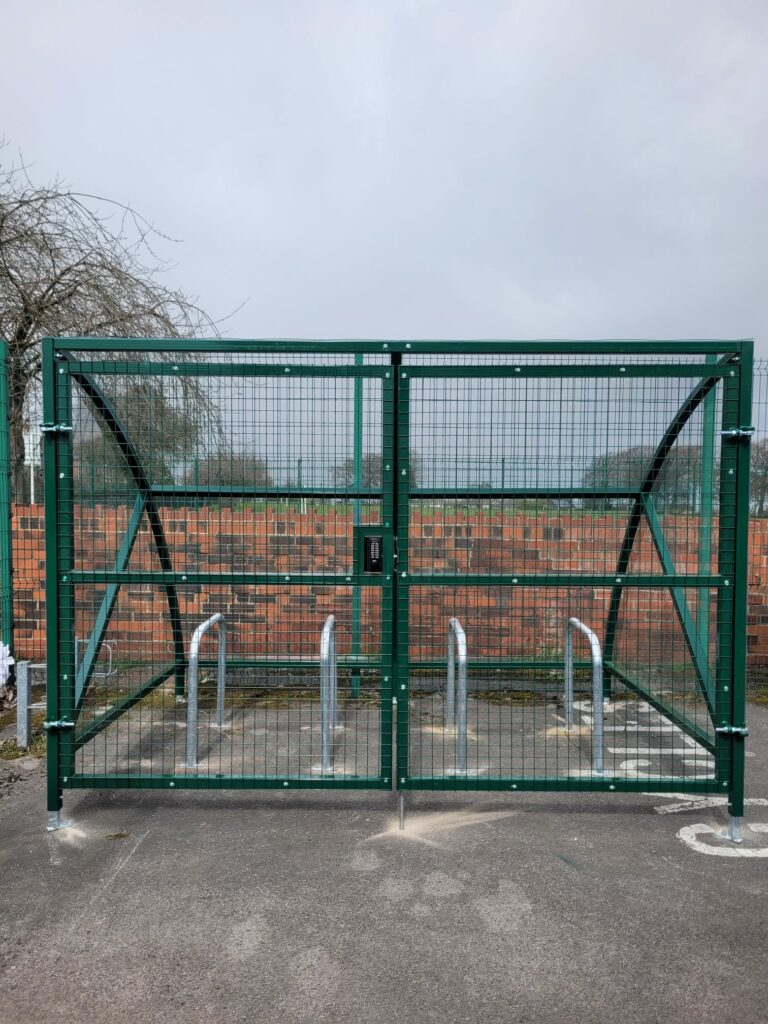
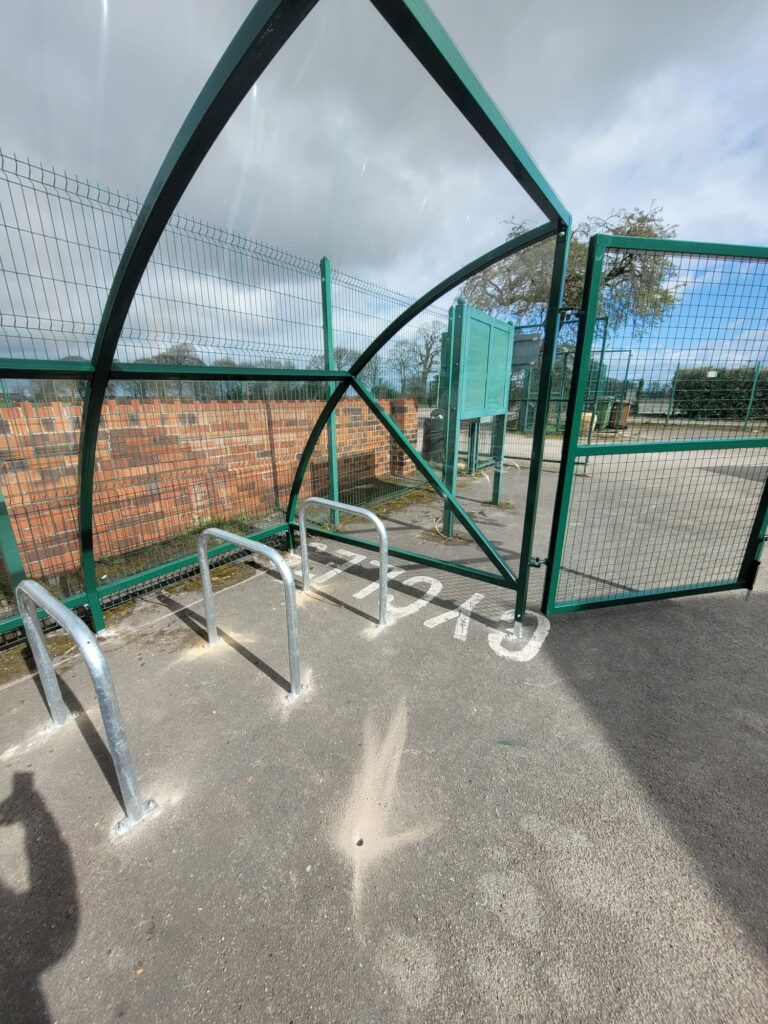
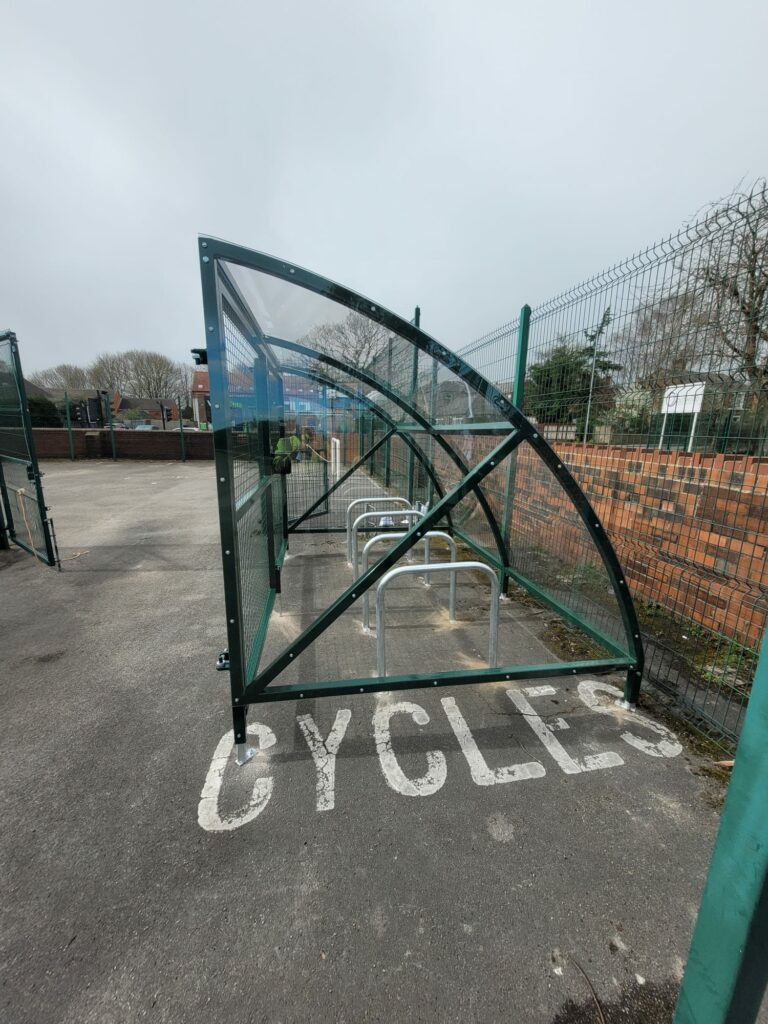
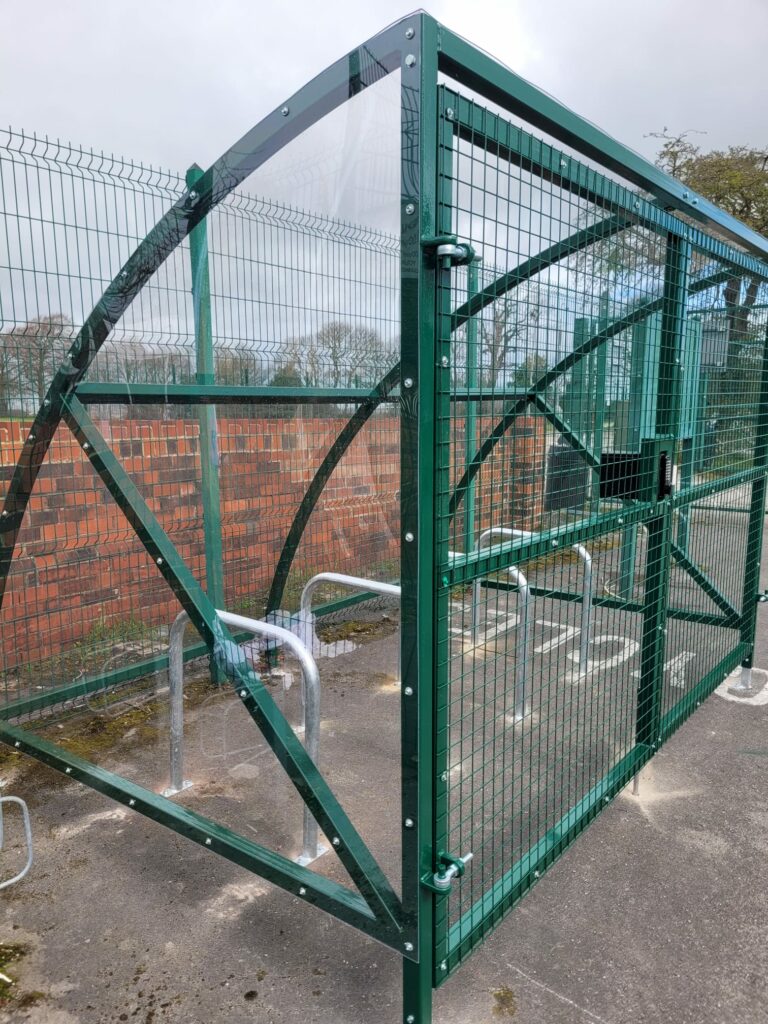
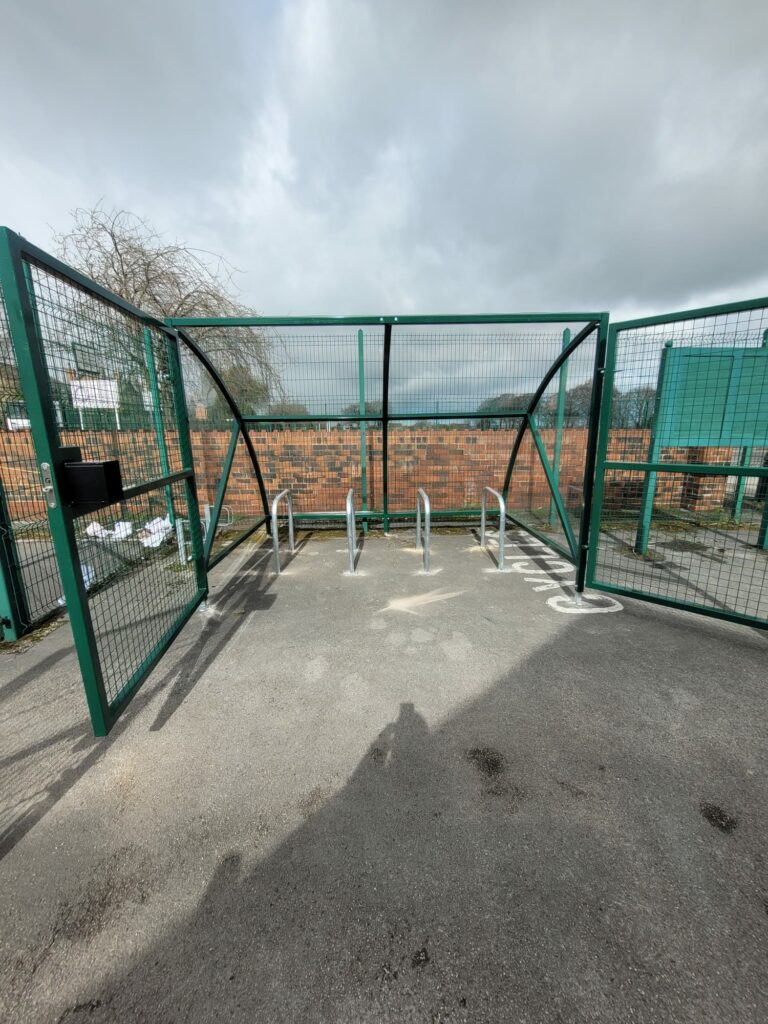
Delivering secure, practical and visually cohesive cycle storage solutions is a key part of supporting sustainable transport infrastructure. This project involved the supply, assembly and installation of a high-quality Canal Curve Cycle Shelter, designed to provide secure and accessible bike storage while complementing the surrounding environment.
The specified structure measured 3100mm in width, 2100mm in depth and 2100mm in height, offering a compact yet efficient footprint suitable for a variety of locations. The shelter was manufactured using a robust galvanised steel framework, finished with a durable powder coating in Moss Green (RAL 6005). This finish was selected not only for its resilience against weathering and corrosion, but also for its ability to blend seamlessly into landscaped or urban settings.
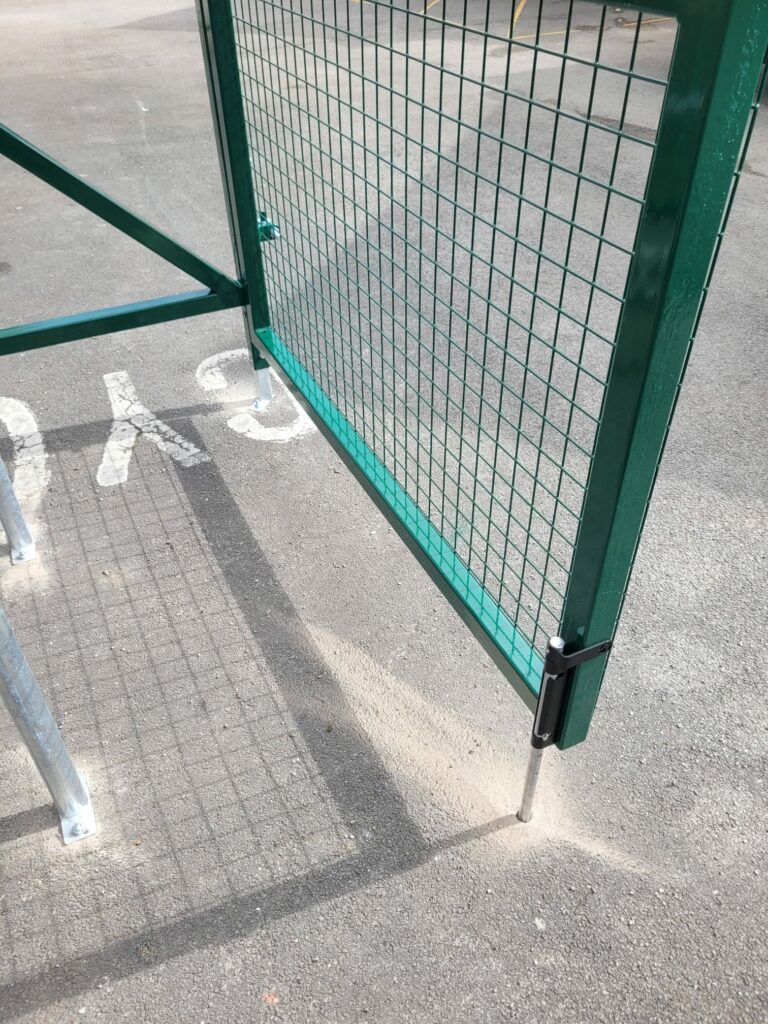
To ensure both visibility and protection, the shelter was clad with clear PETG panels along the rear and sides. This material provides a strong, impact-resistant barrier against the elements while maintaining a light, open feel that enhances usability. Access to the shelter was secured with a mesh-clad double swing gate, also powder coated to match the main structure. The gate was fitted with a hasp and staple locking mechanism, carefully installed and tested to ensure smooth operation and reliable security.
Internally, the shelter was equipped with 4 Sheffield-style cycle stands, providing storage for up to eight bicycles. These stands were positioned and installed with precision to maximise usability and ensure adequate spacing for users, supporting both convenience and protection against bike damage.
Given that the installation area consisted of a tarmac surface, careful consideration was given to the fixing method. Resin fixings was identified as a potential requirement to ensure a secure and long-lasting installation.
The project concluded with a thorough site clean-up, leaving the area tidy and ready for immediate use. The completed cycle shelter now offers a secure, weather-protected and visually appealing solution for bicycle storage, supporting active travel and enhancing the usability of the space.
This installation demonstrates our commitment to delivering high-quality cycle infrastructure, combining durable materials, precise workmanship and efficient project management to meet the needs of modern environments.
Chat on WhatsApp
Open WhatsApp on this computerChat on your phone
Scan with your camera


