
/tcs/uploads/categories/20260106-09-59-00_2452a0ee-5d2f-4f0a-ad18-1d653e48926a.jpg)
/tcs/uploads/categories/20260106-09-24-54_fa149ae6-6b92-41a2-8c58-6872c3f98f46.jpg)
/tcs/uploads/categories/20260420-14-42-55_6x4-pent-2.jpeg)
/tcs/uploads/categories/cycle-storage-cycle-lockers.jpeg)
/tcs/uploads/categories/20260420-14-39-09_parkis-5.jpg)
/tcs/uploads/categories/20260106-09-51-52_img-1458.jpg)
/tcs/uploads/categories/cycle-storage-bike-pump-repair-stands.jpeg)
/tcs/uploads/categories/20260420-14-44-33_whatsapp-image-2026-02-24-at-131821-4.jpeg)
TRANSPORT SECTOR
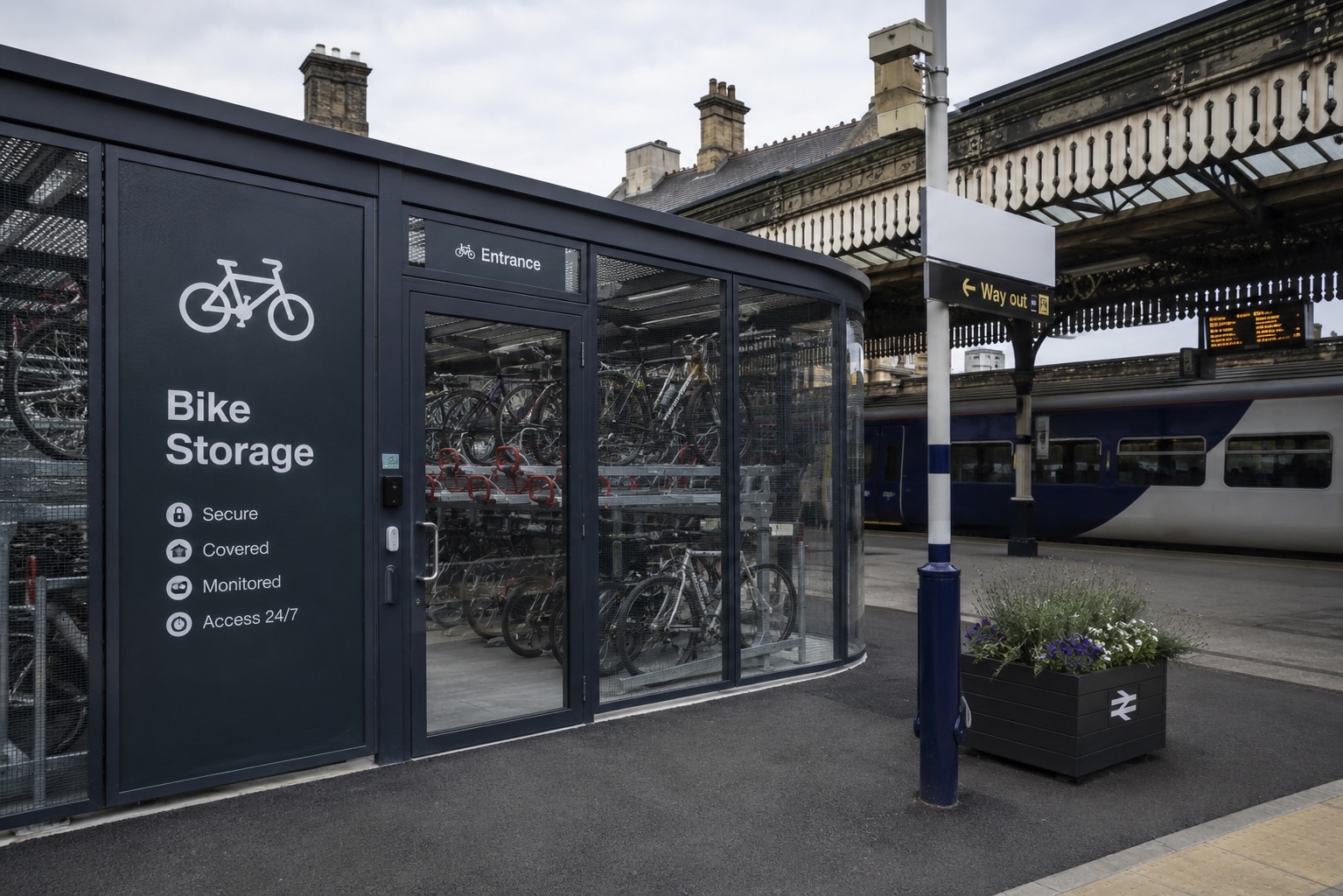
Cycle Storage for Transport Hubs, Train Stations, Airports & Mobility Hubs
Get In Touch With Our Team For Assistance
Why Transport Bike Storage Is Important
The number of people combining cycling with public transport, known as bike-and-ride, has grown significantly over the past decade. Transport hubs are the physical link in multimodal journeys, and inadequate cycle parking is one of the most frequently cited barriers to active travel.
Planning requirements are tightening. LTN 1/20, the Department for Transport’s Local Transport Note on cycle infrastructure, sets clear standards for cycle parking at transport interchanges. It specifies minimum capacity levels based on passenger numbers, requires shelters with weather protection, and demands that parking be located close to station entrances with clear wayfinding. For new developments and station upgrades, compliant cycle storage is now a planning condition rather than an afterthought.
DfT funding is conditional. The Department for Transport increasingly requires Station Travel Plans as part of franchise agreements and funding bids. These plans must demonstrate adequate, secure cycle parking that meets National Rail standards. Operators bidding for franchise renewals or applying for Access for All funding must show how they’ll improve the first-and-last-mile experience, and cycle storage is a central pillar of that commitment. Passenger demand is real. Bike-and-ride trips have risen steadily, particularly at commuter rail stations around major cities and at regional mobility hubs. Passengers expect to find secure, well-lit, weather-protected parking that can accommodate a range of bicycle types, including e-bikes, cargo bikes, and folding bikes. Poor facilities push passengers back into cars for the entire journey. Active Travel England drives standards. As the government’s active travel watchdog, ATE reviews cycle parking proposals at transport hubs as part of its funding and design review process. Their guidance emphasises capacity, security, accessibility, and integration with wider active travel routes. Installations that don’t meet the ATE design standards risk losing funding approval and planning consent.
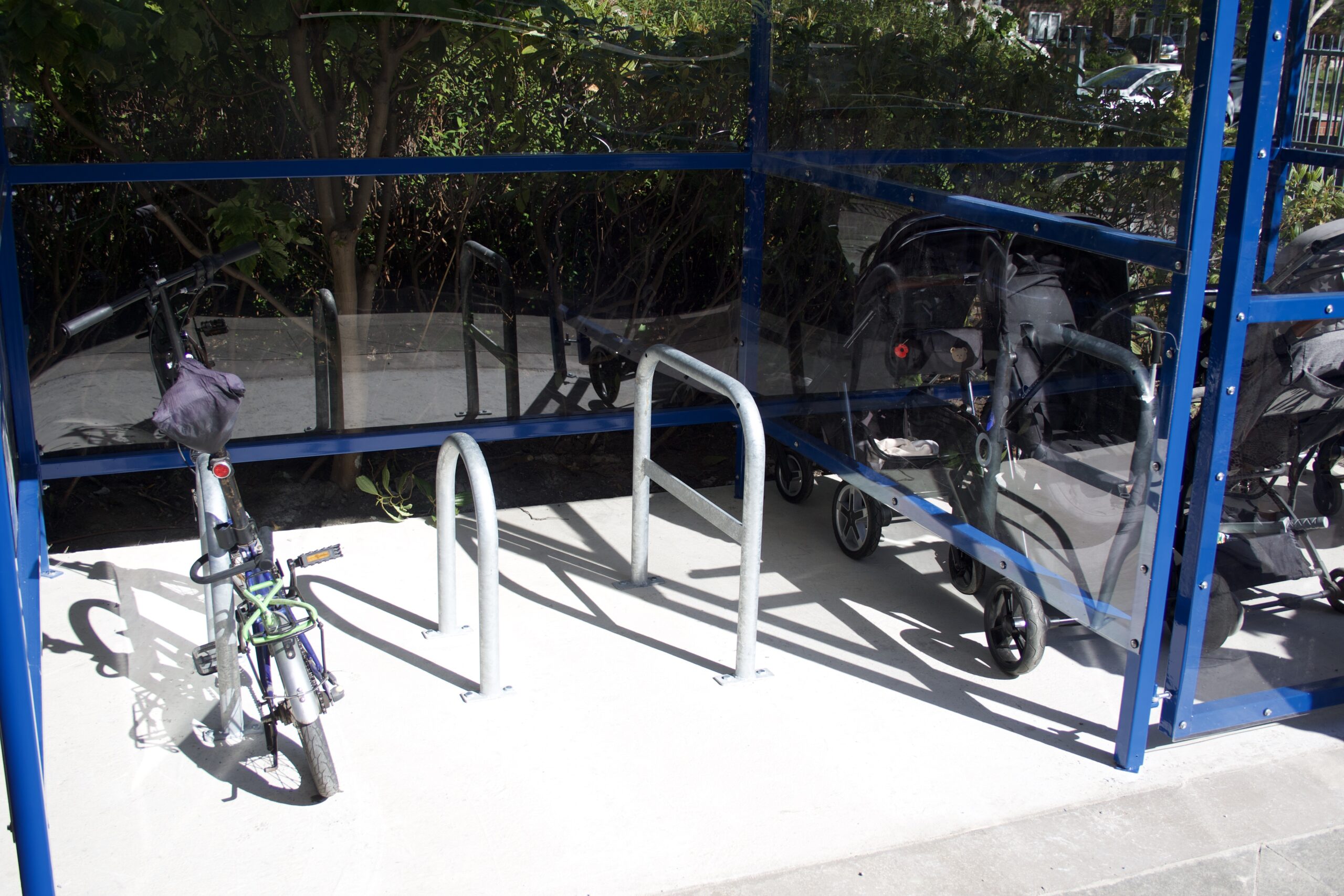
Transport Cycle Storage Solutions
Design, supply, and install compliant cycle storage for multimodal journeys. Secure Cycle Store works with transport operators, local authorities, and developers to deliver bike parking solutions at train stations, airports, bus interchanges, and mobility hubs across the UK.
From bike-and-ride facilities at railway stations to long-stay secure compounds at airports and e-bike charging points at mobility hubs, we provide end-to-end cycle storage solutions that meet planning compliance, Secured by Design standards, and Active Travel England guidance.
OUR STANDOUT TRANSPORT CASE STUDIES
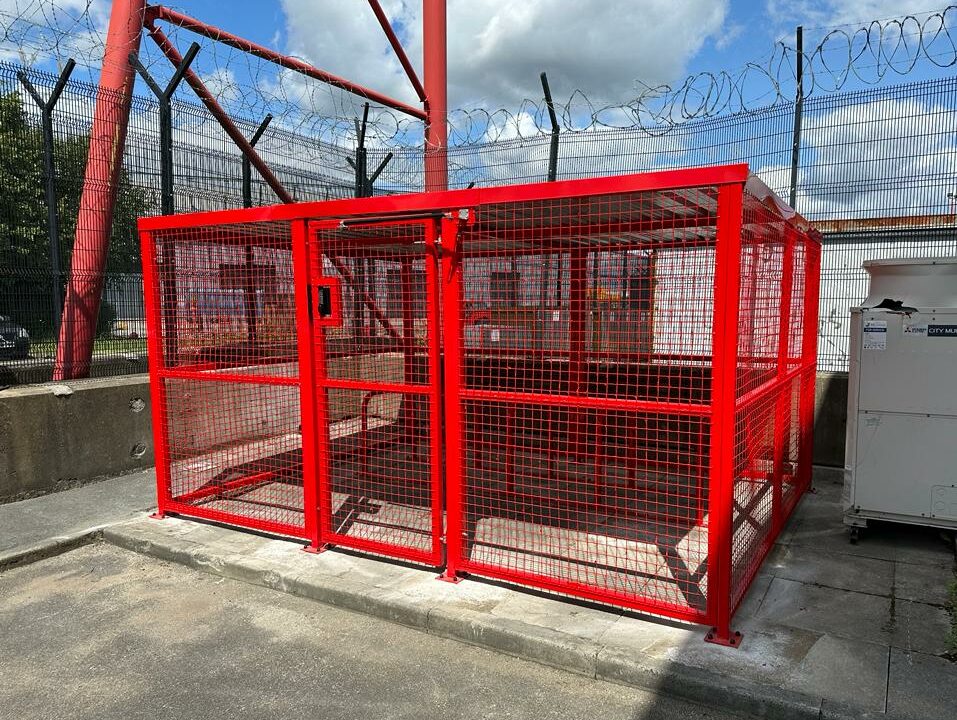
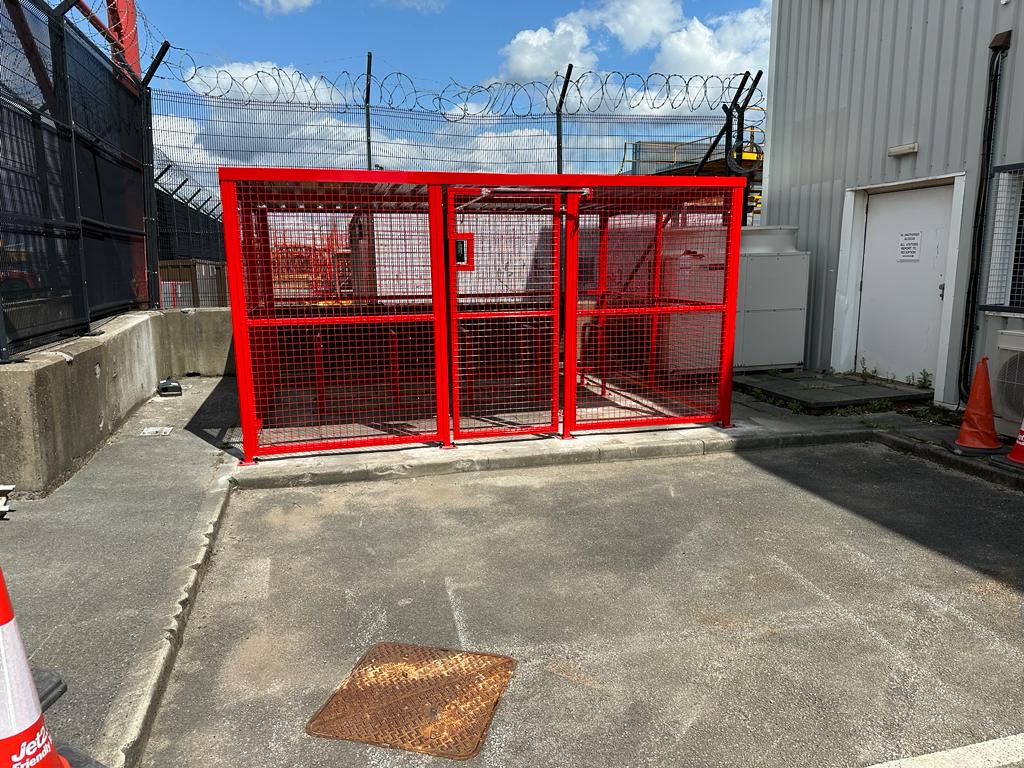
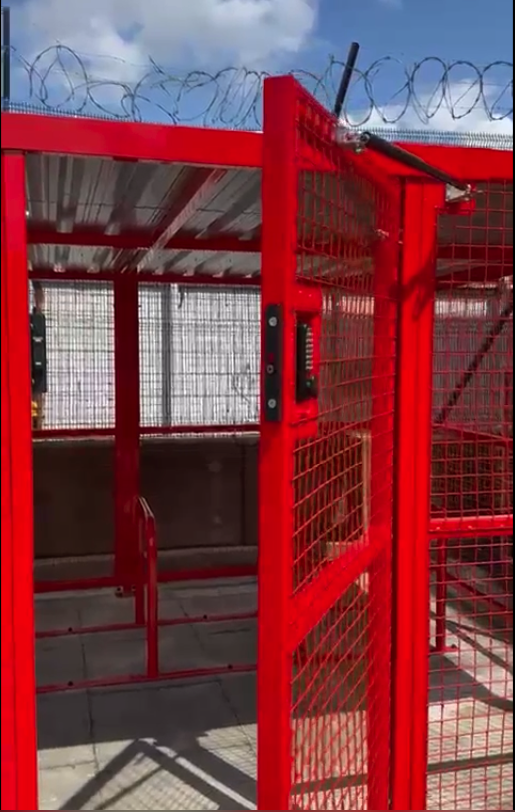
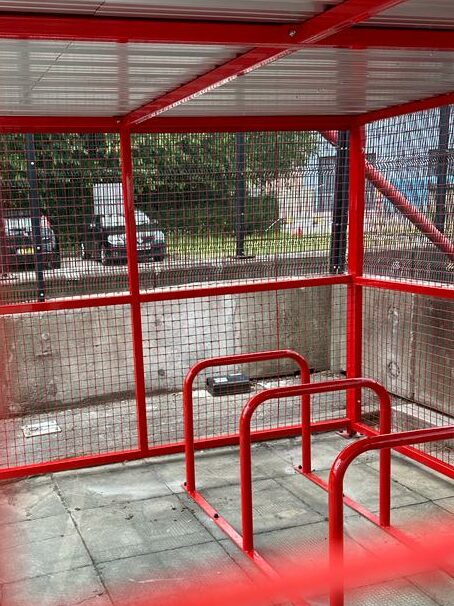
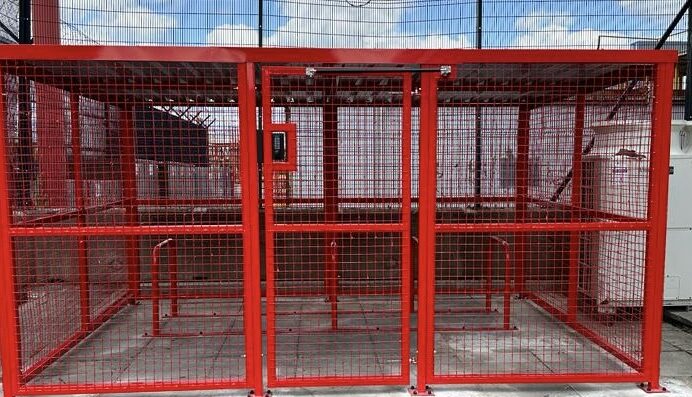
Jet2.com | Hangar 5 Manchester International Airport
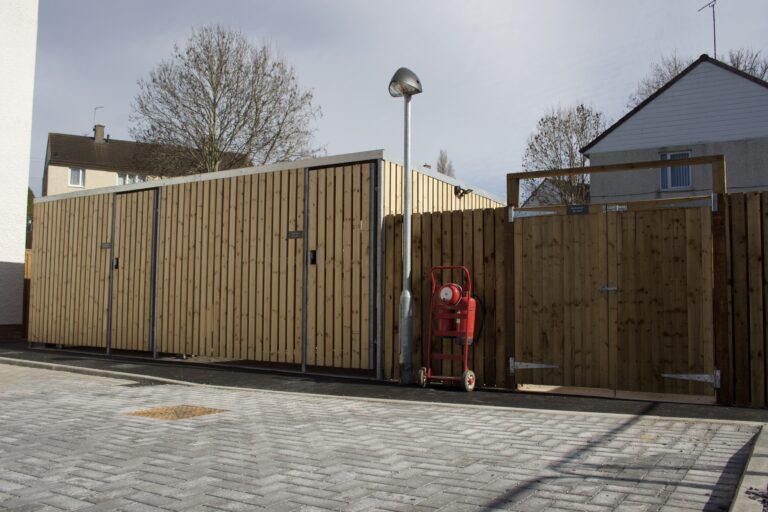
Jet2.com approached us to replace their old cycle store with a new, secure solution. We provided groundworks and installed a 10-space welded mesh-clad shelter, galvanised and powder-coated in their corporate colours. The shelter includes a deep design, a single access gate with a self-closing mechanism, and a digit combination latch lock for added security. We also powder-coated the Sheffield cycle racks. This secure cycle store installation encourages sustainable commuting and aligns with Jet2.com’s brand identity, providing staff with a safe and convenient bike storage solution.

Planning & Regulatory Context
Delivering compliant cycle storage at transport hubs means navigating a layered regulatory environment. Here are the key standards and guidance documents that apply:
LTN 1/20 — Cycle Infrastructure Design
The Department for Transport’s Local Transport Note 1/20 is the definitive national standard for cycle infrastructure, including parking at transport interchanges. It requires:
- Cycle parking within 50m of station entrances where feasible
- A minimum of 10% of passenger arrivals to be accommodated as cycle parking at new developments
- Weather protection for all long-stay cycle parking
- Sheffield stands or equivalent as the minimum standard for short-stay parking
- Accessible stands suitable for adapted cycles and cargo bikes
Active Travel England Guidance
ATE now reviews all cycle infrastructure proposals as part of the government’s active travel funding programme. For transport hubs, ATE guidance emphasises:
- Integration with wider active travel networks (cycle routes, pedestrian paths)
- Wayfinding signage from the station entrance to cycle parking
- CCTV coverage or passive surveillance for all parking areas
- Capacity planning based on peak passenger flows, not averages
Station Travel Plans
DfT requires Station Travel Plans as part of rail franchise agreements and many station improvement funding bids. These plans must include:
- A baseline audit of existing cycle parking quantity, quality, and security
- Targets for increasing bike-and-ride mode share
- Timetabled investment in additional cycle storage
- Ongoing monitoring and reporting against targets
Station Travel Plans are also increasingly required for bus stations, mobility hubs, and airport surface access strategies.
National Rail Cycle Parking Standards
Individual Train Operating Companies (TOCs) and Network Rail apply their own standards for station cycle parking, typically requiring:
- At least one secure cycle parking space per 50 passenger arrivals during peak periods
- Covered, well-lit parking with CCTV coverage
- A mix of short-stay (Sheffield stands) and long-stay (lockers/compounds) options
- Accessible spaces for adapted cycles and trikes
- Integration with station ticket office or gateline where applicable
Secured by Design — Commercial and Public Access
For public-facing cycle parking at transport hubs, SBD standards apply to ensure the design actively deters theft and vandalism. Key requirements include:
- Stands made from 3mm thick mild steel or equivalent
- Minimum two contact points enabling frame-and-wheel locking
- Compounds with no-crawl perimeter design
- Anti-lift hinges on gates and anti-tamper fixings
- Passive surveillance from adjacent transport operations
Transport Bike Storage Solutions
Choosing the Right Solution
Different transport hub types present different challenges. Here’s how we approach each one:
Train Stations (Bike-and-Ride)
Best suited to: Two-tier racks + cycle shelters
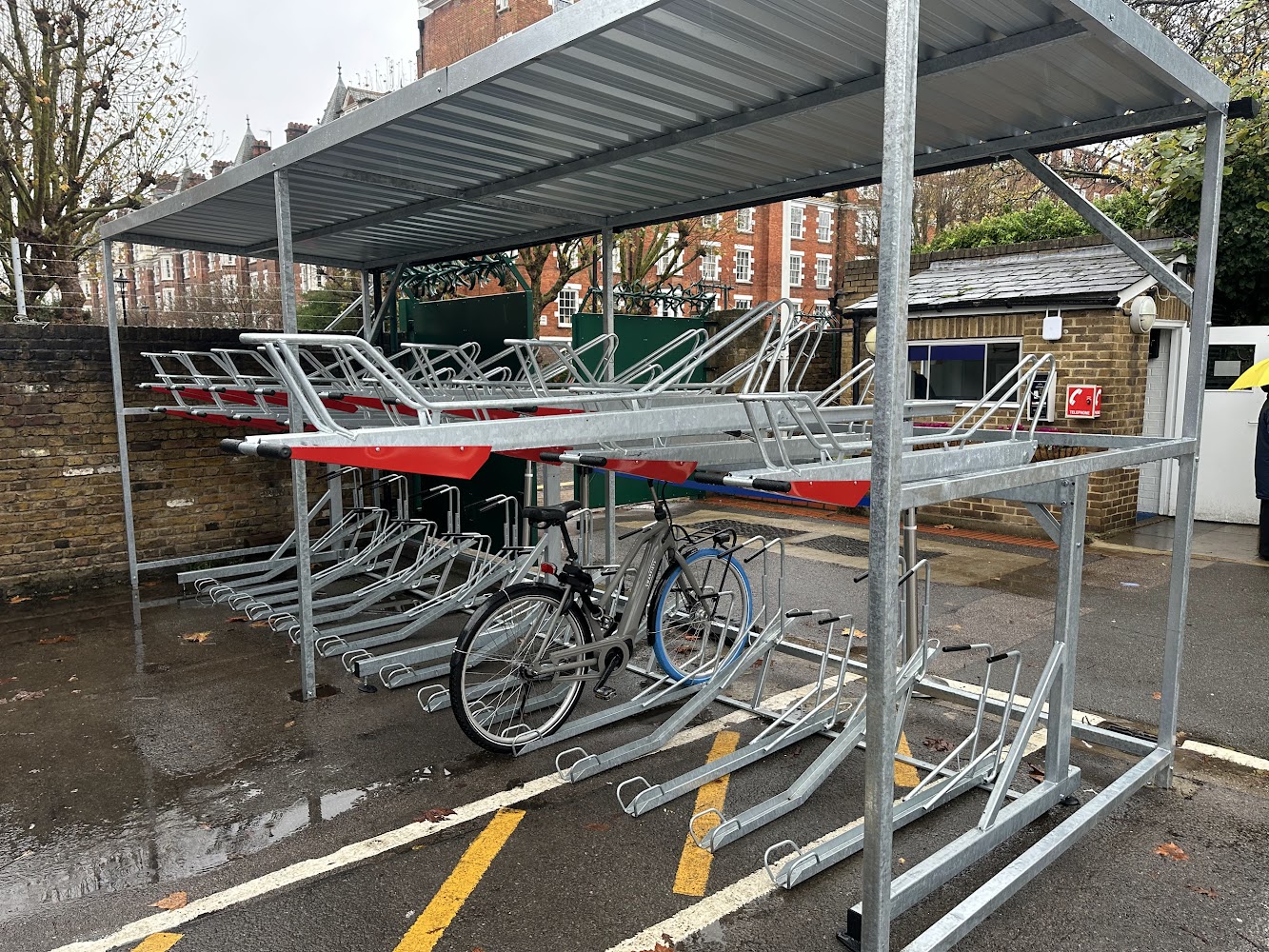
Commuter stations need high-density parking within a small footprint. Two-tier bike racks maximise capacity, often doubling the number of spaces compared to standard single-level stands. Paired with open or enclosed cycle shelters, they provide weather protection and security. For smaller stations, Sheffield stands within covered shelters offer a cost-effective alternative.
Recommended products: Two-Tier Bike Racks, Canal Curved Bike Shelter, Sheffield Toast Rack
Airports (Overnight / Long-Stay)
Best suited to: Secure lockers + CCTV-ready compounds
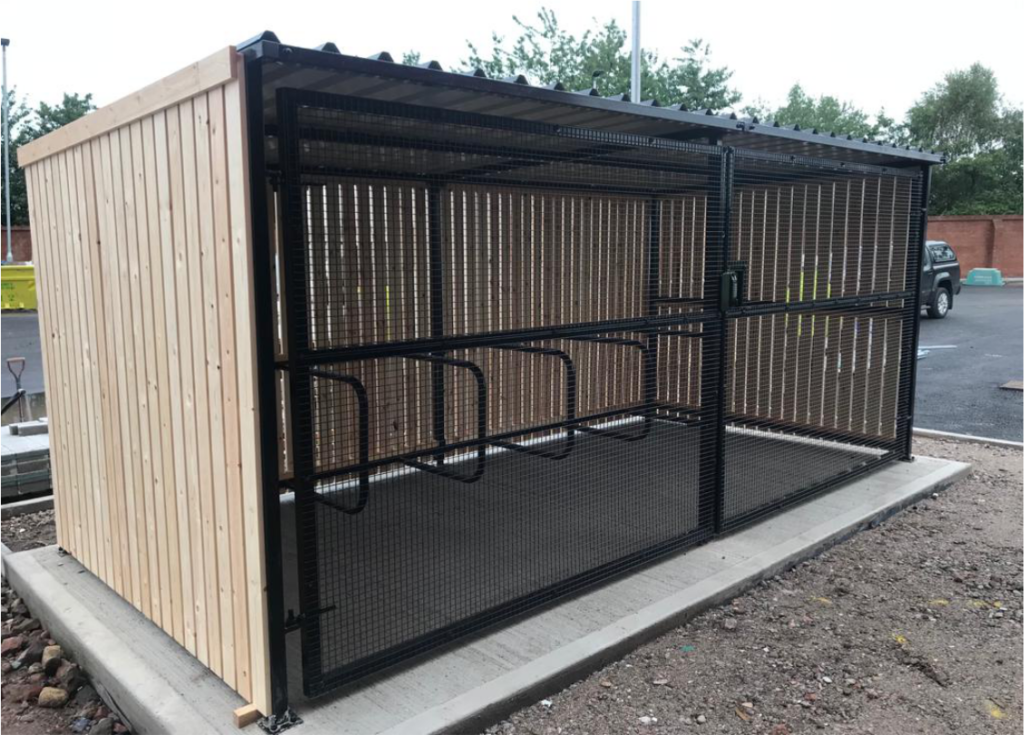
Airport staff and passengers leaving bikes for extended periods need the highest level of security. Secure bike lockers provide individual, lockable storage for each bicycle, protecting against both theft and weather. For larger installations, mesh-enclosed compounds with controlled access (digit combination or smart card locks) and CCTV integration offer scalable capacity.
Recommended products: Bike Lockers, Merton Mesh Bike Shelter
Bus Interchanges
Best suited to: Semi-vertical racks + repair stands
Bus interchanges typically serve shorter-duration parking but at high turnover rates. Semi-vertical bike racks pack more bikes into less space while keeping them visible and accessible. Adding a public bike repair stand with integrated pump gives passengers the ability to inflate tyres or make quick adjustments before boarding.
Recommended products: Semi-Vertical Cycle Rack, Public Bike Repair Stand
Mobility Hubs (E-Bikes / E-Scooters)
Best suited to: E-bike lockers + charging points
Mobility hubs are the newest category of transport interchange, integrating cycling, e-scooters, and sometimes car club vehicles into a single location. These require dedicated e-bike lockers with integrated power for battery charging, alongside standard parking for conventional bikes. Charging infrastructure for e-scooters and e-bikes is becoming a specification requirement for funded mobility hub projects.
Recommended products: Bike Lockers (with e-bike charging options), Sheffield Cycle Stands
Get a Quote
Whether you’re planning a new bike-and-ride facility at a train station, a secure staff compound at an airport, or a multi-modal mobility hub, we can help.
We offer a full service — from initial site survey and layout design through to supply, delivery, and professional installation. Our team has delivered cycle storage for airports, railway stations, transport interchanges, and bus facilities across the UK.
Call us: +44 (0)151 933 8895Email us: or get in touch via our contact page for a free, no-obligation quote.


